The aim of the Child Health Program is to issue recommendations on preventive activities to be carried out in the Spanish pediatric and adolescent population, based on the best available evidence and morbidity trends and the resources of the health care system in Spain. Its overarching goal is to improve the overall health of children across all stages of development.
Routine health checkup visits in healthy children improve the early detection of physical and psychosocial health risks and promote better health and well-being throughout childhood and adolescence. Their impact on reducing severe disease, morbidity, and mortality is limited and depends on care quality and individualization.
El objetivo del programa de salud infantil es realizar recomendaciones sobre actividades preventivas a realizar en la población infantil y adolescente españolas, basadas en la evidencia, morbilidad en nuestro país y recursos disponibles de nuestro sistema sanitario. Su fin es mejorar la salud integral de la población infantil en todas sus etapas a lo largo de todo su desarrollo. Las revisiones de salud rutinarias en niños sanos, mejoran la detección temprana de riesgos físicos y psicosociales, y promueven una mejor salud y bienestar en la infancia y adolescencia. Su impacto sobre la reducción de enfermedad grave, morbilidad y mortalidad es limitado y depende de la calidad y personalización de la atención.
In 1990, the Sociedad Española de Medicina Familiar y Comunitaria (semFYC, Spanish Society of Family and Community Medicine) created the Program for Preventive Activities and Health Promotion (PAPPS) with the participation of a group of pediatricians, the Prevention in Childhood and Adolescence (PrevInfad) group, to develop various health promotion and prevention activities within the primary care system based on the model of the United States Preventive Services Task Force (USPSTF) and the Canadian Task Force on Preventive Health Care (CTFPHC).
In 2000, the Asociación Española de Pediatría de Atención Primaria (AEPap, Spanish Association of Primary Care Pediatrics) was established, with PrevInfad, which is dedicated to developing evidence-based recommendations on preventive care activities, as one of its founding groups.
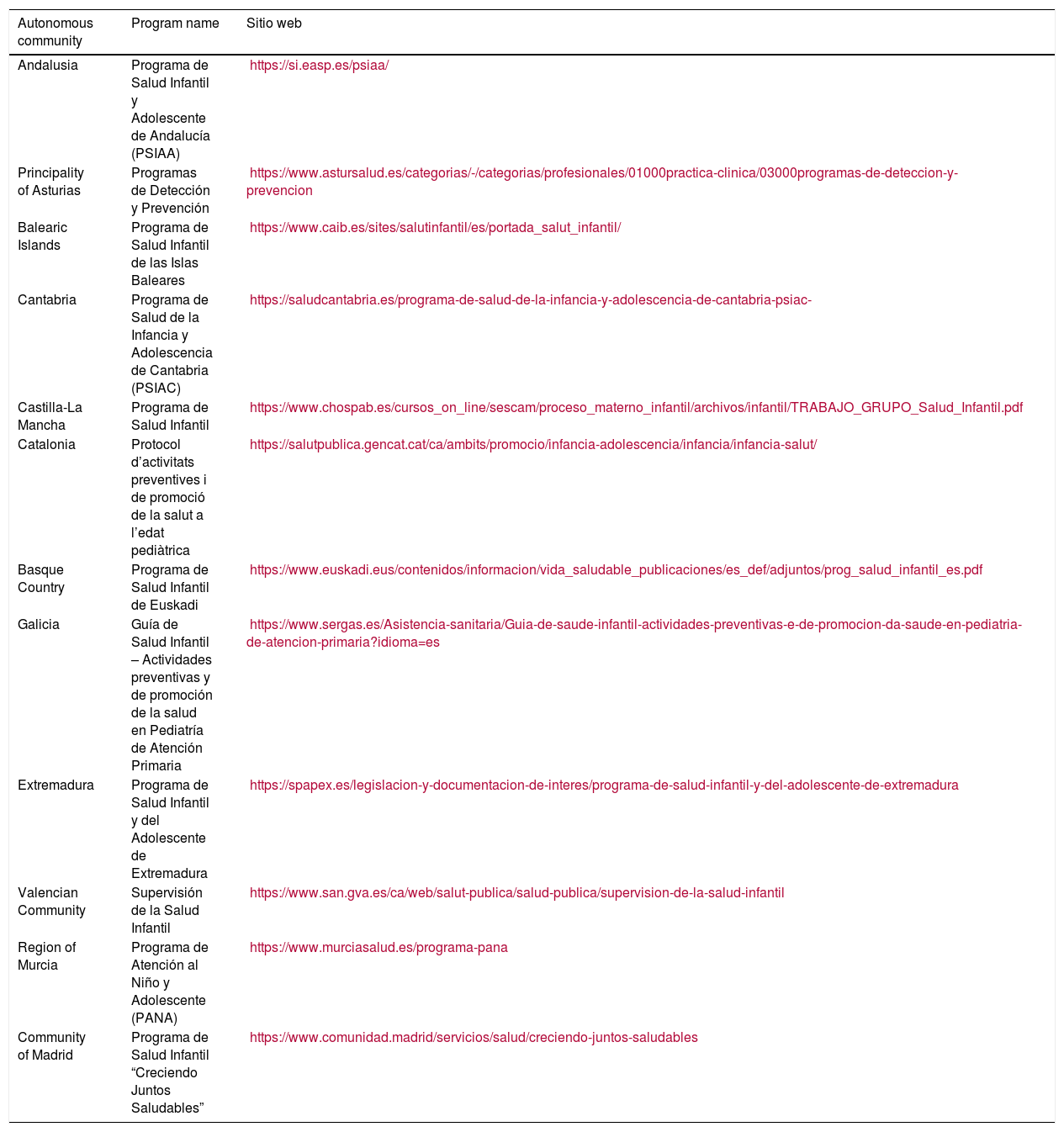
Since then, the various autonomous communities have been incorporating the Well-Child Program (WCP) into their respective service portfolios, adapting it to their regional health care systems (Table 1).
Well-child programs in the autonomous communities of Spain.
| Autonomous community | Program name | Sitio web |
|---|---|---|
| Andalusia | Programa de Salud Infantil y Adolescente de Andalucía (PSIAA) | https://si.easp.es/psiaa/ |
| Principality of Asturias | Programas de Detección y Prevención | https://www.astursalud.es/categorias/-/categorias/profesionales/01000practica-clinica/03000programas-de-deteccion-y-prevencion |
| Balearic Islands | Programa de Salud Infantil de las Islas Baleares | https://www.caib.es/sites/salutinfantil/es/portada_salut_infantil/ |
| Cantabria | Programa de Salud de la Infancia y Adolescencia de Cantabria (PSIAC) | https://saludcantabria.es/programa-de-salud-de-la-infancia-y-adolescencia-de-cantabria-psiac- |
| Castilla-La Mancha | Programa de Salud Infantil | https://www.chospab.es/cursos_on_line/sescam/proceso_materno_infantil/archivos/infantil/TRABAJO_GRUPO_Salud_Infantil.pdf |
| Catalonia | Protocol d’activitats preventives i de promoció de la salut a l’edat pediàtrica | https://salutpublica.gencat.cat/ca/ambits/promocio/infancia-adolescencia/infancia/infancia-salut/ |
| Basque Country | Programa de Salud Infantil de Euskadi | https://www.euskadi.eus/contenidos/informacion/vida_saludable_publicaciones/es_def/adjuntos/prog_salud_infantil_es.pdf |
| Galicia | Guía de Salud Infantil – Actividades preventivas y de promoción de la salud en Pediatría de Atención Primaria | https://www.sergas.es/Asistencia-sanitaria/Guia-de-saude-infantil-actividades-preventivas-e-de-promocion-da-saude-en-pediatria-de-atencion-primaria?idioma=es |
| Extremadura | Programa de Salud Infantil y del Adolescente de Extremadura | https://spapex.es/legislacion-y-documentacion-de-interes/programa-de-salud-infantil-y-del-adolescente-de-extremadura |
| Valencian Community | Supervisión de la Salud Infantil | https://www.san.gva.es/ca/web/salut-publica/salud-publica/supervision-de-la-salud-infantil |
| Region of Murcia | Programa de Atención al Niño y Adolescente (PANA) | https://www.murciasalud.es/programa-pana |
| Community of Madrid | Programa de Salud Infantil “Creciendo Juntos Saludables” | https://www.comunidad.madrid/servicios/salud/creciendo-juntos-saludables |
The primary goal of the WCP is to steer the health care system toward promoting child health, early detection of potential problems, and fostering the autonomy of children and families in the care and responsibility of their own health, driving a model of care centered on prevention rather than disease.
The program consists of a series of scheduled visits from birth through age 14, which include monitoring of physical and psychomotor development, health promotion guidance, vaccination, screening and early detection of diseases, preventive care, and family counseling.
What is the current evidence on the effectiveness of the well-child program? Does its implementation improve child health?Well-child checkups are a cornerstone of pediatric primary care. However, it is important to assess whether current evidence supports an impact on clinical outcomes and family satisfaction, and whether it justifies continuation of the program.
Routine health checkups in healthy children, compared with no checkups or usual care without structured checkups, may improve early detection of physical and psychosocial risks, support preventive care, and promote better health and well-being in adolescence, although the impact on reducing serious illness and morbidity and mortality is limited and depends on the quality and individualization of care.1–3 Structured checkups are associated with higher rates of screening, vaccination, and referral for psychosocial problems, especially in socially disadvantaged populations, but evidence of a direct reduction in morbidity or mortality is scarce; most benefits involve the recognition and management of risk factors.4,5 Gaps in the evidence regarding long-term clinical outcomes and direct reductions in mortality remain; therefore, high-quality studies focusing on clinical outcomes are needed to clarify the full impact of routine checkups.4,6
Specific screening programs that include particular activities during the scheduled visits have a varying impact depending on the intervention and the frequency of screening.4,7–10 Thus, interventions incorporated into well-child checkups, such as vaccination, oral health promotion, healthy habit promotion, vision and hearing screening, neonatal metabolic screening, and screening for anemia and developmental disorders, have been found to have individual benefits (such as vaccination rates and reductions in the incidence and morbidity of infectious diseases, injury prevention measures, and early detection and treatment of developmental disorders or hearing loss), although the effect of the scheduled visit itself cannot be isolated clearly.
There is social inequality in the use of health services and access to preventive care among disadvantaged social groups and those with lower socioeconomic status, with the most vulnerable children receiving the least preventive care and health guidance.11
Family satisfaction with pediatric care is generally high, especially when visits are longer and specific concerns are addressed; structured preventive visits can improve the perceived utility and the acquisition of information compared to routine care without structured checkups.12,13
New strategies, such as the use of telemedicine, can be a useful tool in preventive care, are acceptable to families, and could complement (though not yet replace) in-person visits.1,14
The main benefit of routine health checkups lies in the early detection and management of risk factors and in family satisfaction.
Is the well-child program cost-effective?The evidence on the cost-effectiveness of routine checkups compared to usual care without structured checkups is limited and inconsistent.
Previous economic analyses have mostly focused on specific interventions (mental health, physical activity, healthy eating, hearing and vision screening), with mixed results that are often insufficient to guide large-scale policy decisions.15
In terms of implications for pediatric health policy, it would be advisable to tailor and segment preventive care according to the needs and social context of the population, in order to maximize efficiency and equity.1 This involves adjusting the frequency, content, and health care professionals involved in the checkups, prioritizing resources for the groups at highest risk or with the greatest social vulnerability.
The main limitations of the current evidence include a shortage of high-quality studies with relevant clinical and economic outcomes, a lack of long-term follow-up, and limited generalizability outside Europe and Australia.4,15 Furthermore, most economic analyses do not take into account indirect costs or the impact on health equity.
Therefore, there is no robust evidence to show that routine pediatric checkups are cost-effective in terms of reducing morbidity, mortality, or long-term costs compared with usual care without structured checkups. Further studies are needed to evaluate clinical and economic outcomes to inform decision-making in pediatric health policy.
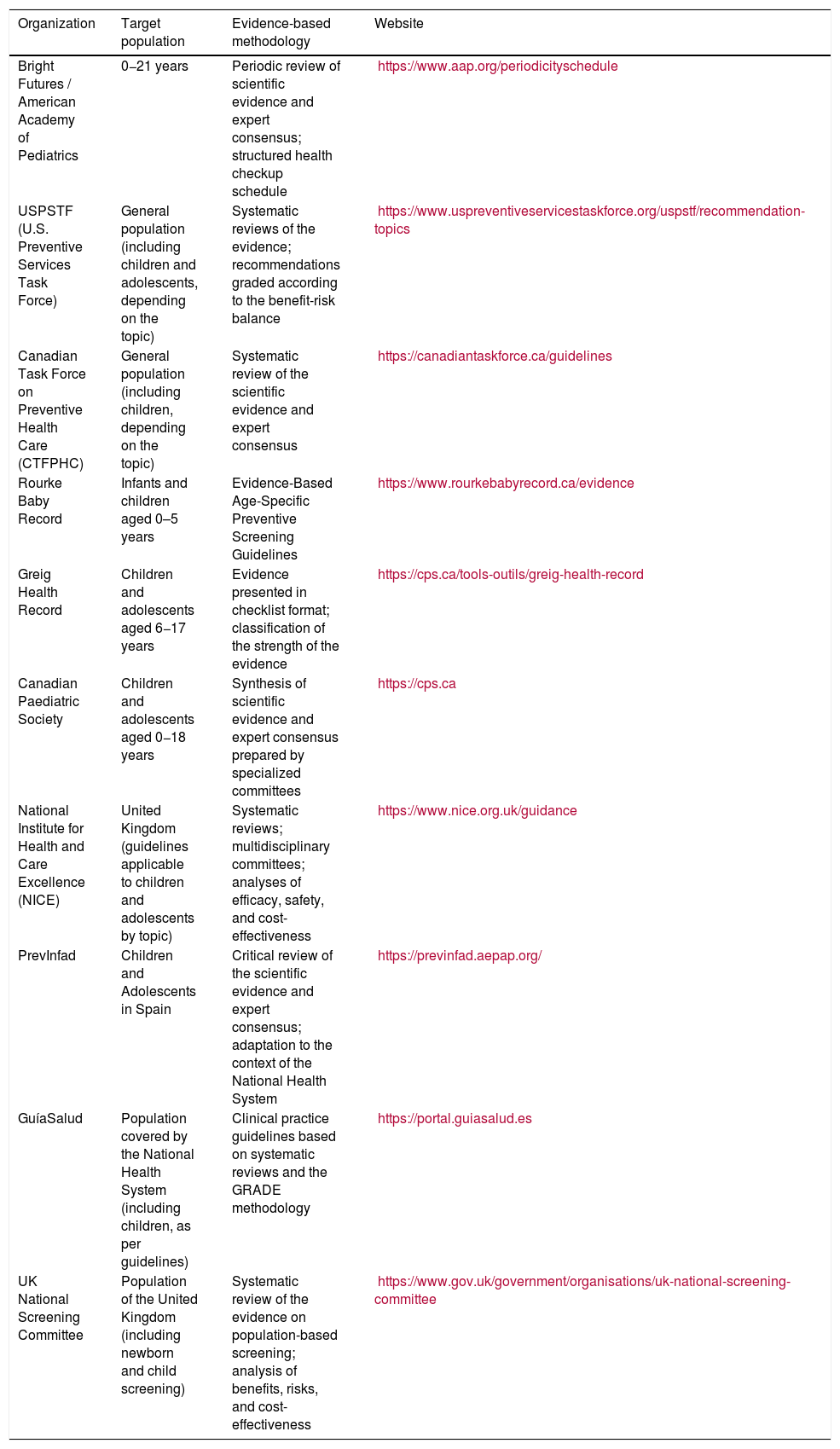
What do evidence-based clinical practice guidelines recommend?Child health monitoring guidelines provide recommendations for structured visits based on the current evidence integrated with clinical practice and expert consensus. Table 2 shows the main organizations that develop clinical practice guidelines on preventive activities.
Major organizations that issue recommendations on preventive measures for children.
| Organization | Target population | Evidence-based methodology | Website |
|---|---|---|---|
| Bright Futures / American Academy of Pediatrics | 0−21 years | Periodic review of scientific evidence and expert consensus; structured health checkup schedule | https://www.aap.org/periodicityschedule |
| USPSTF (U.S. Preventive Services Task Force) | General population (including children and adolescents, depending on the topic) | Systematic reviews of the evidence; recommendations graded according to the benefit-risk balance | https://www.uspreventiveservicestaskforce.org/uspstf/recommendation-topics |
| Canadian Task Force on Preventive Health Care (CTFPHC) | General population (including children, depending on the topic) | Systematic review of the scientific evidence and expert consensus | https://canadiantaskforce.ca/guidelines |
| Rourke Baby Record | Infants and children aged 0–5 years | Evidence-Based Age-Specific Preventive Screening Guidelines | https://www.rourkebabyrecord.ca/evidence |
| Greig Health Record | Children and adolescents aged 6−17 years | Evidence presented in checklist format; classification of the strength of the evidence | https://cps.ca/tools-outils/greig-health-record |
| Canadian Paediatric Society | Children and adolescents aged 0−18 years | Synthesis of scientific evidence and expert consensus prepared by specialized committees | https://cps.ca |
| National Institute for Health and Care Excellence (NICE) | United Kingdom (guidelines applicable to children and adolescents by topic) | Systematic reviews; multidisciplinary committees; analyses of efficacy, safety, and cost-effectiveness | https://www.nice.org.uk/guidance |
| PrevInfad | Children and Adolescents in Spain | Critical review of the scientific evidence and expert consensus; adaptation to the context of the National Health System | https://previnfad.aepap.org/ |
| GuíaSalud | Population covered by the National Health System (including children, as per guidelines) | Clinical practice guidelines based on systematic reviews and the GRADE methodology | https://portal.guiasalud.es |
| UK National Screening Committee | Population of the United Kingdom (including newborn and child screening) | Systematic review of the evidence on population-based screening; analysis of benefits, risks, and cost-effectiveness | https://www.gov.uk/government/organisations/uk-national-screening-committee |
The preventive checkups of the WCP are essential for delivery of high-impact interventions (vaccination, developmental screening, health promotion, and care for at-risk groups), but there is insufficient direct evidence on their causal relationship with overall child health outcomes. However, there is moderate evidence of improved family satisfaction and of the effectiveness of specific screening programs conducted during these visits.
The current consensus supports the value of regular checkups for health promotion and early detection,9,10 although there are still areas for which the evidence is limited and individualizing care based on the needs of the patient and family is recommended.1 Integrating various preventive strategies into pediatric primary care is essential for improving child health outcomes and reducing the incidence of preventable diseases.
More long-term longitudinal studies comparing structured visit schedules with on-demand care and cost-benefit analyses are needed to determine the optimal checkup schedule for healthy children and adolescents.
It is important to view the WCP not as a series of isolated screening visits, but as an ongoing process of recommended preventive activities, supported by evidence and tailored to different developmental stages, risk groups, and social contexts, forming a framework with a clear structure of included activities,16,17 coordinated between providers, communities and national health policy, and including coverage indicators, quality criteria, identification of barriers to its implementation and evaluation of outcomes4,16 to improve its effectiveness.
Childhood health checkups: organization and frequencyWho should conduct the well-child checkups?In Spain, well-child checkups are generally carried out at the primary care level. According to the available evidence, within the framework of structured programs, there are no significant differences in health outcomes, family satisfaction, or adherence to recommendations when these checkups are performed by pediatricians versus nurses with specialized training in child health.18,19
The available systematic reviews indicate that the participation of nurses in preventive pediatric care—particularly in health promotion, health education, and developmental monitoring—can be safely and effectively integrated into shared-care models without compromising the quality of care or clinical outcomes.18,19
In this context, the current recommendations of PrevInfad prioritize preventive measures with proven effectiveness and do not link the achievement of the WCP objectives to a specific professional category, but rather to the proper organization of care teams and coordination among professionals, which allows task allocation to be adapted to the competencies and resources available in each health care setting.20
How many health checkups are necessary during childhood and adolescence?There is no international consensus based on robust evidence that would allow for the establishment of an optimal and universal number of health checkups during childhood and adolescence. Schedules for checkups vary widely between countries and health care systems, reflecting the lack of conclusive studies demonstrating the superiority of any specific sequence.21
Studies that evaluated a reduction in the number of visits for healthy children showed that reducing the frequency of checkups is not associated with poorer child health, developmental outcomes, or family satisfaction.21 Based on this, PrevInfad recommends a rationalized model that includes 10 checkups between the ages of 0 and 14, as well as one prenatal visit and one in late adolescence, timing the checkups to coincide with the vaccination schedule and prioritizing preventive measures supported by the strongest scientific evidence.20
In contrast to this selective approach, some institutions call for more extensive schedules. The American Academy of Pediatrics, through the Bright Futures/Periodicity Schedule, recommends multiple health supervision visits during the early years and annual visits thereafter, emphasizing the need to tailor the frequency of visits according to the level of risk of the child.22 More recently, the World Health Organization has proposed a guideline of at least 17 scheduled well-care visits between the ages of 0 and 19 as a global framework that can be adapted according to the national or local context.23
Overall, the available evidence suggests that both the number of checkups and their allocation to different health care professionals should be based on prioritizing effective preventive interventions, intensifying follow-up for children with risk factors, and avoiding unnecessary checkups in the healthy population. This approach allows for the optimization of resources without compromising the quality of care, especially in settings with high workloads.20,22,23
Preventive activities within the well-child programIn Spain, the PrevInfad group is the leading authority on the development of preventive care recommendations in the field of primary care pediatrics. Following a systematic assessment of the quality of evidence and the benefit-risk balance, PrevInfad formulates its recommendations using the GRADE methodology or the USPSTF criteria, prioritizing interventions with a demonstrated net benefit and adequate clinical applicability.24
Vaccination and prophylaxisRoutine vaccination is the preventive measure with the greatest proven impact on reducing child morbidity and mortality. Clear recommendations and addressing any concerns and vaccine hesitancy during pediatric visits are associated with increased vaccination coverage and greater confidence of families in the health care system.25
Vitamin K prophylaxis at birth is an essential measure for preventing hemorrhagic disease of the newborn and should be provided universally.26 In addition, infants aged less than one year who are exclusively breastfed should receive vitamin D supplementation at a dose of 400 IU/day, starting in the first few days of life. For formula-fed infants, vitamin D supplementation is recommended when daily intake is less than one liter of formula.27
ScreeningsDuring the neonatal period, providers must confirm that newborn screening for genetic, endocrine, and metabolic disorders has been completed, as well as newborn hearing screening using otoacoustic emissions and/or automated auditory brainstem response, given their importance for neurosensory and language development.28
There is consensus on the recommendation for universal screening for visual impairments between the ages of 3 and 4, aimed at the early detection of amblyopia, strabismus, and refractive errors.29 PrevInfad also recommends including eye examinations and red reflex tests during the health checkups in the first 6 months of life.
Although the supporting evidence is less robust, it is recommended that blood pressure be measured, at least twice during the first 14 years of life: the first time between the ages of 3 and 6 years, and the second time from age 11 years, preferably with a targeted and opportunistic approach.30
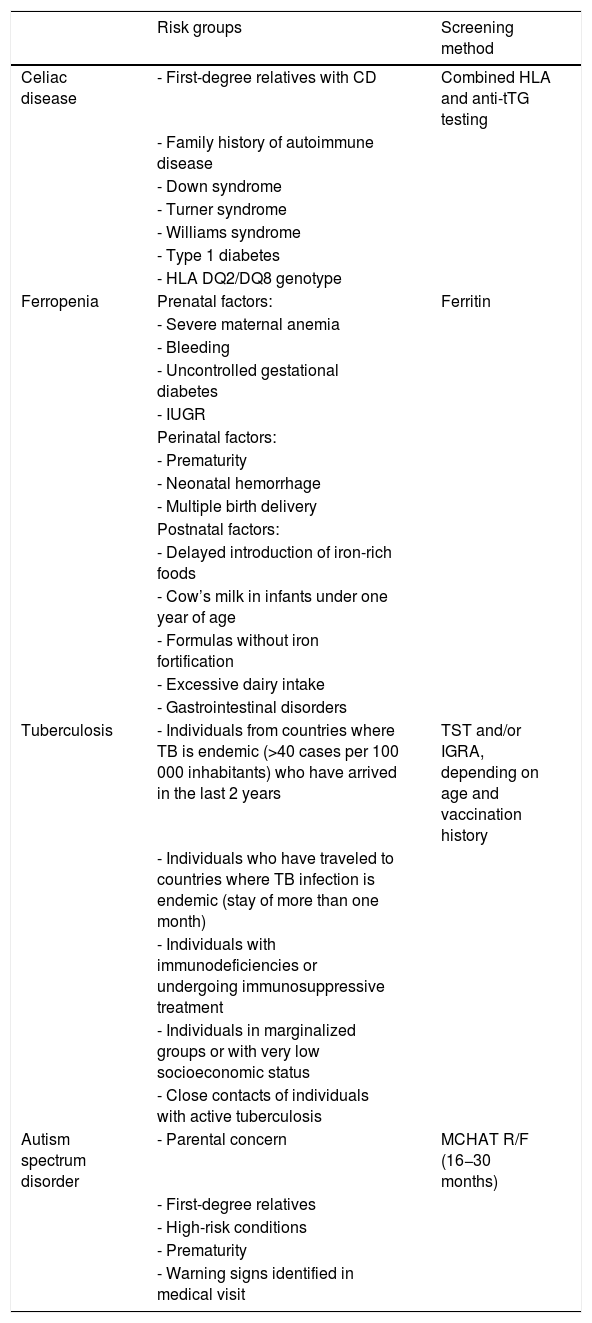
In the case of celiac disease, iron deficiency, tuberculosis, and autism spectrum disorder, screening should not be universal but rather targeted at at-risk populations. Table 3 provides a summary of the at-risk groups and recommended screening methods.
Screening in risk groups.
| Risk groups | Screening method | |
|---|---|---|
| Celiac disease | - First-degree relatives with CD | Combined HLA and anti-tTG testing |
| - Family history of autoimmune disease | ||
| - Down syndrome | ||
| - Turner syndrome | ||
| - Williams syndrome | ||
| - Type 1 diabetes | ||
| - HLA DQ2/DQ8 genotype | ||
| Ferropenia | Prenatal factors: | Ferritin |
| - Severe maternal anemia | ||
| - Bleeding | ||
| - Uncontrolled gestational diabetes | ||
| - IUGR | ||
| Perinatal factors: | ||
| - Prematurity | ||
| - Neonatal hemorrhage | ||
| - Multiple birth delivery | ||
| Postnatal factors: | ||
| - Delayed introduction of iron-rich foods | ||
| - Cow’s milk in infants under one year of age | ||
| - Formulas without iron fortification | ||
| - Excessive dairy intake | ||
| - Gastrointestinal disorders | ||
| Tuberculosis | - Individuals from countries where TB is endemic (>40 cases per 100 000 inhabitants) who have arrived in the last 2 years | TST and/or IGRA, depending on age and vaccination history |
| - Individuals who have traveled to countries where TB infection is endemic (stay of more than one month) | ||
| - Individuals with immunodeficiencies or undergoing immunosuppressive treatment | ||
| - Individuals in marginalized groups or with very low socioeconomic status | ||
| - Close contacts of individuals with active tuberculosis | ||
| Autism spectrum disorder | - Parental concern | MCHAT R/F (16−30 months) |
| - First-degree relatives | ||
| - High-risk conditions | ||
| - Prematurity | ||
| - Warning signs identified in medical visit |
Abbreviations: anti-tTG, anti-tissue transglutaminase antibodies; CD, celiac disease; IGRA, interferon-gamma release assay; IUGR, intrauterine growth restriction; TB, tuberculosis; TST, tuberculin skin test.
With regard to the timing of celiac disease screening in children at risk for the condition, there is no high-quality evidence to determine the specific ages at which screening should be performed. Screening is not recommended before age 12–18 months; it is preferable to begin at age 3 years or older, provided the child has been consuming gluten for at least one year. Ideally, a genetic risk assessment should be conducted, and the periodicity of serological testing should be determined based on the results. If the HLA type is low-risk, screening is considered complete.31
Anticipatory guidancePromoting exclusive breastfeeding through 6 months of age is a priority preventive measure, and continued breastfeeding is recommended thereafter, along with the introduction of iron-rich complementary foods. The implementation of breastfeeding support measures in primary care is associated with longer breastfeeding duration and better child health outcomes.32
From the neonatal period onward, guidance should be offered on avoiding secondhand smoke exposure, with opportunistic intervention targeting parental smoking. For adolescents who have not yet started smoking, counseling aimed at preventing smoking initiation is recommended.33
PrevInfad recommends promoting reading aloud to children from an early age by providing brief guidance during well-child visits, given the beneficial effects of this practice on children’s language, cognitive, and emotional development.25
Prevention of sudden infant death syndrome (SIDS) includes universally recommending that infants sleep on their backs and on firm sleeping surfaces, keeping soft objects out of the crib, and avoiding exposure to tobacco, alcohol, and sedatives. Promoting breastfeeding and the use of a pacifier during sleep, once breastfeeding is established, are associated with a reduced risk of SIDS.34
Providers are encouraged to offer guidance on promoting physical activity, healthy lifestyle habits, and reducing sedentary behavior, as well as ensuring adequate iron intake and limiting free sugars intake.25
Primary care providers should offer advice on the proper use of child restraint systems and the use of helmets when riding bicycles and mopeds, both during routine checkups and at other appropriate times, for instance, when treating injuries related to traffic accidents.35 It is also important to recommend the use of outlet covers, safety gates for stairways and rooms, safety locks for doors and drawers, and the safe storage of toxic and hazardous products.36
Avoiding the use of baby walkers reduces the number of unintentional child injuries in the home, and since their use offers no proven benefits for motor development, the evidence against their use remains strong.
Routine clinical examinationsScheduled checkups allow for the integration of assessments with preventive value, enabling the early detection of signs of disease through routine clinical examinations.
In the first few months of life, screening for developmental dysplasia of the hip should be performed using the Barlow and Ortolani tests during the neonatal period, and the Galeazzi test and assessment of abduction until the child begins to walk. Hip ultrasound is reserved for infants with risk factors or suggestive clinical findings.37
Genital examination of boys is essential for detecting cryptorchidism through bilateral testicular palpation. If the condition persists, referral to pediatric surgery at 6 months of age is recommended, with the goal of performing early orchidopexy, preferably before the first birthday.38
In the field of neurodevelopment and language, current evidence supports active, longitudinal clinical monitoring—based on observation and information provided by families—rather than the indiscriminate use of screening tests. Between 16 and 30 months of age, the Modified Checklist for Autism in Toddlers, Revised with Follow-Up (M-CHAT-R/F) can be used as a screening tool for autism spectrum disorder in children with clinical suspicion or risk factors.39
Starting at age 12, monitoring for stressful life events and depressive symptoms is recommended, as well as assessing the risk of suicidal behavior through open-ended questions and active listening, with the clinical interview serving as a key tool for fostering empathetic communication with adolescents.40
The PrevInfad group believes that the evidence does not support a favorable risk-benefit balance for universal screening for adolescent idiopathic scoliosis, given the risk of overdiagnosis and overtreatment; therefore, routine screening is not recommended.
FundingThis research project did not receive specific financial support from funding agencies in the public, private or not-for-profit sectors.
The authors have no conflicts of interest to declare.
We thank Dr Jose Maria Mengual Gil for his comments and critical review of the manuscript.