We have read with interest the response to our article on the “Trends in the selection of pediatrics residency positions by medical residents during the 2010–2025 period” sent by Dr Moreno Villares.1,2
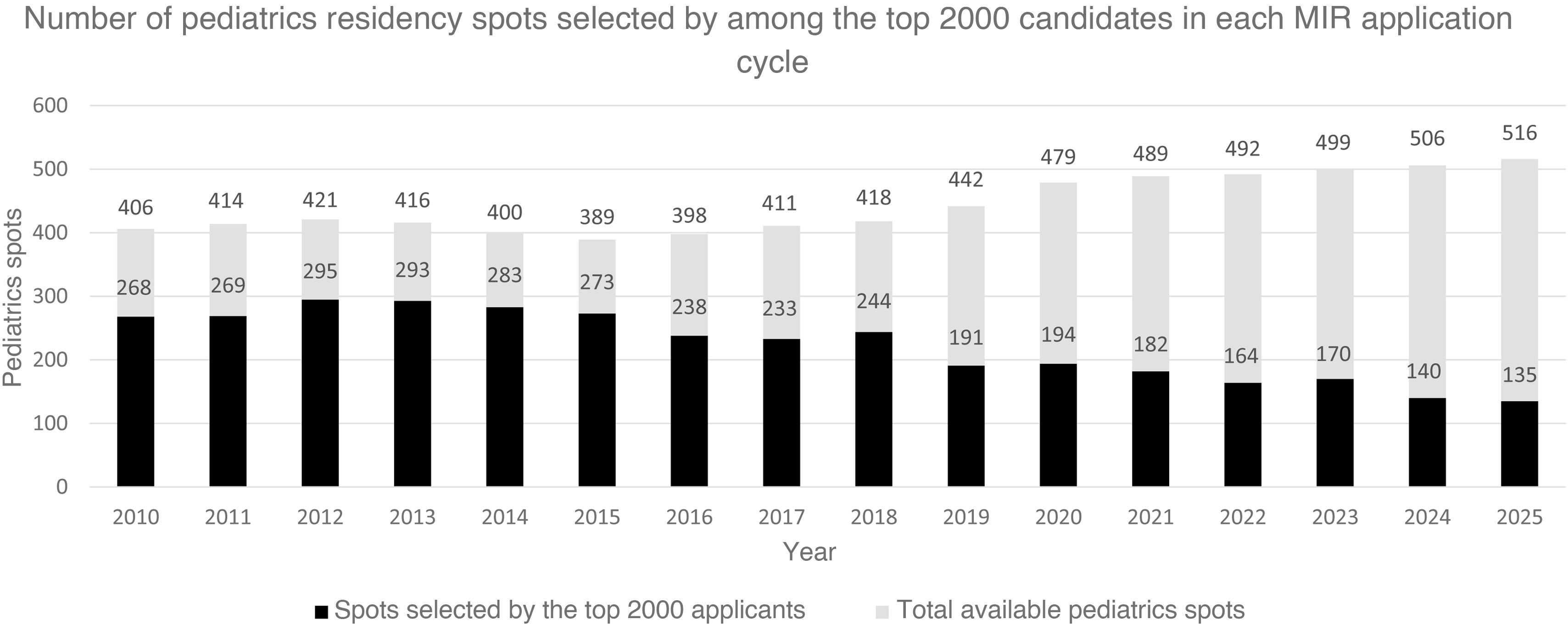
We agree with the author that this is an issue that we should reflect on as a scientific association, and that was the goal of our article. We also agree that this is not a problem unique to Spain or to our field, although we believe there are factors specific to our context that contribute to this situation. Any analysis of the data on the choice of pediatrics as a specialty among medical intern-resident (MIR) applicants is alarming. Fig. 1 shows how the choices of the top 2000 MIR applicants have evolved over time in proportion to the total number of available pediatric MIR spots.
The author believes that the problem goes beyond the current state of the primary care system, the burden of 24-h on-call shifts, or the recognition of medical specialties. He points to the uninspiring and demotivating teaching methods used in pediatrics courses at medical schools, along with the outdated and stagnant MIR training curriculum in pediatrics, as factors contributing to this troubling situation. While we agree on this assessment, plastic surgery courses in medical school are generally no more impressive than those in pediatrics. The dates that the curricula for residency training were last updated in the most sought-after specialties, like dermatology or cardiology (both updated in 2007), against which our specialty was still a strong contender in 2010, are not significantly different from the latest update in pediatrics (2006).
With regard to the division of pediatrics into two functional areas (primary care pediatrics and hospital-based pediatrics), the author suggests differentiating their training. While we agree that the pediatrics training program should be adapted to this reality, we do not know whether that would entail splitting it into two distinct MIR specialties. If that were to happen, we believe the risk of unfilled positions in primary care pediatrics in future recruitment cycles would be extremely high, as is currently the case with the family and community medicine specialty.
It is worth noting that, in recent years, our hospital has made an effort to improve the training program for our residents with the goal of making it more comprehensive and interdisciplinary, reducing the burden of on-call shifts as much as possible, and enhancing teaching through new tools such as simulation. This is likely also occurring in many other centers. However, the results are discouraging, as Fig. 1 shows.
We continue to believe that the working conditions offered by pediatrics training programs during residency and future career prospects as a specialist are key aspects to consider, given the importance that new generations of physicians place on them.
In any case, and despite the differences in our perspectives, we agree with the author that close collaboration between the administration, medical schools, and leading pediatric societies is necessary to establish a joint action plan with a defined timeline.
FundingThis research did not receive any external funding.
The authors have no conflicts of interest to declare.