The transition to extrauterine life involves profound respiratory and hemodynamic changes that enable the shift from transplacental to pulmonary gas exchange and the conversion of fetal circulation to neonatal circulation. In recent years, important modifications have been introduced in delivery room stabilization strategies, particularly regarding umbilical cord management and the initial fraction of inspired oxygen (FiO₂) in preterm infants. The aim of this review is to analyze the available evidence on delayed umbilical cord clamping, ventilation with an intact umbilical cord, and initial oxygen strategies during postnatal stabilization. We performed a narrative review of the recent scientific literature, including experimental studies, clinical trials, and meta-analyses evaluating the impact of these interventions in term and preterm newborns during early neonatal transition. Delayed cord clamping allows additional placental transfusion, increasing the circulating blood volume, improving ventricular preload, and promoting a more stable cardiovascular transition. These effects are associated with earlier stabilization of heart rate and oxygen saturation, as well as reduced supplemental oxygen requirements. Ventilation with an intact umbilical cord allows initiation of respiration while maintaining placental hemodynamic support, facilitating a more gradual cardiorespiratory transition. In addition, recent evidence suggests that initial FiO₂ levels above 0.30 may facilitate achieving the target oxygen saturation in the first minutes of life, particularly in extremely preterm infants.
La transición fetal-neonatal implica profundos cambios respiratorios y hemodinámicos que permiten el paso del intercambio gaseoso transplacentario al pulmonar y la conversión de la circulación fetal en circulación neonatal. En los últimos años se han introducido modificaciones relevantes en las estrategias de estabilización en sala de partos, particularmente en relación con el manejo del cordón umbilical y la fracción inspiratoria inicial de oxígeno (FiO₂) en recién nacidos prematuros. El objetivo de esta revisión es analizar la evidencia disponible sobre el pinzamiento diferido del cordón umbilical, la ventilación con cordón intacto y las estrategias de oxigenoterapia inicial durante la estabilización postnatal. Se realizó una revisión narrativa de la literatura científica reciente, incluyendo estudios experimentales, ensayos clínicos y metaanálisis que evalúan el impacto de estas intervenciones en recién nacidos a término y pretérmino durante la transición neonatal. El pinzamiento diferido del cordón umbilical permite una transfusión placentaria adicional que incrementa la volemia circulante, mejora la precarga ventricular y favorece una transición cardiovascular más estable. Estos efectos se asocian con una estabilización más precoz de la frecuencia cardíaca y de la saturación de oxígeno, así como con menores requerimientos de oxígeno suplementario. La ventilación con el cordón intacto permite iniciar la respiración manteniendo el soporte hemodinámico placentario, facilitando una transición cardiorrespiratoria más gradual. Asimismo, la evidencia reciente sugiere que FiO₂ iniciales superiores a 030 pueden facilitar el alcance de saturaciones objetivo en los primeros minutos de vida, especialmente en prematuros extremos.
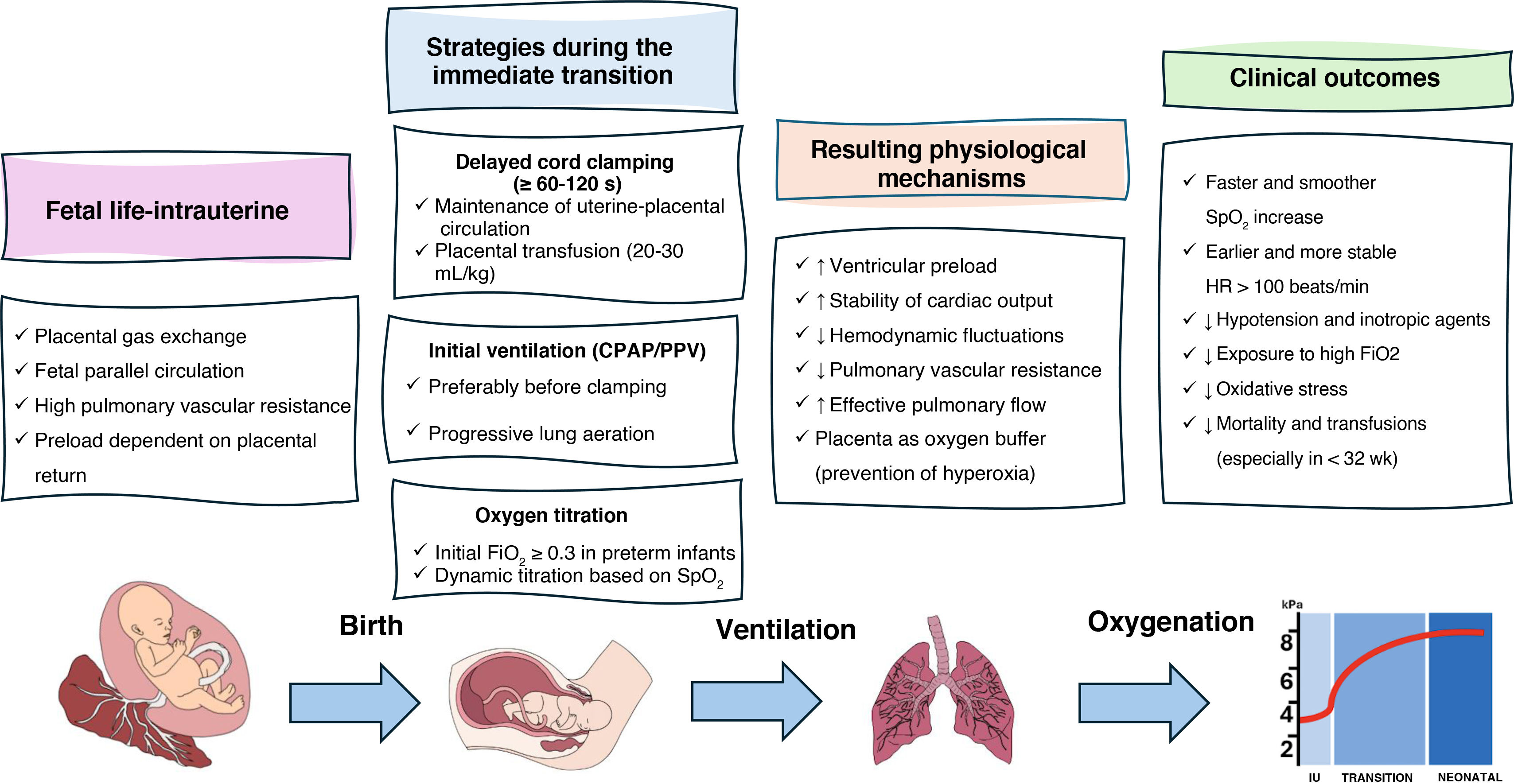
The transition from intrauterine to extrauterine life, as can be seen in Fig. 1, entails the shift from placental to pulmonary gas exchange. The first inspirations expand the alveoli, promoting fluid clearance and surfactant secretion in the lungs, allowing alveolar recruitment and generating a functional residual capacity that optimizes ventilation. In a few minutes, the heart rate (HR) and partial pressure of oxygen stabilize, reflecting the rapid cardiopulmonary adaptation of the newborn infant.1
From fetal to postnatal circulationThe start of breathing triggers the transition from fetal to postnatal circulation.2,3 During intrauterine life, fetal shunts (ductus venosus, foramen ovale and ductus arteriosus) divert the oxygenated blood that arrives through the placenta away from the pulmonary vascular bed. After birth, placental circulation ceases, causing an increase in systemic vascular resistance, while lung expansion reduces pulmonary vascular resistance, increases pulmonary venous return, and promotes functional closure of the fetal shunts. During this period, placental perfusion contributes to the maintenance of cardiac preload, effective circulating volume, and perfusion of vital organs, and is key for an efficient cardiovascular transition.4
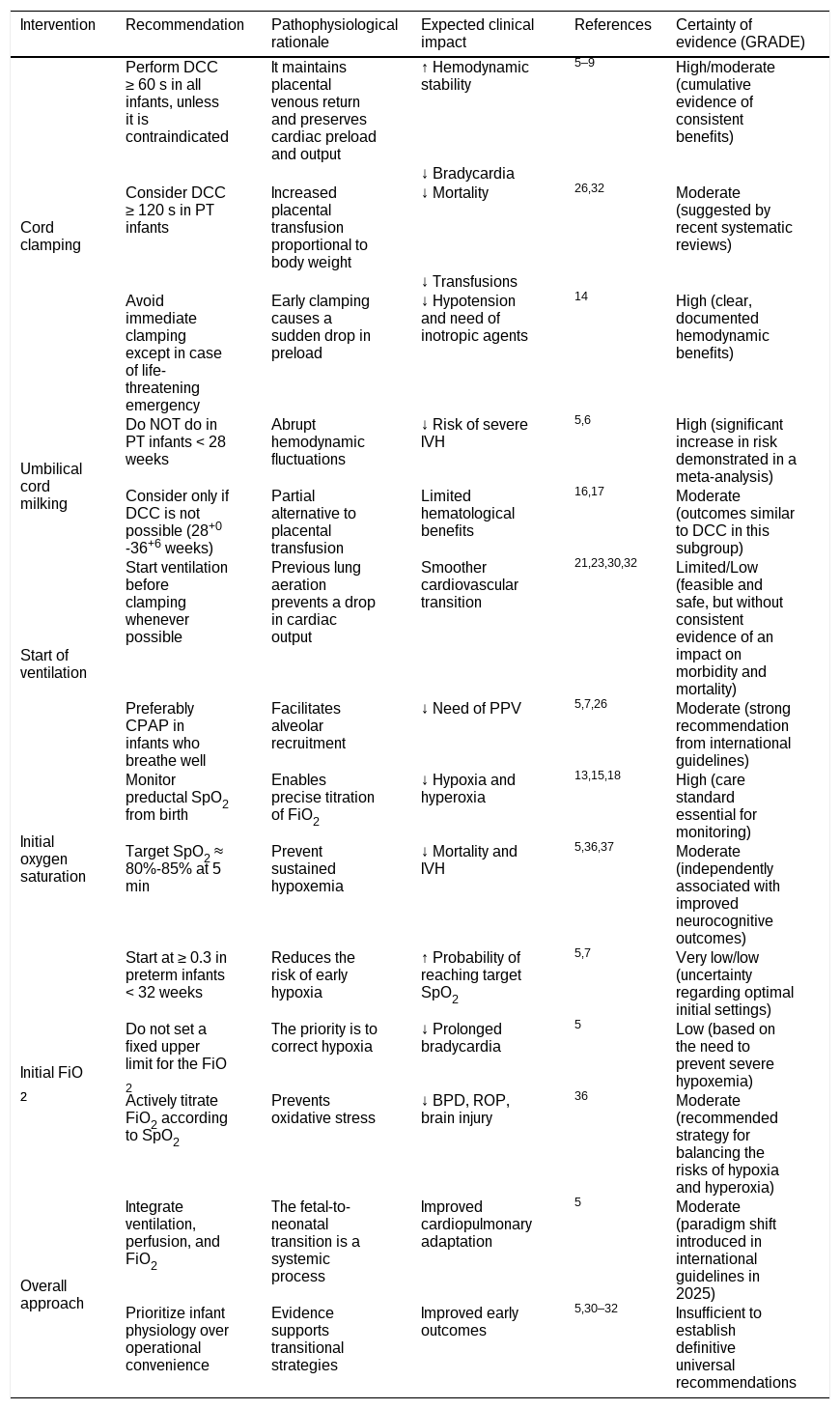
Objectives of the reviewIn the past decade, significant changes have been introduced to the guidelines for neonatal stabilization, including delayed cord clamping, initiation of ventilation with an intact cord, and the revision of the initial fraction of inspired oxygen (FiO2) recommended for preterm infants (Table 1). In this review, we analyze the current evidence on these strategies and their clinical application.
Good clinical practice recommendations for neonatal stabilization beyond delayed cord clamping.
| Intervention | Recommendation | Pathophysiological rationale | Expected clinical impact | References | Certainty of evidence (GRADE) |
|---|---|---|---|---|---|
| Cord clamping | Perform DCC ≥ 60 s in all infants, unless it is contraindicated | It maintains placental venous return and preserves cardiac preload and output | ↑ Hemodynamic stability | 5–9 | High/moderate (cumulative evidence of consistent benefits) |
| ↓ Bradycardia | |||||
| Consider DCC ≥ 120 s in PT infants | Increased placental transfusion proportional to body weight | ↓ Mortality | 26,32 | Moderate (suggested by recent systematic reviews) | |
| ↓ Transfusions | |||||
| Avoid immediate clamping except in case of life-threatening emergency | Early clamping causes a sudden drop in preload | ↓ Hypotension and need of inotropic agents | 14 | High (clear, documented hemodynamic benefits) | |
| Umbilical cord milking | Do NOT do in PT infants < 28 weeks | Abrupt hemodynamic fluctuations | ↓ Risk of severe IVH | 5,6 | High (significant increase in risk demonstrated in a meta-analysis) |
| Consider only if DCC is not possible (28+0-36+6 weeks) | Partial alternative to placental transfusion | Limited hematological benefits | 16,17 | Moderate (outcomes similar to DCC in this subgroup) | |
| Start of ventilation | Start ventilation before clamping whenever possible | Previous lung aeration prevents a drop in cardiac output | Smoother cardiovascular transition | 21,23,30,32 | Limited/Low (feasible and safe, but without consistent evidence of an impact on morbidity and mortality) |
| Preferably CPAP in infants who breathe well | Facilitates alveolar recruitment | ↓ Need of PPV | 5,7,26 | Moderate (strong recommendation from international guidelines) | |
| Initial oxygen saturation | Monitor preductal SpO2 from birth | Enables precise titration of FiO2 | ↓ Hypoxia and hyperoxia | 13,15,18 | High (care standard essential for monitoring) |
| Target SpO2 ≈ 80%-85% at 5 min | Prevent sustained hypoxemia | ↓ Mortality and IVH | 5,36,37 | Moderate (independently associated with improved neurocognitive outcomes) | |
| Initial FiO2 | Start at ≥ 0.3 in preterm infants < 32 weeks | Reduces the risk of early hypoxia | ↑ Probability of reaching target SpO2 | 5,7 | Very low/low (uncertainty regarding optimal initial settings) |
| Do not set a fixed upper limit for the FiO2 | The priority is to correct hypoxia | ↓ Prolonged bradycardia | 5 | Low (based on the need to prevent severe hypoxemia) | |
| Actively titrate FiO2 according to SpO2 | Prevents oxidative stress | ↓ BPD, ROP, brain injury | 36 | Moderate (recommended strategy for balancing the risks of hypoxia and hyperoxia) | |
| Overall approach | Integrate ventilation, perfusion, and FiO2 | The fetal-to-neonatal transition is a systemic process | Improved cardiopulmonary adaptation | 5 | Moderate (paradigm shift introduced in international guidelines in 2025) |
| Prioritize infant physiology over operational convenience | Evidence supports transitional strategies | Improved early outcomes | 5,30–32 | Insufficient to establish definitive universal recommendations |
Abbreviations: BPD, bronchopulmonary dysplasia; DCC, delayed cord clamping; IVH, intraventricular hemorrhage; PPV, positive pressure ventilation; PT, preterm; ROP, retinopathy of prematurity; UCM, umbilical cord milking.
The approach to umbilical cord management in neonatal stabilization has evolved significantly, with recommendations shifting from immediate cord clamping (ICC) to strategies that promote placental transfusion, such as delayed cord clamping (DCC) and, in specific situations, umbilical cord milking.5–8 Delayed cord clamping, customarily defined as deferral of clamping for at least 30−60 s after birth, allows transfer of an additional 20–30 mL of placental blood to the infant, increasing the total blood volume and venous return to the right ventricle.
Increase in blood volumeThe continuation of placental blood flow in DCC guarantees a sustained venous return to the right atrium, preserving preload and preventing the abrupt drop in cardiac output caused by immediate cord clamping.5–7 This results in an increase in total blood volume, improves early hemodynamic stability and maintains a more stable systemic arterial pressure during the transition.8 In addition, the increase in hemoglobin mass and iron stores translates to an increased oxygen transport capacity, which is particularly relevant in preterm newborns with a low oxygen reserve and at high risk of oxidative stress.8,9
Increase in right ventricular preloadThe additional blood volume mitigates the drop in cardiac output associated with the start of breathing and maintains a more stable pulmonary blood flow. As a result, cardiopulmonary adaptation is better in infants managed with DCC, with evidence of decreased oxygen requirements and a smoother increase in oxygen saturation in the first 10 min of life.9,10 In addition, DCC mitigates the abrupt drop in cardiac preload that results from immediate cord clamping, facilitating the stabilization of the HR and preventing bradycardia episodes secondary to transient hypoxia. In addition, the increase in blood flow promotes a more efficient increase in oxygen saturation (SpO2) with a corresponding decrease in the required fraction of inspired oxygen (FiO2) in supplemental oxygen.9,11 The greater preload also promotes a more favorable chronotropic response: more stable heart rates, faster increase to 100 beats/min, and a decreased incidence of bradycardia associated with transient hypoxia, a complication that has been extensively documented in infants subjected to immediate cord clamping.10
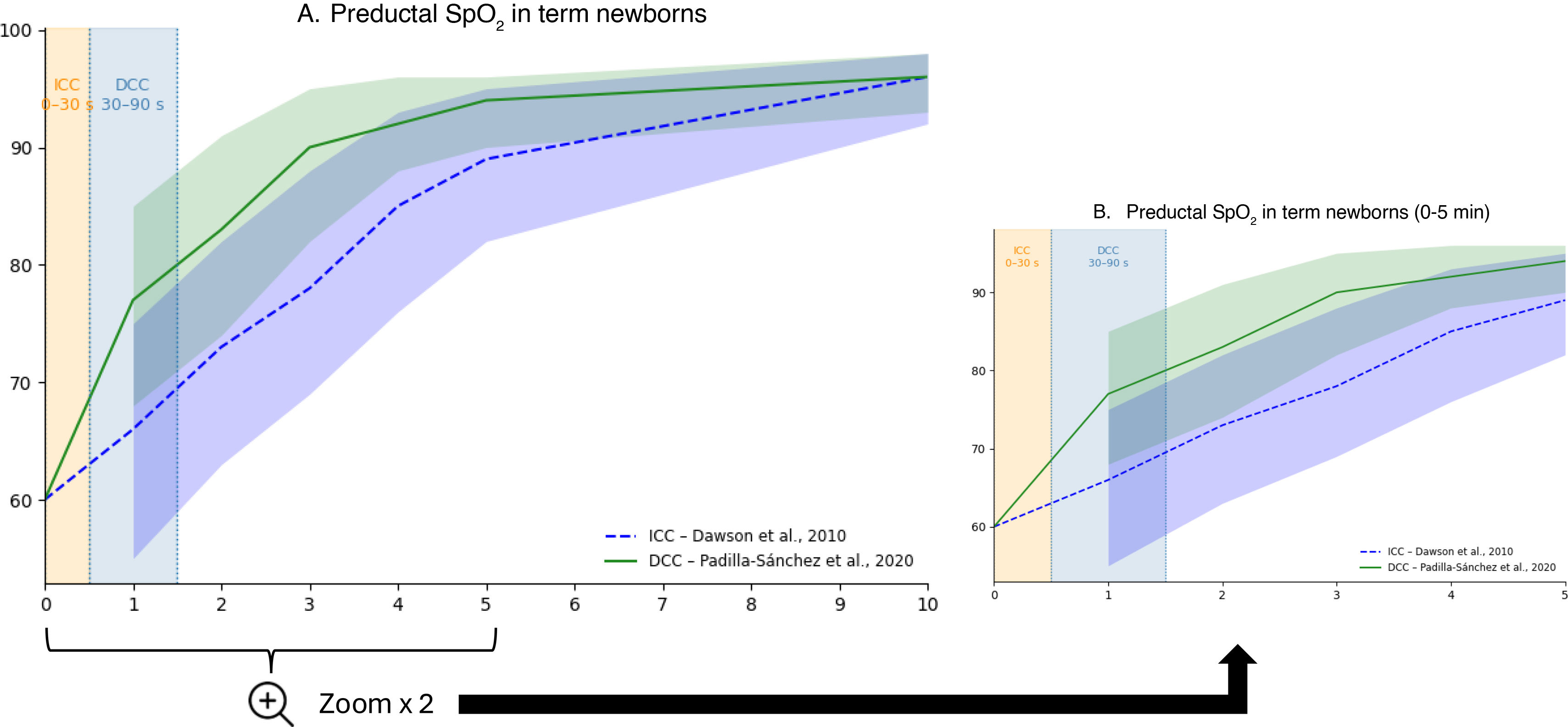
Earlier stabilization of oxygenationAs a result, DCC results in changes to the HR and SpO2 curves in the first minutes of life. The classic reference ranges published by Dawson et al.,12 derived from measurements obtained from newborn infants at a time when early cord clamping was routine, show a progressive increase in SpO2 from between 60% and 70% at 1 min to 90%–95% at 10 min, accompanied by a rapid increase in HR to more than 100 beats/min. However, more recent studies in which DCC was used found higher and more stable values for both parameters, especially in the early minutes of life, which reflects a smoother cardiovascular transition, approximating what would be expected in undisturbed neonatal physiology.
Umbilical cord milking: indicationsUmbilical cord milking (UCM) is another approach that has been subject to extensive study, and consists in grasping the cord and gently squeezing it to push the blood toward the infant, usually with two to four quick movements, prior to clamping. The goal is to increase the volume of blood transferred to the infant in a short amount of time (<15−20 s). This is only recommended as an alternative to DCC in preterm infants born between 28+0 and 36+6 weeks in whom DCC is not feasible (for instance, due to the need of immediate resuscitation or maternal hemodynamic instability).13,14
Although it improves hemoglobin mass, UCM is associated with a significant increase in the risk of severe intraventricular hemorrhage in infants born before 28 weeks.5,6 Although a clinical trial conducted by Rao et al.13 in preterm infants born between 28 and 32 weeks found that mortality and the incidence of severe intraventricular hemorrhage were similar with UCM and DCC, these findings need to be confirmed in larger samples and different populations.14 Nevertheless, when it comes to extremely preterm infants, there is still uncertainty in relation to the risk of brain injury and adverse long-term neurodevelopmental outcomes. Thus, the current evidence does not support recommending UCM as standard practice, and further research on the subject is required.6,8
Impact of DCC in real-world clinical practiceComparison of clinical outcomes of DCC vs ICCIn term newborns, DCC has been found to provide hemodynamic benefits, including increased hemoglobin levels, greater cardiovascular stability, improved organ perfusion, and faster stabilization of SpO2 at levels close to those in adults.11 In addition, recent meta-analyses confirm a significant decrease in the incidence of anemia in infancy and an improvement in iron stores in the first several months of life.8,15 In late preterm infants, although oxygen saturation values are lower in the first minutes post birth and the HR and SpO2 curves increased at a slower pace compared to term infants, even with DCC, this approach is still associated with a smoother increase and a reduced need of respiratory support.16
While DCC offers proven benefits, some studies have found a slight increase in asymptomatic polycythemia and in the need of phototherapy, although they are usually not clinically relevant and do not alter the overall positive impact of this strategy.7,17 In addition, the optimal timing of clamping is still unclear, for, while some studies have found additional benefits with longer delays in some groups of preterm infants, the current evidence is insufficient to issue a universal recommendation.17
Oxygen saturation and heart rate reference curves for delayed cord clampingPadilla-Sánchez et al.11 carried a study in 282 term newborns managed with DCC who did not require stabilization maneuvers and in whom the clamping was performed at a mean of 111 s post birth. They observed earlier stabilization of SpO2 and HR compared to data from previous cohorts managed with ICC,12 corroborating the beneficial effects of DCC on postnatal cardiopulmonary adaptation (Fig. 2).
Changes in preductal SpO2 in term newborns managed with ICC vs DCC. Panel A (10 min): Comparison of SpO2 curves with ICC (Dawson et al.12) and DCC (Padilla-Sánchez et al.11) with the corresponding CIs. Panel B (5 min): Same as panel A, but limited to the first 5 min, showing more pronounced differences in the first minutes after birth.
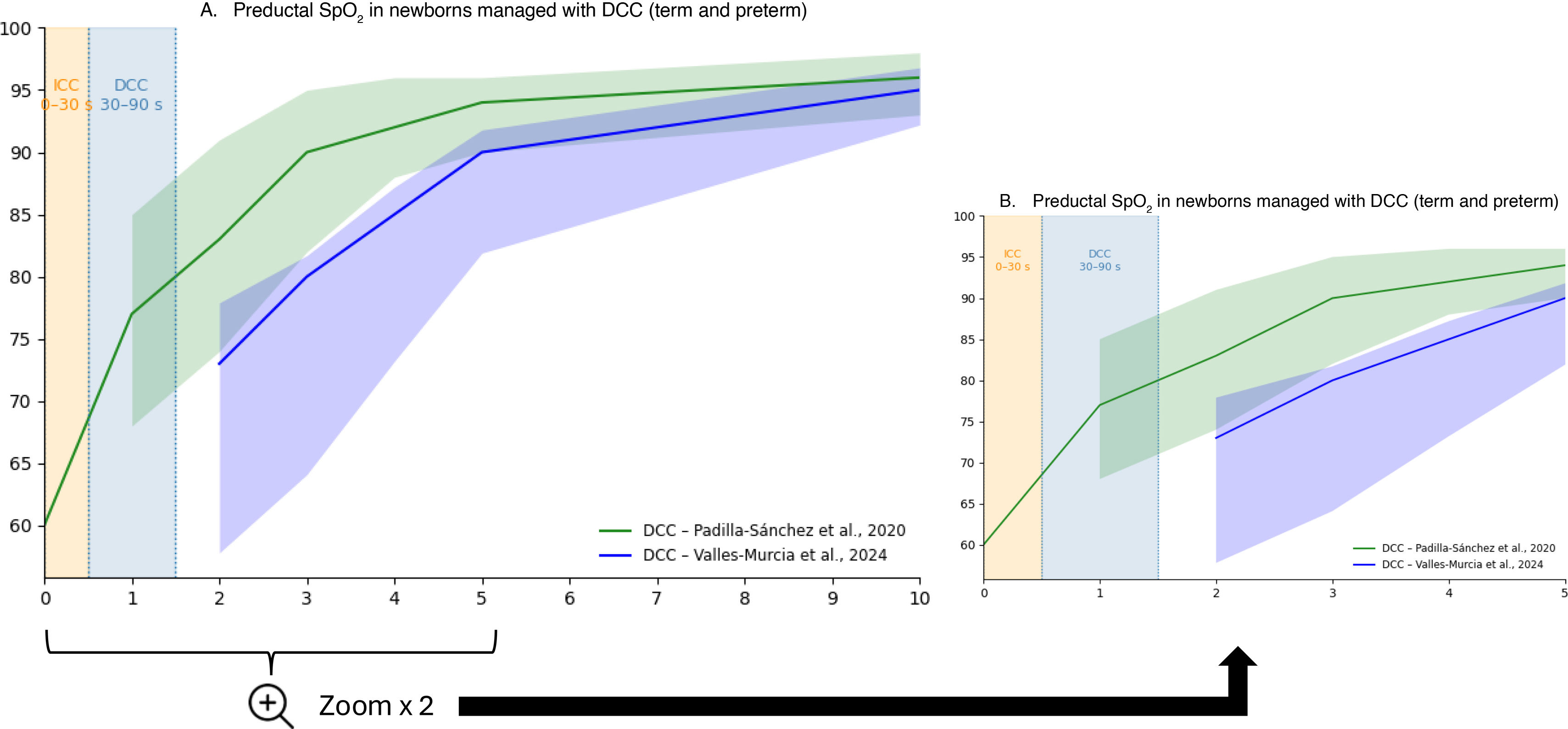
In a later study, Valles-Murcia et al.16 evaluated the fetal-to-neonatal transition in moderately and late preterm infants (32–36 weeks of gestational age) managed with DCC. Although these infants had initial SpO2 values below those observed in term newborns, they exhibited a smoother increase and earlier stabilization of oxygen saturation, maintaining HRs above 100 beats/min from the first few minutes of life. Compared to preterm infants who underwent ICC, the increase in SpO2 was smoother, with a reduced variability in HR.
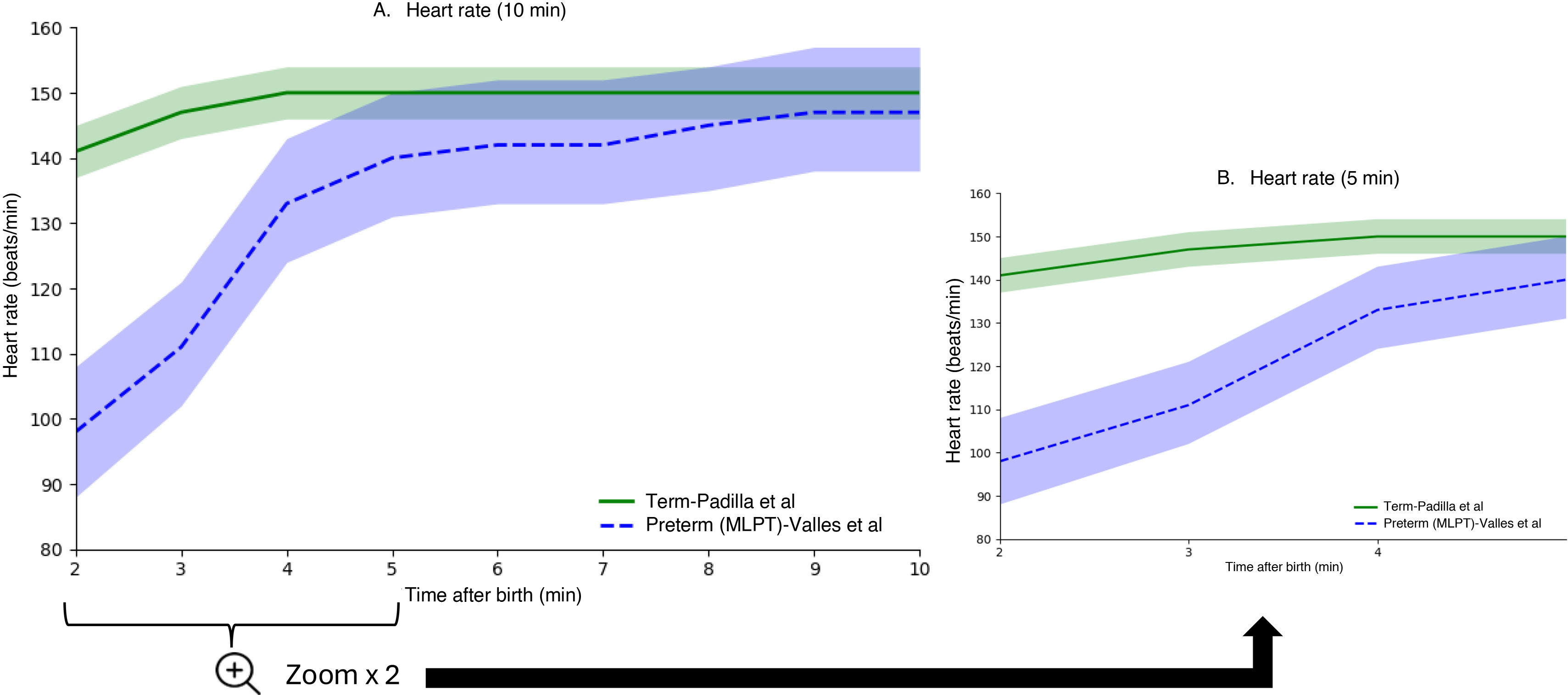
Figs. 3 and 4 compare the SpO2 and HR curves in the first 10 min of life in term and preterm newborns managed with DCC.
Comparison of preductal SpO2 curves in term versus preterm infants managed with DCC. Panel A (10 min): DCC curves in term infants (Padilla-Sánchez et al.11) and preterm infants (Valles-Murcia et al.16), with the corresponding CIs. Panel B (5 min): Comparison of the first 5 min, showing the difference in the early changes in SpO2 between the two groups.
Comparison of HR in term vs preterm newborns managed with DCC. Panel A (10 min): DCC curves for term (Padilla-Sánchez et al.11) and preterm (Valles-Murcia et al.16) infants, with the corresponding CIs. Panel B (5 min): Comparison of the first 5 min, showing the difference in the early changes in HR between the two groups.
Physiological-based cord clamping (PBCC) brought on a paradigm shift in relation to DCC, as in this approach, the timing of clamping is not fixed, but depends on the physiology of the infant. The cord remains intact as spontaneous breathing or assisted ventilation starts, and it is clamped once the cardiopulmonary transition is complete, which is commonly defined as a HR above 100 beats/min, an SpO2 greater than 85% and a supplemental oxygen requirement (FiO2) of less than 0.40.18
Experimental studies, chiefly conducted in preterm lamb models, show that delaying cord clamping until ventilation onset promotes a decrease in pulmonary vascular resistance and a progressive increase in pulmonary blood flow. Thus, the pulmonary venous return compensates for the loss of placental venous return, preserving ventricular preload and preventing the hemodynamic instability that may result from early cord clamping.18 In addition, while pulmonary gas exchange is established, the placenta continues to contribute to oxygenation and can act as a buffer against exposures to high levels of oxygen, decreasing the associated risk of oxidative stress.19
Clinical dataThe available clinical trials show that PBCC is a feasible and safe strategy, especially in preterm infants requiring immediate respiratory support. Its use is associated with a more stable cardiovascular transition, improved oxygenation and maintenance of ventricular preload in the first minutes after birth.20
However, its implementation requires significant organizational changes, including access to equipment allowing delivery of respiratory support at the bedside, maintenance of normothermia, coordination between obstetric and neonatal providers, and specific training of personnel. In addition, logistical factors such as space limitations, the length of the umbilical cord, or challenges in maintaining a sterile field may limit its routine use. The VentFirst trial also found an increased incidence of hypothermia during stabilization with an intact cord, highlighting the importance of thermal protection measures.21
The potential benefits of PBCC are particularly relevant in preterm infants born before 32 weeks, whose respiratory and cardiovascular immaturity increases the risk of hypoxemia, apnea, and hemodynamic instability. In these patients, maintaining placental blood flow while ventilation is established can facilitate a smoother and more stable transition.22–24
Ventilation before cord clamping: relevant clinical trialsThe ABC3 multicenter trial compared physiological-based versus conventional time-based delayed cord clamping in very preterm infants. Although the trial demonstrated that PBCC is a feasible and safe strategy, it did not find significant differences in the primary outcome of intact survival without major cerebral injury and/or necrotizing enterocolitis, nor in the incidence of intraventricular hemorrhage. On the other hand, it found that PBCC was associated with fewer red blood cell transfusions and a lower incidence of late-onset sepsis, suggesting potential benefits in hematological adaptation and systemic stability. A post hoc analysis also found improved outcomes in centers with more experience in PBCC, underscoring the importance of specific training for its implementation.25,26
The VentFirst trial compared assisted ventilation during 120 s of DCC to conventional DCC in extremely preterm infants. Although, as was the case in the ABC3 trial, the intervention did not achieve a significant reduction in mortality or in the incidence of intraventricular hemorrhage, it was associated with a reduced frequency of intubation in the delivery room, particularly in infants who were not breathing well 30 s after birth and infants in the higher gestational age stratum (26–28 versus 23–25 weeks).21,27
Overall, the evidence from clinical trials indicates that ventilation with an intact umbilical cord improves various physiological parameters during the transition to extrauterine life and may reduce the need for some initial respiratory support measures. However, to date, there is no consistent evidence of benefits in relation to clinical outcomes, so larger multicenter trials are still needed to define its role in clinical practice.
Increase in the initial fraction of inspired oxygen (FiO2) during postnatal stabilizationRestriction of the initial FiO2Oxygen therapy during neonatal stabilization, especially in extremely preterm infants, requires careful titration to balance the competing risks of hypoxia and hyperoxia. Hypoxemia in the first minutes of life is associated with prolonged bradycardia, hemodynamic instability, severe intraventricular hemorrhage, and increased mortality, whereas hyperoxia promotes oxidative stress and increases the risk of lung, brain, and retinal injury.28,29 Several systematic reviews have compared low (≤0.5) versus high (>0.5) initial FiO2 strategies in preterm infants, and found no significant differences in mortality or major neonatal complications. Still, the overall quality of the available evidence is low due to the heterogeneity of the studies, so the optimal FiO2 has yet to be established.30
The post hoc analysis of the TORPIDO trial has led to a shift in clinical practice, as it found an increase in mortality and poorer neurodevelopmental outcomes in extremely preterm infants (born before 28 weeks of gestation) initially stabilized with room air in whom the SpO2 did not increase to at least 80% at 5 min post birth.31,32 Since then, numerous studies have confirmed that early achievement of oxygen saturation targets is a better predictor of clinical outcomes than the initial FiO2.
For decades, high oxygen concentrations were used in neonatal resuscitation to rapidly reverse hypoxia. Subsequent evidence of injury secondary to oxidative stress led to the recommendation to use an initial FiO2 of 0.21–0.30 in the stabilization of preterm infants.33,34 However, many of these studies were performed in newborns subjected to ICC, a circumstance that limits the extrapolation of these findings to current physiological-based transition strategies.
Later studies showed that a large proportion of very premature infants did not reach the target saturations when stabilization was initiated with a FiO2 of 0.30. The delay in achieving the target saturation is independently associated with a higher mortality, an increased incidence of intraventricular hemorrhage, and poorer neurodevelopmental outcomes.35,36 These findings prompted performance of a meta-analysis of data from individual studies that suggested a potential decrease in mortality with intermediate to high initial FiO2 settings, without a significant increase in complications associated with hyperoxia, although the certainty of the evidence continues to be low.35
In consequence, the latest recommendations of the International Liaison Committee on Resuscitation (ILCOR) propose starting respiratory stabilization in preterm infants born before 32 weeks with a FiO2 greater than 0.30 with subsequent titration based on continuous SpO2 monitoring. Extremely preterm infants may require even higher initial concentrations to achieve the saturation targets in the first minutes after birth, although the current evidence is insufficient to establish a universal recommendation.5,29,37
Thus, the current evidence supports an individualized approach guided by continuous monitoring of SpO2 with dynamic titration of the FiO2 with the aim of avoiding both hypoxia and hyperoxia during the neonatal transition.31,35
Recommendations from 2025 international guidelinesThe guidelines published by the ILCOR, American Heart Association (AHA), American Academy of Pediatrics (AAP), European Resuscitation Council (ERC) and Neonatal Resuscitation Group of the Sociedad Española de Neonatología (SENeo, Spanish Society of Neonatology) prioritize the use of neonatal stabilization approaches based on the physiology of the transition to extrauterine life.
The guidelines recommend DCC whenever possible, consider physiological-based cord clamping a promising strategy for preterm infants who require respiratory support, and recommend initiation of stabilization with a FiO2 greater than 0.30 in infants born before 32 weeks, with subsequent titration to pursue an SpO2 target of approximately 80% by 5 min post birth. They also highlight the importance of maintaining normothermia and preserving placental perfusion during the fetal-to-neonatal transition.5
The most recent recommendations of the Neonatal Resuscitation Group of the SENeo are aligned with the main international guidelines, adapting them to the Spanish context.38
ConclusionThe transition to extrauterine life is a complex physiological process in which the interaction between ventilation, pulmonary circulation, and placental perfusion is key to cardiopulmonary adaptation, particularly in preterm infants.
The available evidence shows that DCC improves hemodynamic stability, increases blood volume and cardiac preload, optimizes initial oxygenation, and reduces the need for transfusions; therefore, it is currently considered the standard of care. Physiology-based cord clamping, on the other hand, is a strategy that shows promise for facilitating a smoother transition; however, clinical trials have not yet demonstrated consistent benefits in key clinical outcomes, and its implementation requires specific resources, training, and protocols.
As regards oxygen therapy, rather than a predetermined initial FiO2, what must be prioritized is achieving the target saturation quickly through the dynamic titration of supplemental oxygen, avoiding both hypoxia and hyperoxia.
Thus, international guidelines reflect a paradigm shift toward a neonatal resuscitation approach based on the physiology of the transition to extrauterine life, in which ventilation, oxygen saturation, and placental perfusion are considered complementary components of a single strategy aimed at optimizing neonatal adaptation.
FundingÁlvaro Solaz-García, Máximo Vento, and Laura Torrejón-Rodríguez receive funding from the Health Outcomes Cooperative Research Network (RICORS), funded by the Instituto de Salud Carlos III through European funds allocated to the Recovery, Transformation, and Resilience Plan as well as the European Union (NextGenerationEU package) in the framework of the Primary Care Interventions for the Prevention of Chronic Maternal and Childhood Diseases of Perinatal and Developmental Origin Program (grant No. RD21/0012/0015). Laura Torrejón-Rodríguez receives funding through the Río Hortega contract (file No. CM23/00,112). Nerea Valles Murcia is a predoctoral researcher at the Instituto de Investigación Sanitaria La Fe (Valencia, Spain). This study was funded by the Instituto de Investigación del Consejo General de Enfermería de España (Research Institute of the General Council of Nursing of Spain) (grant No. PN22I_CGE80).
The authors have no conflicts of interest to declare.