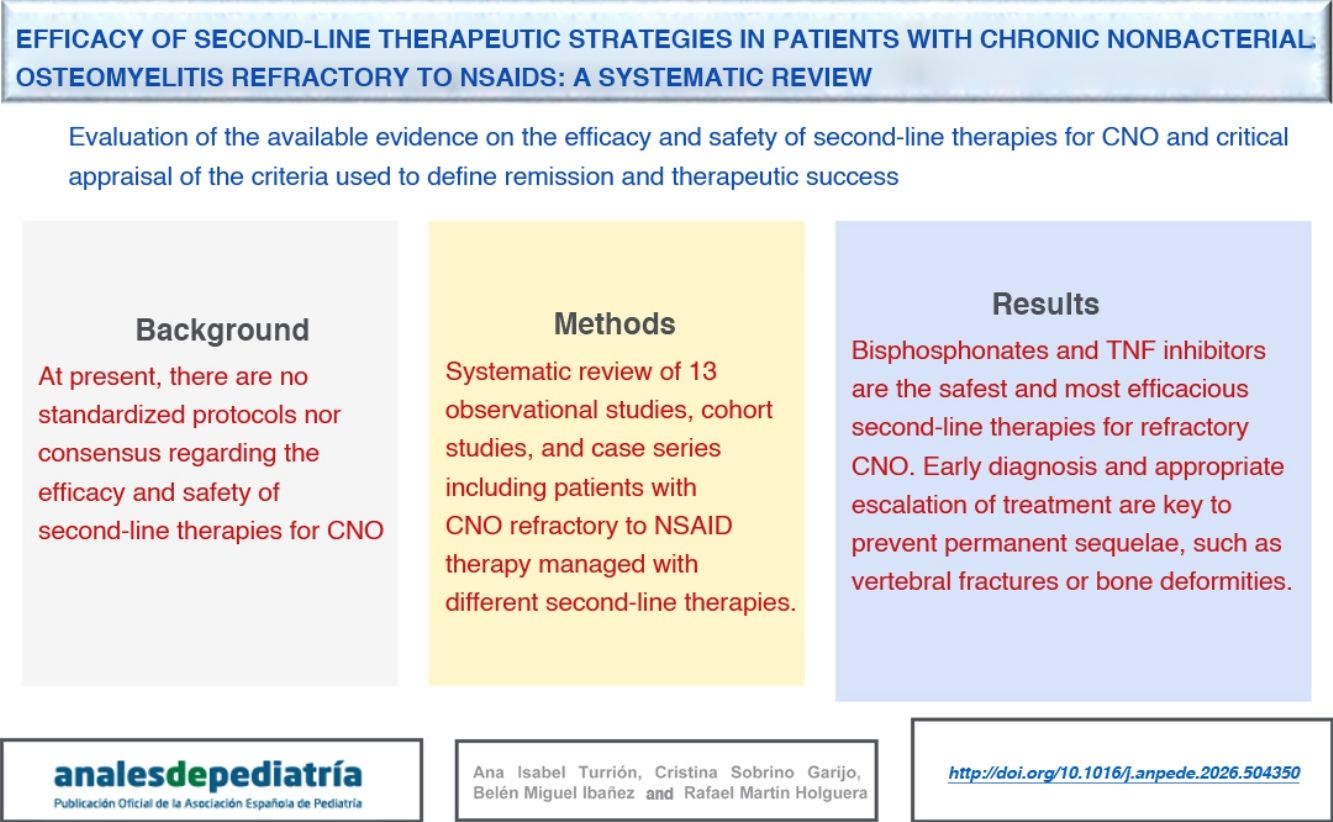

To evaluate the efficacy and safety of second-line therapies in pediatric patients with chronic nonbacterial osteomyelitis (CNO) that responded poorly to nonsteroidal anti-inflammatory drugs (NSAIDs).
MethodsA systematic review of observational studies, cohort studies, and case series (n = 13) involving patients aged less than 15 years with a diagnosis of CNO. We analyzed clinical and radiological remission rates, safety profiles, and the incidence of adverse events for the different therapeutic regimens.
ResultsThe efficacy of NSAIDs in monotherapy was limited (18%–57%). Among second-line therapies, bisphosphonates (particularly pamidronate) and tumor necrosis factor-α inhibitors (TNF inhibitors) achieved the highest response rates, with remission levels between 70% and 91%. Pamidronate proved highly effective for spinal lesions, achieving rapid pain resolution. TNF inhibitors were particularly effective in refractory cases and for the prevention of long-term relapses. The efficacy of disease-modifying antirheumatic drugs (DMARDs) was lower and inconsistent (12%–50%). No serious adverse effects were reported; the most frequent event was flu-like syndrome following the first pamidronate infusion.
ConclusionsBisphosphonates and TNF inhibitors constitute the most effective and safe second-line strategies for the treatment of refractory CNO. Early diagnosis and appropriate therapeutic scaling are essential to achieve complete remission and prevent permanent bone sequelae, such as spinal fractures or deformities.
Evaluar la eficacia y seguridad de las terapias de segunda línea en pacientes pediátricos con Osteomielitis Crónica No Bacteriana (OCNB) que presentan una respuesta insuficiente a los antiinflamatorios no esteroideos (AINE).
MétodosRevisión sistemática de estudios observacionales, cohortes y series de casos (n = 13) que incluyen pacientes menores de 15 años con diagnóstico de OCNB. Se analizaron las tasas de remisión clínica y radiológica, el perfil de seguridad y la incidencia de efectos adversos de los diferentes regímenes terapéuticos.
ResultadosLos AINE mostraron una eficacia limitada como monoterapia (18%–57%). Entre las terapias de segunda línea, los bisfosfonatos (especialmente pamidronato) y los inhibidores del factor de necrosis tumoral α (anti-TNF) demostraron las mayores tasas de respuesta, con niveles de remisión entre el 70% y el 91%. El pamidronato resultó altamente efectivo en lesiones vertebrales, logrando una rápida resolución del dolor. Los anti-TNF destacaron en casos refractarios y en la prevención de recaídas a largo plazo. Los fármacos modificadores de la enfermedad sintéticos convencionales (FAMEsc) presentaron una eficacia menor e inconsistente (12%–50%). No se reportaron efectos adversos graves; el evento más común fue el síndrome pseudogripal tras la primera infusión de pamidronato.
ConclusionesLos bisfosfonatos y los anti-TNF constituyen las estrategias de segunda línea más eficaces y seguras para el tratamiento de la OCNB refractaria. Un diagnóstico precoz y el escalado terapéutico adecuado son fundamentales para lograr la remisión completa y prevenir secuelas óseas permanentes, como fracturas vertebrales o deformidades.
Chronic nonbacterial osteomyelitis (CNO) is an autoinflammatory disorder that affects children characterized by chronic bone inflammation in the absence of bacterial infection.1 It usually follows a relapsing/remitting course with eventual resolution, but without adequate diagnosis and treatment, it may cause growth disturbances and other sequelae.
In cases with multifocal involvement, it is known as chronic recurrent multifocal osteomyelitis (CRMO).2
This disease is considered rare, and there are few epidemiological studies on the subject, most of them cohort studies.3 Advances in the diagnosis and knowledge of the disease suggest that it is underdiagnosed and its incidence, which ranges from 5 to 10 cases per 10 000 inhabitants/year, may be underestimated.4
The mean age of onset is 10 years, with a female-to-male ratio of 2:1.5,6
Its etiology involves an imbalance between proinflammatory and anti-inflammatory cytokines, with overexpression of the former, leading to aberrant osteoclastic activation and uncontrolled bone resorption that cause the characteristic lesions of CNO.4,7
The disease manifests with bone pain and osteolytic and hyperostotic lesions in different locations. The pain is intense, usually worsening at night, and a limp may develop in association with lesions located in the lower extremities or spine. Most cases are multifocal, predominantly involving bones of the lower extremities and pelvis, the spine and the clavicles. Mandibular involvement is less frequent, although it is a classic site in cases of unifocal involvement. There may be extraosseous manifestations, such as inflammatory bowel disease or psoriasis, which are associated with a severe phenotype.8,9
It is a diagnosis of exclusion, so it requires ruling out diseases with a similar presentation.
In occasional cases, children received a diagnosis of SAPHO (synovitis, acne, pustulosis, hyperostosis, osteitis). The pattern of bone involvement in this syndrome is practically identical to that of CNO, but in SAPHO it is associated with significant cutaneous involvement.10,11
Diagnostic delay is frequent, and it may take months to reach the definitive diagnosis. In 2025, the European League Against Rheumatism (EULAR) and the American College of Rheumatology (ACR) developed new classificatory criteria for pediatric CNO.12
Inflammatory markers are not useful, and there is no specific biomarker for CNO. Whole-body MRI has revolutionized the diagnosis and follow-up of the disease, allowing detection of bone marrow edema and lesions even in asymptomatic children.13,14 In patients with unifocal involvement, a bone biopsy must be performed to rule out malignancy.15
The goals of treatment are to alleviate pain and prevent structural damage and chronic disease activity. There is consensus that nonsteroidal anti-inflammatory drugs (NSAIDs) are the first-line treatment, as they achieve a good response in a high proportion of patients.16 However, there are patients who do not respond to treatment and require second-line treatment with other drugs, such as corticosteroids, conventional synthetic disease-modifying antirheumatic drugs (csDMARDs), bisphosphonates, or tumor necrosis factor inhibitors (TNFis), and there is no consensus regarding which achieves the best outcomes,17 nor standardized treatment plans. Among the efforts to standardize the management of CNO, we ought to highlight the three consensus treatment plans proposed by the Childhood Arthritis and Rheumatology Research Alliance (CARRA)18 for CNO refractory to NSAIDs: (1) methotrexate or sulfasalazine,( 2) TNFi with optional use of methotrexate, and (3) bisphosphonates. The CARRA proposes performance of prospective studies to assess the efficacy of each of these plans. The efficacy of second-line treatments will probably depend on the location of the lesions, the presence of systemic comorbidities, and the general health of the patient.
The rationale for this review was the need to gather evidence on second-line therapies for CNO. The prognosis is usually favorable, but severe forms of disease may cause sequelae and deformities such as kyphosis, so standardized protocols are required to improve treatment outcomes.
The objective of this review was to assess the current evidence on the efficacy and safety of second-line therapies in patients with CNO. A secondary objective was to critically appraise the evolution of the criteria used by different authors to define disease remission.
MethodsThe review adhered to the Preferred Reporting Items for Systematic reviews and Meta-Analyses (PRISMA) and was registered in PROSPERO (CRD42023455741).
We searched for studies published in journals in English or Spanish from 2013 through the end of 2025 that included children aged 6–14 years with CNO treated with second-line drugs.
We selected randomized clinical trials, retrospective cohort studies and case series that analyzed variables such as bone pain, fever, inflammatory manifestations in the affected area, fatigue/muscle weakness, quality of life and radiological features.
We searched the PubMed, EMBASE, Scopus and SciELO databases between August 2024 and December 2025, using MeSH terms and keywords combined with Boolean operators and structured in 3 blocks:
- •
Population: “Osteomyelitis, Chronic”, “Chronic Recurrent Multifocal Osteomyelitis”, “CRMO”, “Chronic Non-bacterial Osteomyelitis”, “CON”.
- •
Intervention: “Bisphosphonates”, “Biological Products”, “Pamidronate”, “Adalimumab”, “anti-TNF”, “Second-line therapy”.
- •
Clinical context: “NSAID resistance”, “Refractory”, “Failure”.
The search strategy in PubMed was:
(“Osteomyelitis, Chronic”[Mesh] OR “Chronic Recurrent Multifocal Osteomyelitis”[Supplementary Concept] OR “CRMO” OR “CNO” OR “Chronic Non-bacterial Osteomyelitis” OR “Chronic Multifocal Osteomyelitis”) AND (“Diphosphonates”[Mesh] OR “Biological Products”[Mesh] OR “Tumor Necrosis Factor Inhibitors”[Mesh] OR “Pamidronate” OR “Zoledronate” OR “Adalimumab” OR “Etanercept” OR “Infliximab” OR “Methotrexate” OR “Sulfasalazine” OR “Second-line”) AND (“NSAID” OR “Non-steroidal anti-inflammatory” OR “Refractory” OR “Resistance” OR “Failure”).
The records were uploaded to the RAYYAN platform, removing duplicates, and two authors (RMH and AITN) independently analyzed each study, extracting data. Disagreements were resolved by a third author (CSG).
We extracted the following information for each study:
- •
Author, year of publication, design, and sample size.
- •
Age and sex of patients.
- •
Drugs prescribed, with their dosage and duration of treatment.
- •
Remission rate, radiological response, and reported adverse events.
Due to the heterogeneity of the studies, particularly in relation to treatment protocols and the operational definition of remission, and treatment protocols, we considered that a meta-analysis of the data would not be appropriate, and instead conducted a narrative synthesis of their findings.
To assess the risk of bias and the quality of the evidence, we used the Joanna Briggs Institute (JBI) checklist. Articles that met more than 70% of the criteria were considered to be of high quality and included in the review.
We also applied the Grading of Recommendations Assessment, Development and Evaluation (GRADE) approach to assess the quality of the evidence and determine the strength of recommendation.
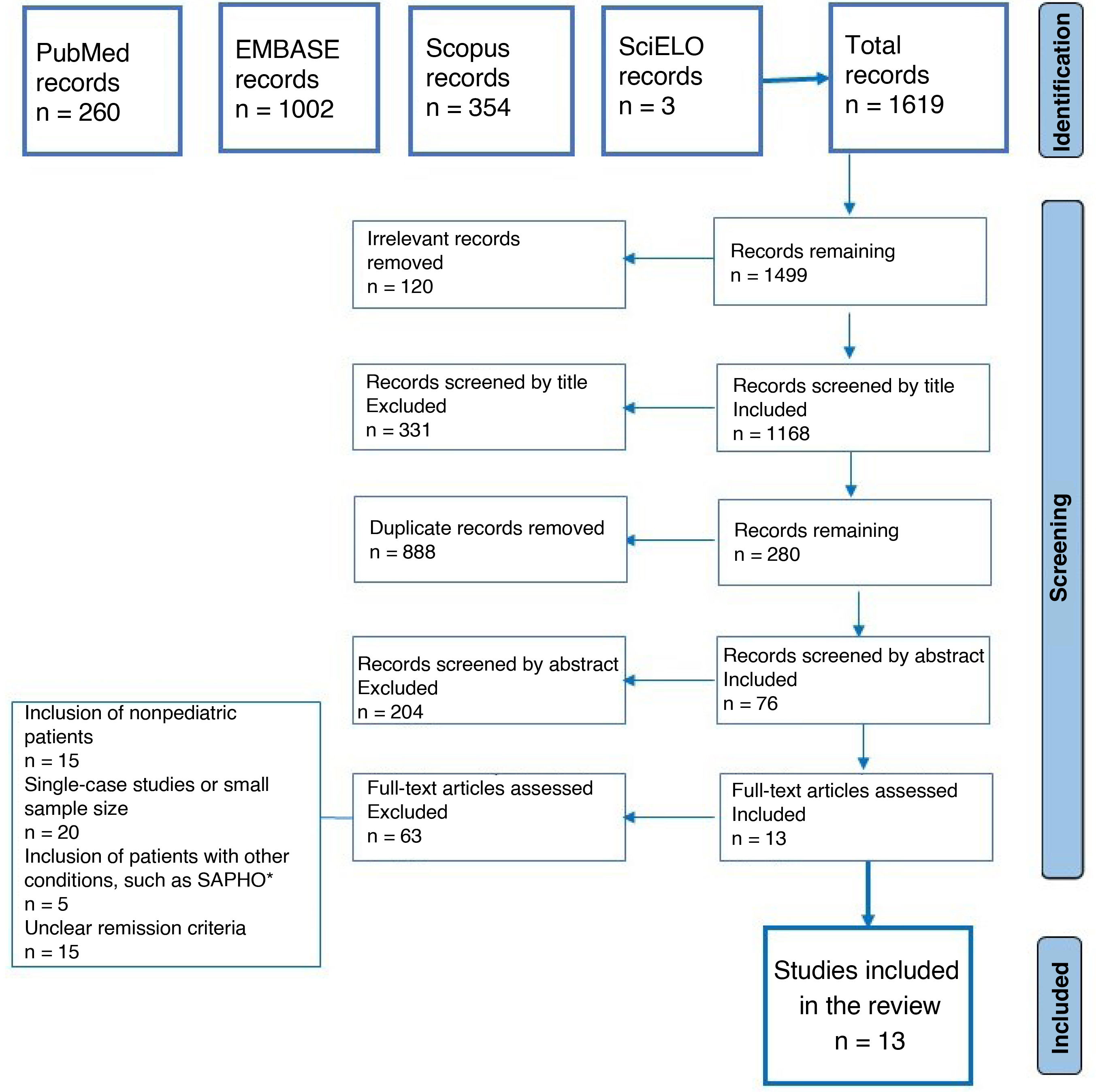
ResultsFig. 1 presents the study selection flow diagram.
Table 1 summarizes the characteristics and findings of the selected studies.
Main characteristics of the selected studies.
| Author and year | Study design and sample size | Population (mean age/sex) | Second-line treatment | Primary outcomes |
|---|---|---|---|---|
| Bhat et al.,31 2018 | Multicenter retrospective chart review (n = 131) | 10.7 years (37 M/94 F) | Methotrexate | Definition of remission: |
| Pamidronate | Clinical remission was defined as subsidence of pain, swelling or constitutional symptoms, and radiological remission as reduction of activity or reduction in number of radiological lesions. In the last follow-up, 82.4% of the patients were in remission. | |||
| TNF inhibitors (adalimumab, etanercept, infliximab) | Response to drugs: | |||
| NSAIDs: used as first-line treatment, with an observed response rate of 57.6%. | ||||
| Bisphosphonates: response rate of 68.53%. | ||||
| TNF inhibitors: they were very effective in refractory cases, with response rates of 90.9% with adalimumab and 87.5% with infliximab. | ||||
| Methotrexate: less effective, with a response rate of 43.75%. | ||||
| Adverse events: | ||||
| No documented cases of osteonecrosis of the jaw associated with bisphosphonates. On the other hand, paradoxical psoriasis was reported in 25% of patients treated with infliximab. | ||||
| Kostik et al,19 2019 | Nonrandomized observational study (n = 52) | 8.4 years (25 M/27 F) | Methotrexate | Definition of remission: |
| Sulfasalazine | Clinical remission defined as absence of bone pain and inflammation associated with normalization of inflammatory parameters. Radiological remission was defined as absence of bone edema on MRI. At the end of follow-up, inactive disease status had been achieved in 39.6% of the patients. | |||
| Pamidronate | Response to drugs: | |||
| TNF inhibitors | NSAIDs: used as first-line treatment in all children, achieving remission of CNO activity in 39.5% of cases treated with monotherapy. | |||
| Methotrexate and sulfasalazine: low efficacy, with remission rates of 12.5 and 14.3%, respectively. | ||||
| Pamidronate: achieved remission of CNO activity in 40% of patients. | ||||
| TNF inhibitors: more efficacious in refractory cases, with a response rate of 60%. | ||||
| Adverse events: | ||||
| Treatment was well tolerated overall, with no serious adverse events. The reported mild adverse events were: nausea or vomiting associated with methotrexate; flu-like syndrome with the first cycle of pamidronate; local injection site reactions with biologic agents. | ||||
| Bhat et al,21 2019 | Retrospective chart review (n = 40) | 11.6 years (10 M/30 F) | Pamidronate | Definition of remission: |
| TNF inhibitors | Clinical remission defined as absence of bone pain and inflammation (edema), and radiological remission as a reduction in the activity or number of lesions in whole-body MRI. Overall, 80% of patients achieved clinical remission. | |||
| Response to drugs: | ||||
| NSAIDs: used as first-line treatment in 84% of cases; but the response rate was low (20%). | ||||
| Pamidronate: used as the preferred bisphosphonate, it achieved clinical remission in 80% of patients and radiological remission in 64%. | ||||
| TNF inhibitors: administered to 12% of patients after pamidronate failure. | ||||
| Adverse events: | ||||
| The most frequent adverse event was flu-like syndrome, reported in 48% of children in the first cycle of pamidronate. There was also one case of asymptomatic transient hypocalcemia. There were no cases of osteonecrosis of the jaw. | ||||
| Sulko et al,26 2019 | Retrospective chart review (n = 41) | 10 years (7 M/34 F) | Pamidronate | Definition of remission: |
| Remission was defined as absence of clinical symptoms and complete healing of bone lesions in radiological examination. | ||||
| Response to drugs: | ||||
| NSAIDs: used as first-line treatment, achieved remission in 46% of the cases. | ||||
| Pamidronate: highly effective in cases refractory to NSAID therapy, achieving remission in 78%. Although rapid reduction of pain was observed after the first dose, a mean of 7 cycles were required to achieve complete remission, with a mean duration of treatment of 20 months. | ||||
| Adverse events: | ||||
| No serious adverse events were reported. The most frequent adverse events were mild flu-like symptoms, particularly during administration of the first dose of pamidronate. There were no cases of osteonecrosis of the jaw; nevertheless, the authors emphasized the need to monitor calcium levels after administration of pamidronate due to the risk of hypocalcemia. | ||||
| Kostik et al,24 2020 | Retrospective cohort study (n = 99) | 7.3 years (55 M/44 F) | Pamidronate | Definition of remission: |
| TNF Inhibitors | Clinical remission was defined as resolution of fever, pain, and swelling, normalization of inflammatory parameters, and absence of chronic use of analgesics for at least 3 months. Radiological remission was defined as restoration of the involved bone and lessening of bone edema on MRI. | |||
| Response to drugs: | ||||
| NSAIDs: found ineffective for CNO with spinal involvement, although NSAID therapy was successful in 52.6% of patients with peripheral CNO. | ||||
| Pamidronate: it was the most effective treatment for CNO with spinal involvement, achieving a response rate of 90.9% and a significant reduction in pain. | ||||
| TNF inhibitors: achieved a response rate of 66.7% in patients with vertebral lesions. | ||||
| Of the patients with spinal involvement, 13.8% required surgical intervention due to spinal instability or severe spinal deformity. This study demonstrates that bisphosphonates and biologic agents are essential options to prevent spinal cord damage and pathological fractures in cases of CNO with spinal involvement. | ||||
| Gaal et al,27 2020 | Retrospective cohort study (n = 22) | 11 years (14 M/8 F) | csDMARDs | Definition of remission: |
| Pamidronate | Remission was defined as resolution of pain and swelling, normalization of inflammatory markers, and resolution/minimal abnormal signal on MRI. | |||
| TNF inhibitors | Response to drugs: | |||
| NSAIDs: 77% of patients responded, although the response was partial in most cases, and the time to a full response was longer (median, 18 months). | ||||
| TNF inhibitors: they were found to be most effective, with a response rate of 91%, and achieved a full response quicker than NSAIDs. | ||||
| Pamidronate: achieved a full response in 75% of treated patients. | ||||
| Conventional synthetic DMARDs: they were least effective, with a response rate of only 33%. | ||||
| The highlights of this study are that corticosteroids were successful in rapidly controlling flares, although many patients required escalation to biologic agents due to persistent mandibular involvement. | ||||
| Concha et al,30 2020 | Multicenter retrospective chart review (n = 19) | 10 years (10 M/9 F) | Methotrexate | Definition of remission: |
| Bisphosphonates | Remission was defined as resolution of pain and normalization of inflammatory parameters. At the end of follow-up, remission had been achieved in 79% of patients. | |||
| Etanercept | Response to drugs: | |||
| Adalimumab | NSAIDs: Used as first-line treatment in all patients, achieving remission in 47% of cases. | |||
| Methotrexate: Administered to 21% of patients, with a 50% response rate. | ||||
| Pamidronate: Prescribed to 26% of the cohort, it was highly effective, with an 80% response rate. | ||||
| Etanercept/adalimumab: Used in 16% of patients, with a response rate of 66%. | ||||
| Adverse events: | ||||
| Gastrointestinal symptoms were reported in association with the use of NSAIDs and methotrexate. Transient acute-phase reactions were also documented following the first pamidronate infusion. | ||||
| O’Leary et al,25 2021 | Retrospective chart review (n = 44) | 10.5 years (12 M/32 F) | Methotrexate | Definition of remission: |
| Pamidronate | Clinical remission was defined as inactive disease status, characterized by absence of inflammatory pain and functional impairment. Radiological remission was defined as resolution of active lesions on MRI. At the end of the follow-up, 60% of the patients had achieved clinical remission. | |||
| TNF inhibitors | Response to drugs: | |||
| NSAIDs: Used as first-line treatment in 98% of patients; however, only 18% achieved remission with monotherapy. | ||||
| Methotrexate: Used in 41% of cases, achieving a remission rate of 46%. | ||||
| Pamidronate: Highly effective, with a clinical response rate of 78% and significant improvement of lesions on MRI. | ||||
| Adalimumab: Reserved for refractory cases, achieving remission in 62% of this subgroup. | ||||
| Adverse events: | ||||
| The reported side effects included methotrexate-induced nausea and acute-phase reactions following the first dose of pamidronate. Notably, 16% of patients already had permanent damage (such as spinal deformity) at the time of diagnosis. | ||||
| Bustamante et al,28 2021 | Multicenter retrospective chart review (n = 25) | 8.8 years (5 M/20 F) | Pamidronate | Definition of remission: |
| Adalimumab | Clinical remission was defined as the absence of bone pain and local inflammatory signs, along with normalization of acute-phase reactants. Radiological remission was defined as the resolution of bone edema on MRI. | |||
| Etanercept | Response to drugs: | |||
| Infliximab | NSAIDs and methotrexate: These had not succeeded in controlling the disease in this specific group of patients, who were selected because they had refractory disease. | |||
| Pamidronate: It achieved a clinical response in 52% of cases; however, many patients had flares or failed to achieve complete remission. | ||||
| Adalimumab/infliximab: They were highly effective, achieving clinical remission in 89.4% of patients. | ||||
| Adalimumab was the most frequently used biologic agent, achieving resolution of lesions on MRI in most cases. | ||||
| Adverse events: | ||||
| Biologic agents were well tolerated. The reported side effects were mild, most notably injection-site reactions and one case of TNF inhibitor-induced paradoxical psoriasis. Most patients did not experience serious infections or adverse events requiring permanent cessation of treatment. | ||||
| Schnabel et al,29 2022 | Multicenter retrospective chart review (n = 91) | 10.8 years (38 M/53 F) | Pamidronate | Definition of remission: |
| TNF inhibitors | Complete clinical remission was defined as the total absence of signs of inflammation. Complete radiological remission was determined by the resolution of bone lesions on whole-body MRI. | |||
| Response to drugs: | ||||
| NSAIDs: They were used as first-line treatment in patients without spinal involvement. However, more than 50% of patients treated with NSAIDs as monotherapy experienced flares within the first 2 years. | ||||
| Pamidronate: It achieved faster resolution of lesions on MRI compared with TNF inhibitors, although the difference was not statistically significant. Pamidronate failure was associated with female sex, CRP elevation, and a higher baseline lesion count. | ||||
| TNF inhibitors: They were more effective in preventing flares (fewer compared to pamidronate). They were used more frequently in patients with fatigue, arthritis, or inflammatory bowel disease; the authors noted that treatment was often selected based on the presence of comorbidities such as psoriasis or arthritis. In particular, they found a greater use of TNFis in HLA-B27-positive patients. | ||||
| Adverse events: | ||||
| No reported serious adverse events. | ||||
| Andreasen et al,22 2022 | Retrospective chart review (n = 18) | 9.8 years (7 M/11 F) | Pamidronate | Definition of remission: |
| The study focused on quantifying disease activity with a modified radiological index for non-bacterial osteitis (mRINBO). Remission was defined based on radiological features, assessing the reduction in the number and size of active bone lesions and extramedullary changes on whole-body MRI. | ||||
| Response to drugs: | ||||
| NSAIDs: They were used as first-line therapy; however, the study focused on patients who did not respond to NSAID therapy and required escalation to bisphosphonates. | ||||
| Pamidronate: This was the most frequently used agent following NSAID failure. After one year of therapy, the mRINBO score decreased significantly, from a median of 9.5 to 3.5. | ||||
| The number of active lesions decreased from 103 to 44 in the study group, and the maximal size of the lesions decreased in 83% of the patients. | ||||
| The study shows that pamidronate is an effective option for reducing the burden of bone inflammation. However, it highlights that, despite significant radiological improvement, most patients still had residual active lesions after one year of treatment, suggesting the need for prolonged therapy or adjustments to follow-up protocols. | ||||
| Adverse events: | ||||
| No serious adverse events were reported during the follow-up. | ||||
| Ma et al,20 2022 | Multicenter retrospective chart review (n = 18) | 9.2 years (8 M/10 F) | csDMARDs | Definition of remission: |
| Bisphosphonates | Clinical remission was defined as complete resolution of symptoms and normalization of acute-phase reactants. Radiological remission was defined based on the stabilization or improvement of lesions on MRI. At the end of follow-up, 88.9% of patients were in remission. | |||
| TNF inhibitors | Response to drugs: | |||
| NSAIDs: Used as first-line treatment in every patient; remission achieved with monotherapy in 33.3%. | ||||
| Corticosteroids: Used in 55.6% of cases for initial symptom control, with a rapid response. | ||||
| Methotrexate: It was the most frequently used second-line agent (61.1% of patients), with a good response rate. | ||||
| Bisphosphonates and TNF inhibitors: They were reserved for refractory cases or cases with spinal involvement and achieved remission in all patients who received them. | ||||
| Adverse events: | ||||
| The reported adverse events were mild, including gastrointestinal discomfort associated with use of NSAIDs and transient elevation of liver enzymes with methotrexate. | ||||
| This study highlights that early diagnosis and an aggressive initial treatment approach are key to a favorable prognosis. | ||||
| Hofmann et al,23 2025 | Prospective observational cohort study (n = 37) | 10.8 years (13 M/24 F) | Sulfasalazine | Definition of remission: |
| Methotrexate | Remission defined using the pedCNO disease activity score, considering clinical improvements of 30%, 50%, 70%, and up to 90%. By 12 months, 54% of patients had reached the 70% threshold (pedCNO70). | |||
| Pamidronate | Response to drugs: | |||
| NSAIDs: Used as first-line treatment for all patients. Although they were initially effective, 43% of the children required escalation of treatment. | ||||
| Pamidronate: Used in the most severe or refractory cases, achieving a significant reduction in both clinical and radiological disease activity. | ||||
| Sulfasalazine and corticosteroids: These were used as adjunctive therapies in specific cases, achieving disease remission in patients who did not respond to NSAID monotherapy. | ||||
| Adverse events: | ||||
| Adverse events were mild, such as abdominal pain with NSAIDs or acute-phase reactions following pamidronate administration. The study highlights that permanent bone damage was minimal when appropriate treatment was given; however, clinical relapses were frequent during the 5-year follow-up. |
Abbreviations: csDMARD, conventional synthetic disease-modifying antirheumatic drugs; F, female; M, male NSAIDs, nonsteroidal anti-inflammatory drugs.
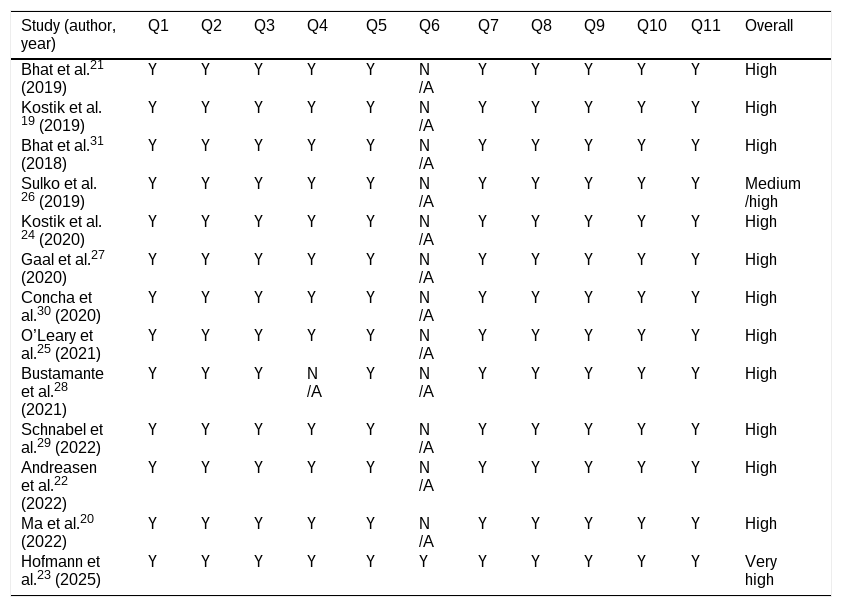
Most studies were of high methodological quality. Table 2 summarizes the results obtained with the JBI checklist.
Application of JBI checklist.
| Study (author, year) | Q1 | Q2 | Q3 | Q4 | Q5 | Q6 | Q7 | Q8 | Q9 | Q10 | Q11 | Overall |
|---|---|---|---|---|---|---|---|---|---|---|---|---|
| Bhat et al.21 (2019) | Y | Y | Y | Y | Y | N/A | Y | Y | Y | Y | Y | High |
| Kostik et al.19 (2019) | Y | Y | Y | Y | Y | N/A | Y | Y | Y | Y | Y | High |
| Bhat et al.31 (2018) | Y | Y | Y | Y | Y | N/A | Y | Y | Y | Y | Y | High |
| Sulko et al.26 (2019) | Y | Y | Y | Y | Y | N/A | Y | Y | Y | Y | Y | Medium/high |
| Kostik et al.24 (2020) | Y | Y | Y | Y | Y | N/A | Y | Y | Y | Y | Y | High |
| Gaal et al.27 (2020) | Y | Y | Y | Y | Y | N/A | Y | Y | Y | Y | Y | High |
| Concha et al.30 (2020) | Y | Y | Y | Y | Y | N/A | Y | Y | Y | Y | Y | High |
| O’Leary et al.25 (2021) | Y | Y | Y | Y | Y | N/A | Y | Y | Y | Y | Y | High |
| Bustamante et al.28 (2021) | Y | Y | Y | N/A | Y | N/A | Y | Y | Y | Y | Y | High |
| Schnabel et al.29 (2022) | Y | Y | Y | Y | Y | N/A | Y | Y | Y | Y | Y | High |
| Andreasen et al.22 (2022) | Y | Y | Y | Y | Y | N/A | Y | Y | Y | Y | Y | High |
| Ma et al.20 (2022) | Y | Y | Y | Y | Y | N/A | Y | Y | Y | Y | Y | High |
| Hofmann et al.23 (2025) | Y | Y | Y | Y | Y | Y | Y | Y | Y | Y | Y | Very high |
Abbreviations: JBI, Joanna Briggs Institute; N, no; N/A, not applicable; Y, yes.
There was significant variation among studies in the definition of remission. Clinical remission was defined as resolution of pain and swelling and normalization of acute phase reactants (Kostik et al.19; Ma et al.20). Radiological remission, assessed by means of whole-body MRI, has become and important criterion over time, and is defined as resolution of bone edema and absence of new lesions (Bhat et al.21; Andreasen et al.22). Some studies used composite disease activity scores, such as the pedCNO, to measure clinical improvement and disease burden (Hofmann et al.23; Andreasen et al.22).
Nonsteroidal anti-inflammatory drugs: their effectiveness is limited, with remission rates ranging from 18% to 57%, and they are particularly ineffective in cases with spinal involvement (Kostik et al.24; O’Leary et al.25).
Bisphosphonates: they have been found to be highly effective, with remission rates ranging from 68% to 90%. They achieve rapid resolution of pain and are superior for treatment of spinal and mandibular involvement (Sulko et al.26, 2020; Gaal et al.27).
TNF inhibitors: they achieved the highest response rates in refractory cases (60%–91%) and were found to be more effective in preventing relapse compared to other treatments (Bustamante et al.28; Schnabel et al.29).
Conventional synthetic DMARDs: lower efficacy, with remission rates ranging from 12% to 50% (Kostik et al.19; Concha et al.30).
The safety profile of the studied drugs was favorable. The most frequent adverse event with the use of pamidronate was flu-like syndrome, observed in many patients in the first cycle (Bhat et al.21). There were no documented cases of osteonecrosis of the jaw. There were isolated cases of psoriasis associated with the use of TNFis (Bhat et al.31; Bustamante et al.28). The side effects of NSAIDs and csDMARDs were predominantly gastrointestinal and mild.
DiscussionThe aim of this review is to assess the evidence on the efficacy and safety of second-line drugs for CNO by critically appraising the parameters used to define therapeutic success. To the best of our knowledge, there are no other recent systematic reviews with the same objectives and approach.
Evolution of the criteria for defining remissionThe assessment of therapeutic efficacy in CNO has historically been inconsistent, hindering comparisons between studies. There has been a shift from clinical criteria toward a comprehensive evaluation that includes systemic biomarkers and imaging techniques such as MRI.
Traditional clinical criteria focus on pain reduction as measured by the visual analog scale (VAS). Ma et al.20 defined clinical improvement as a reduction in pain and in the levels of inflammatory markers. Kostik et al.19 used a triple VAS assessment for the absence of disease activity (patient, pain, and physician) and found that the assessments of the physician (MDVAS) and the patient tended to agree during phases of remission induced by bisphosphonates and TNFis, but there were differences between them when the disease was treated with NSAIDs or csDMARDs. Hofmann et al.23 proposed that clinical improvement always predates radiological improvement.
One critical finding is that there seems to be a “floor effect”: Beck et al.16 found that erythrocyte sedimentation rate (ESR) values and Childhood Health Assessment Questionnaire (CHAQ) scores normalized after 3 months of treatment, even when radiological activity persisted, which suggests that their normalization is not a good enough indicator of healing. In contrast, the number of lesions detected by MRI and the overall estimation of severity continue to vary over time, so they are more reliable indicators of residual disease.
The introduction of whole-body MRI allowed the development of instruments like the CNO MRI scoring tool (CROMRIS, Zhao et al.32) that assess the severity of bone edema, soft tissue inflammation, periosteal reactions, and complications such as vertebral fractures. Bhat et al.21,31 and Schnabel et al.29 emphasize that treatment efficacy cannot be determined based solely on the resolution of pain, and that the hyperintensities on STIR MRI sequences must also disappear for treatment to be considered successful, as silent lesions are common and may progress to bone deformities if left untreated.
After interpreting these findings, we propose the following definitions of remission, aligned with the CARRA criteria:
Complete remissionDefined by the combination of three dimensions:
ClinicalComplete resolution of pain, absence of swelling, and total functional recovery.
BiochemicalNormalization of ESR and CRP.
RadiologicalAbsence of bone marrow edema on MRI.
The definition of remission by O’Leary et al.25 required resolution of edema and absence of new lesions on imaging. Interestingly, Kostik et al.24 allowed for the persistence of one or two clinically inactive foci on imaging if pain had resolved and inflammatory markers normalized, arguing that bone remodeling is a slower process compared to clinical improvement. Hofmann et al.23 propose a stricter definition: sustained inactive disease (clinical and radiological resolution) for 12 months after cessation of medication.
Partial remissionSignificant improvement, but incomplete resolution. Ma et al.20 define it as a 20%–80% resolution of symptoms and imaging manifestations. Other authors describe it as improvement with radiological stabilization, without progression of lesions.
No responsePersistence of debilitating symptoms and elevation of inflammatory markers or radiological progression of lesions despite treatment. Schnabel et al.29 underscore that early therapeutic failure is a predictor of poorer outcomes and requires rapid escalation to TNFis or bisphosphonates.
Drug efficacyConventional synthetic DMARDsTraditionally, they have been used as the first step following NSAIDs. Sulfasalazine seems to be superior to methotrexate under certain circumstances, with remission rates of 57.1% vs 44.4% in the series published by Kostik et al.24 However, both achieve lower response rates than bisphosphonates in terms of bone marrow healing.
Methotrexate is useful for treatment of CNO with concomitant juvenile idiopathic arthritis, although its ability to control bone inflammation is limited compared to other drugs. It is administered subcutaneously to improve its bioavailability and reduce gastrointestinal intolerance.
Sulfasalazine is the preferred option for patients with spondyloarthropathy or gastrointestinal manifestations because it acts on the gut-joint axis.
Many patients treated with csDMARDs require escalation to bisphosphonates or TNFis due to a partial response.
BisphosphonatesThey are among the most effective drugs. In cases with spinal involvement, pamidronate has been found to achieve resolution rates of 82.3%, controlling pain and preventing deformities. In addition, Gaal et al.27 reported a significantly quicker response in mandibular CNO with pamidronate compared to TNFis.
Zoledronate may be a preferable alternative to pamidronate due to its greater potency and ease of administration (one infusion every 3−6 months). Although there is little research comparing them directly, the evidence from other diseases suggests a similar effectiveness, with zoledronate appearing to be superior for sustained inhibition of osteoclastic activity.33,34
TNF inhibitorsThe current evidence suggests that they play a key role in CNO refractory to bisphosphonates or with severe extraosseous manifestations. Schnabel et al.29 found that while bisphosphonates achieved radiological resolution quicker, the use of TNFis was significantly associated with fewer flares in the long term. The findings of Bustamante et al.28 supported this association, as 94.7% of the cohort in their study remained asymptomatic with TNFis, although nearly every patient experienced flares a few months after withdrawal of biologic therapy.
There is still debate regarding which anti-TNF is most appropriate. Adalimumab (ADA) and infliximab (IFX) seem to be more effective than etanercept (ETN), especially in patients with soft tissue involvement or inflammatory bowel disease. Bustamante et al.28 found that IFX was frequently switch to ADA due to loss of efficacy or the convenience of subcutaneous administration, with a good response in many cases. Adalimumab and IFX are superior to ETN for control of bone inflammation and systemic comorbidities. In the cohort study conducted by Concha et al.,30 ADA achieved remission in 75% of patients with arthritis.
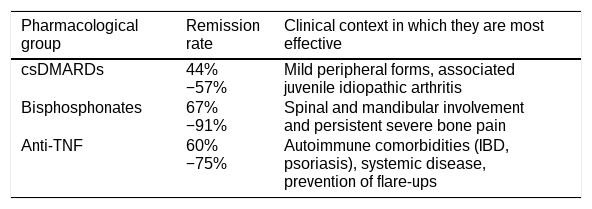
Table 3 presents the remission rates and the clinical contexts in which the different drugs have been found to be most effective, based on data from the reviewed studies.
Achieved remission rates and indications for which the drugs are most efficacious based on the reviewed studies.
| Pharmacological group | Remission rate | Clinical context in which they are most effective |
|---|---|---|
| csDMARDs | 44%−57% | Mild peripheral forms, associated juvenile idiopathic arthritis |
| Bisphosphonates | 67%−91% | Spinal and mandibular involvement and persistent severe bone pain |
| Anti-TNF | 60%−75% | Autoimmune comorbidities (IBD, psoriasis), systemic disease, prevention of flare-ups |
Abbreviations: anti-TNF, tumor necrosis factor inhibitors; csDMARDs, conventional synthetic disease-modifying antirheumatic drugs; IBD, inflammatory bowel disease.
Bisphosphonates appear to induce clinical and radiographic remission more rapidly than TNFis. In mandibular CNO, pamidronate achieves a complete response within about 2 months, compared to 17 months with TNFis. Kostik et al.24 reported remission rates of 88.8% with bisphosphonates compared to 73.3% with TNFis. On the other hand, TNFis are more effective in preventing flares and controlling extraosseous manifestations.
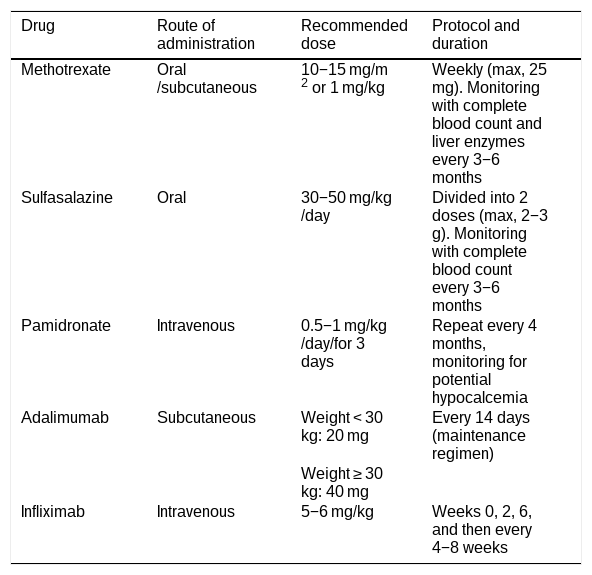
Dosing and treatment durationStandardizing the dosage of these drugs is essential for the development of treatment plans. Table 4 shows the recommended dosage and duration of treatment for each drug.35
Recommended dosage, protocols, and duration of different treatments.
| Drug | Route of administration | Recommended dose | Protocol and duration |
|---|---|---|---|
| Methotrexate | Oral/subcutaneous | 10−15 mg/m2 or 1 mg/kg | Weekly (max, 25 mg). Monitoring with complete blood count and liver enzymes every 3−6 months |
| Sulfasalazine | Oral | 30−50 mg/kg/day | Divided into 2 doses (max, 2−3 g). Monitoring with complete blood count every 3−6 months |
| Pamidronate | Intravenous | 0.5−1 mg/kg/day/for 3 days | Repeat every 4 months, monitoring for potential hypocalcemia |
| Adalimumab | Subcutaneous | Weight < 30 kg: 20 mg | Every 14 days (maintenance regimen) |
| Weight ≥ 30 kg: 40 mg | |||
| Infliximab | Intravenous | 5−6 mg/kg | Weeks 0, 2, 6, and then every 4−8 weeks |
Second-line therapy courses should not be short: Sulko et al.26 reported that in the group that achieved remission with pamidronate, the mean duration of treatment was 20 months, with an average of 7 infusion cycles. In the case of bisphosphonates, the recommendation is to continue treatment until MRI demonstrates complete resolution of the bone lesions. When it comes to TNFis, the evidence suggests that treatment should be maintained for at least 12–24 months after achieving disease inactivity. Premature treatment withdrawal carries a high risk of relapse, with flares occurring as late as 15 years after the onset of symptoms, highlighting the need for long-term surveillance.
Safety and adverse effectsSafety is a key factor in the selection of pharmacological treatment, given the chronic course of the disease.35
Conventional synthetic DMARDsBecause of the potential for hepatic and hematologic toxicity, a complete blood count and liver enzyme tests should be performed monthly or every 3 months. Nausea is a common adverse effect in patients treated with oral methotrexate and frequently leads to switching to the subcutaneous route or treatment discontinuation. Sulfasalazine may cause allergic skin reactions, although they are rare in children.
BisphosphonatesThe most common adverse effect of pamidronate is an acute-phase reaction, which is very common during the first treatment cycle and is characterized by flu-like symptoms and nausea. These symptoms tend to resolve in subsequent cycles and can be mitigated with premedication (antipyretics) and adequate hydration. Transient hypocalcemia is another common adverse effect that requires administration of calcium and vitamin D and monitoring of serum levels 48 h after the infusion. No cases of osteonecrosis of the jaw have been reported in children with CNO, which supports the safety of bisphosphonates even in patients with active mandibular lesions.
TNF inhibitorsThe evidence on their use in the management of juvenile idiopathic arthritis supports its safety, although specific risks have been identified in relation to its use in CNO. Bustamante et al.28 reported one case of osteomyelitis secondary to Staphylococcus aureus infection in a patient treated with IFX, highlighting the importance of differentiating flares from intercurrent infection in immunosuppressed patients. Cases of cutaneous leishmaniasis and TNF inhibitor-induced psoriasis have also been reported. Screening for latent tuberculosis is an absolute requirement before initiating treatment with TNFis.
Limitations and future perspectivesThe current evidence consists of retrospective studies and case series with methodological limitations, small sample sizes, and a lack of standardized treatment protocols; therefore, the overall quality of the evidence, as assessed using the GRADE system, is moderate. However, the consistency of the findings across all 13 studies and the favorable clinical response observed with bisphosphonates and TNFis support the conclusions regarding the effectiveness and safety of these drugs. It is imperative to move from retrospective studies to randomized controlled trials. A comparison between adalimumab and pamidronate using Bayesian designs is required to develop clinical practice guidelines supported on robust evidence.
With regard to new therapies, we ought to highlight the successful use of Janus kinase (JAK) inhibitors in patients refractory to conventional treatments.36,37 Further research is required to establish their efficacy and safety.
ConclusionsThe reviewed studies suggest that remission should be defined radiologically, since the absence of pain does not guarantee disease inactivity. Performance of a whole-body MRI is recommended at diagnosis and at regular intervals thereafter to adjust treatment and detect silent bone lesions.
The switch from NSAIDs to second-line medications should be made quickly, especially in the case of high-risk lesions.
Bisphosphonates and TNFis seem to be more effective than csDMARDs in inducing complete remission. Pamidronate appears to be superior in terms of how quickly it achieves remission and in inhibiting bone resorption, while TNFis offer protection against flares and are the preferred choice in patients with systemic comorbidities.
In CNO with spinal and/or mandibular involvement, bisphosphonates could be used as first-line treatment on account of their anti-resorptive activity and the reduced risk of vertebral collapse. On the other hand, TNFis have been found to achieve better outcomes in cases with peripheral lesions and concomitant arthritis.
It appears that treatments should be extended, as regimens lasting less than 12–18 months are associated with flare-ups. Treatment with bisphosphonates should continue until radiological remission is achieved, and TNFis should be tapered off with caution.
The safety of these drugs in children is acceptable. Acute-phase reactions should be managed proactively, and patients treated with TNFis should be monitored for infections.
Given the retrospective nature and heterogeneity of the included studies, the results should be interpreted with caution. Prospective studies of higher methodological quality are needed to confirm these findings.
AuthorshipAll authors contributed to the development of this work, including the interpretation of data and drafting and revising the manuscript, and all approved the final version.
FundingThis research project did not receive specific financial support from funding agencies in the public, private or not-for-profit sectors.
The authors declare that they have no conflicts of interest in relation to the publication of this article.
The authors thank the Fundación Española de Reumatología (Spanish Foundation of Rheumatology) for its assistance in retrieving full-text articles.