We present the case of a 9-year-old girl with fatty pancreas (FP) in absence of overweight or obesity. The diagnostic workup for sporadic epigastric pain identified hypertriglyceridemia, persistent hyperamylasemia and hyperlipasemia. The aminotransferase activity, fasting glycemia, total immunoglobulin G (IgG) and IgG subclass concentrations, and arterial blood pressure were all within normal limits. The body mass index was at the 55th percentile.
The patient had no family history of chronic pancreatitis (CP) or cystic fibrosis. Genetic testing identified the complex allele IVS8(TG)13(T)5 in the heterozygous state in the CFTR gene. Sweat chloride tests and fecal elastase activity were normal.
Magnetic resonance cholangiopancreatography demonstrated a thickened pancreas with moderate interlobular fatty replacement and a pancreatic fat fraction (PFF) of 9.1% (Fig. 1). There was no evidence of steatotic liver disease. The patient received a diagnosis of CP and FP.
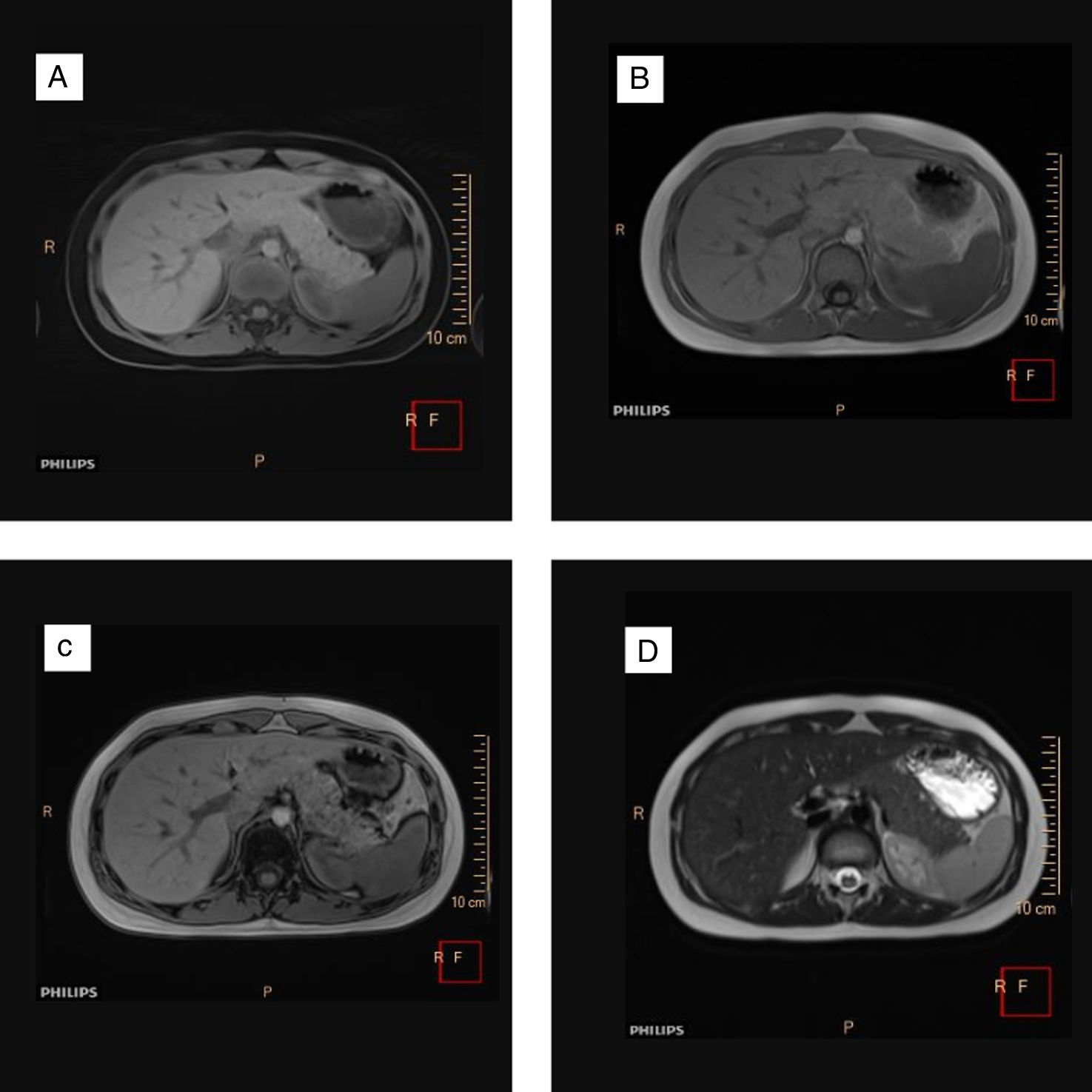
Axial T1- and T2-weighted MRI images [T1-weighted starVIBE (A), T1-weighted VIBE Dixon in-phase (B) and out-of-phase (C), T2-weighted HASTE (D)] show diffuse enlargement of the pancreas with heterogeneous signal intensity and fatty infiltration. The fatty component is most clearly visualized as multiple hypointense foci on the T1-weighted VIBE Dixon out-of-phase sequence, resulting from the chemical shift artifact.
According to the recently published report on FP,1 the patient fulfilled the INSPPIRE criteria for CP,2 but did not meet the diagnostic criteria for cystic fibrosis or CFTR-related disorder.3 A PFF of 9.1% is categorized as “mild” by adult standards. Recent evidence points to a potential association between FP and pancreatic cancer. In the paediatric population, early-onset FP may suggest a prolonged exposure to a tumor-promoting microenvironment and requires further surveillance and a proactive management strategy.
Ethical considerationsThe paper was prepared in accordance with the Declaration of Helsinki, and we obtained parental consent for publication.