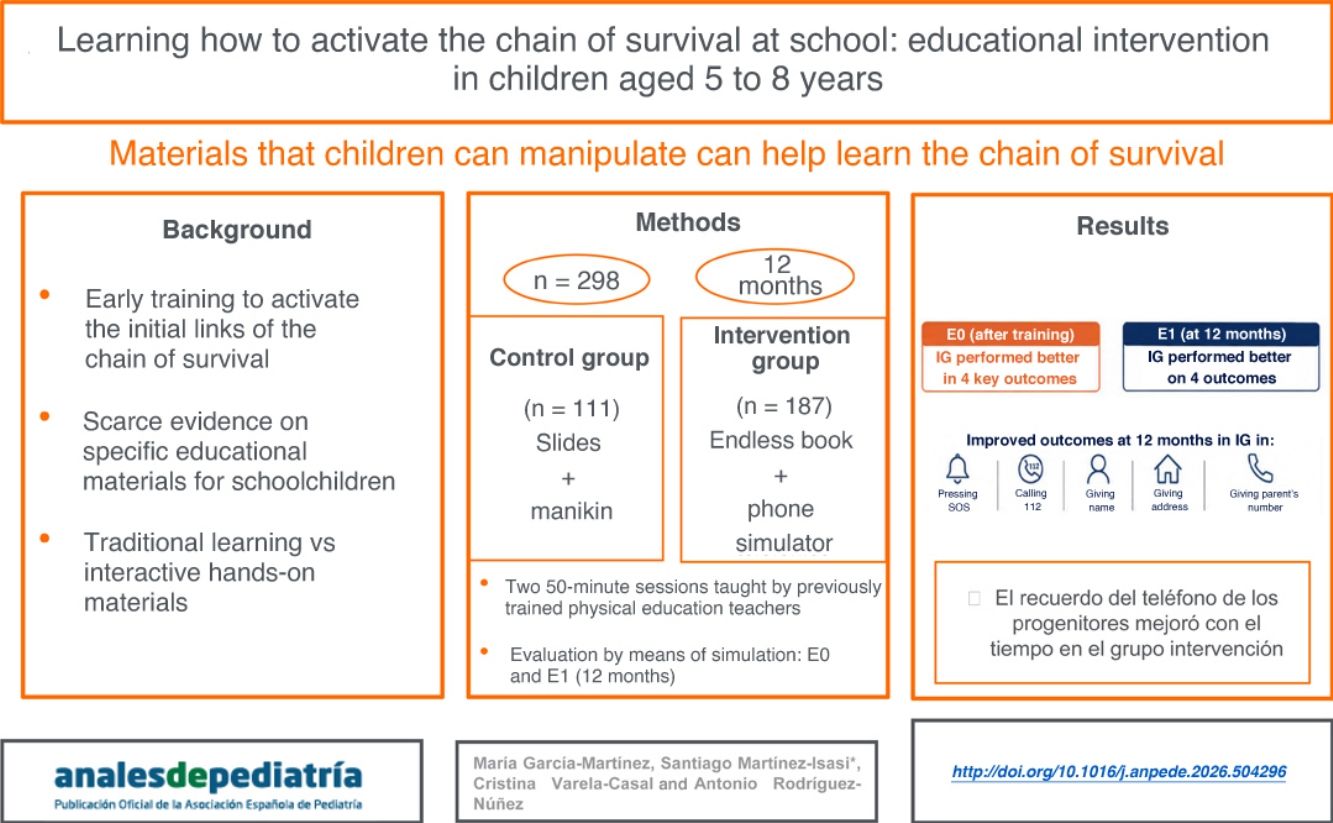
To improve the prognosis of cardiac arrest, annual school-based first aid training is recommended from an early age. However, there is limited scientific evidence supporting specific pedagogical strategies for this purpose. This study evaluated the impact of interactive teaching resources compared with traditional instruction on the acquisition and retention of skills related to activating the chain of survival in schoolchildren aged 5–8 years.
MethodsWe conducted a quasi-experimental study was conducted in five schools. A total of 298 schoolchildren were included: 111 in the control group (traditional instruction) and 187 in the intervention group (learning with a “never-ending book” and a telephone simulator). Assessments were carried out immediately after training (E0) and at 12 months (E1) using a simulation scenario and a checklist.
ResultsIn the initial assessment (E0), the intervention group achieved superior results in four key variables. At the 12-month evaluation (E1), the intervention group maintained significant advantages in competencies related to activating emergency medical services and effective communication with the dispatcher. The ability to use the phone in hands-free mode declined over time in both groups, while the ability to recall a parental phone number improved.
ConclusionsSimple hands-on and interactive resources can improve both the acquisition and retention of basic skills required to activate the chain of survival. Their implementation in schools is feasible, cost-effective, and promotes practical learning from an early age.
Para mejorar el pronóstico de la parada cardiaca se recomienda la formación anual en primeros auxilios desde edades tempranas en la escuela. Existen poca evidencia que avalen estrategias pedagógicas concretas para este objetivo. Este estudio evaluó el impacto de recursos docentes interactivos frente a la enseñanza tradicional en la adquisición y aprendizaje de la competencia de activación de la cadena de supervivencia en escolares de 5 a 8 años.
MétodosEstudio cuasiexperimental realizado en 5 centros educativos. Se incluyeron 298 escolares: 111 del grupo control (enseñanza tradicional) y 187 del grupo intervención (aprendizaje con “libro sin fin” y simulador de teléfono). Las evaluaciones se realizaron tras la formación (E0) y los 12 meses (E1) mediante un escenario de simulación y una lista de comprobación.
ResultadosEn la evaluación inicial (E0), el grupo intervención obtuvo resultados superiores en 4 variables claves. En la evaluación a los 12 meses (E1), el grupo intervención mantuvo ventajas significativas en las competencias relacionadas con la activación de los servicios de emergencia y la comunicación efectiva con el teleoperador. La habilidad para usar el teléfono en modo “manos libres”, se deterioró con el tiempo en ambos grupos y mejoraron su capacidad para recordar el teléfono parental.
ConclusionesCon recursos manipulativos e interactivos sencillos se puede mejorar la adquisición y aprendizaje de las habilidades básicas para activar la cadena de supervivencia. Su implementación en la escuela es factible, económica y favorece un aprendizaje práctico desde edades tempranas.

Out-of-hospital cardiac arrest is one of the main public health problems in developed countries. Eighty percent of cardiac arrests occur at home and are witnessed by family members or friends. In Europe, lay rescuers are the initial responders in 58% of out-of-hospital cardiac arrests.1 In 2015, the European Resuscitation Council (ERC) launched the “Kids Save Lives” initiative, which recommends 2 h of annual first-aid training in schools. Education on the subject can begin at an early age (from age 4 years), focusing on the first links in the chain of survival (activation of the emergency response system), such as recognizing a possible cardiac arrest and contacting emergency services.2,3
The ERC recognizes that the training of schoolchildren must be tailored to their age and developmental stage; therefore, specific materials should be designed and used for this purpose that can be manipulated by children and facilitate interactive and practical learning.2,3 Although various teaching programs and methodologies have been proposed, there is a dearth of evidence to support the development of specific recommendations for teachers.1,4
On the other hand, the poor retention of learned skills just a few months after training has been identified as one of the major limitations of basic life support (BLS) training programs for lay rescuers,5 so it is important to consider this aspect in the development of teaching methods and their evaluation.6
We hypothesized that the use of simple and interactive teaching aids (manipulatives like the Endless Book and a telephone simulator) could improve schoolchildren’s acquisition and retention of the knowledge and skills required to initiate the chain of survival, so we conducted a study to compare the effectiveness of this educational approach with the traditional demonstration-based approach for teaching children aged 5–8 years how to call emergency services.
MethodsDesignWe conducted a multicenter, prospective, quasi-experimental study in five state-subsidized private schools.
ParticipantsFive schools in the autonomous community of Galicia, Spain, participated in the study between January 2025 and January 2026, with an initial sample of 330 children aged 5–8 years enrolled in first and second grade of primary education. For organizational and methodological reasons, and to avoid cross-contamination between groups through sharing of information, the schools were divided into 2 groups: a control group (CG), which received training using traditional resources (a slide presentation and a manikin), and an intervention group (IG), which used 2 interactive manipulatives adapted to the developmental level of the students (the Endless Book and a telephone simulator).
The inclusion criteria were age 5–8 years and having no prior training in BLS. Children with any type of physical or visual disability were excluded from the analysis. In addition, informed consent from the parents and assent from the child were required for participation.
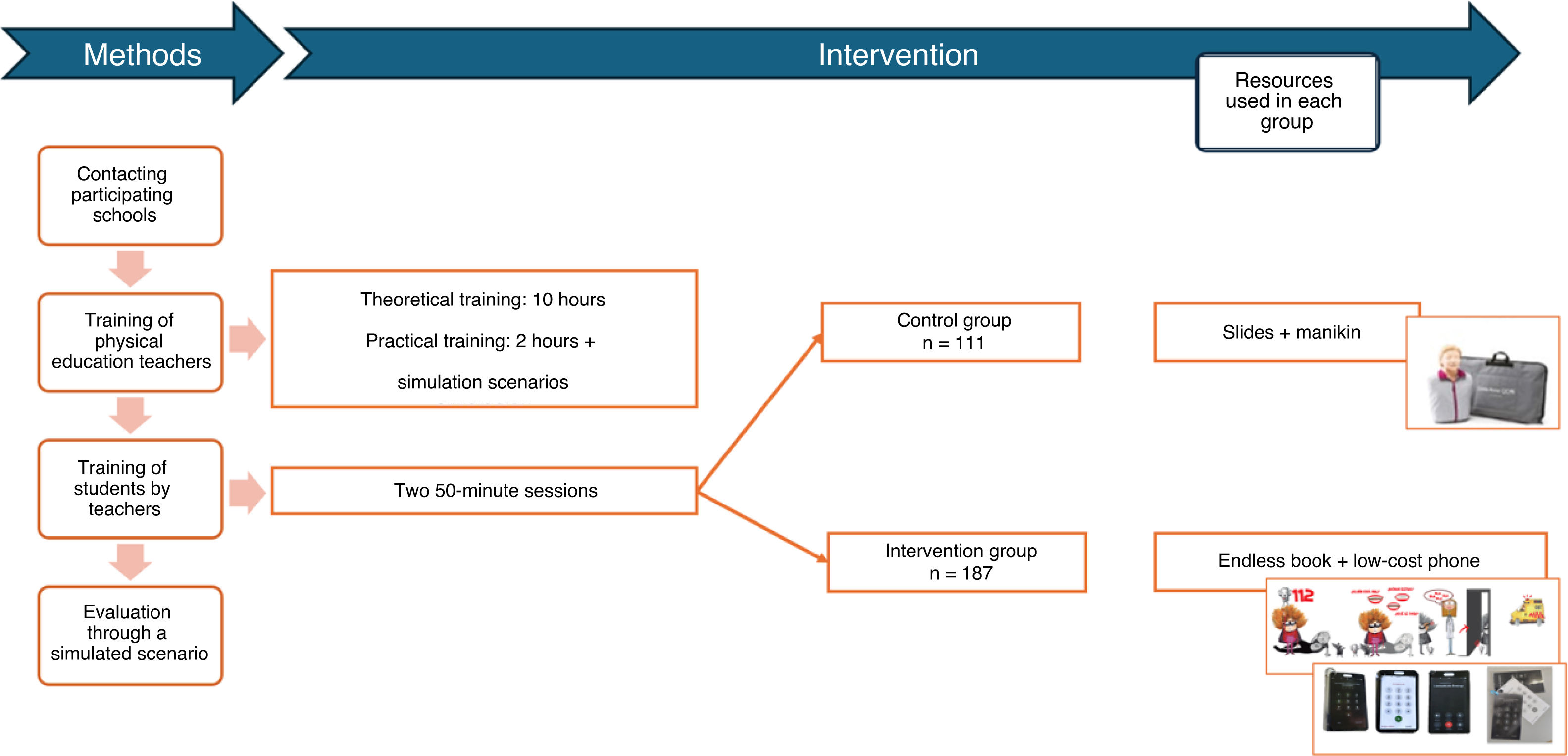
InterventionsThe intervention consisted of two 50-minute sessions delivered by the physical education teacher of each school, who had previously been trained by the research team, and followed the 2021 ERC guidelines.7
The methodology applied in both groups was identical in terms of the student-to-instructor ratio (25:1) and the manikin-to-student ratio (1:5), as well as the duration and structure of the sessions. To ensure consistency across sessions, the teachers were provided with a manual that included three standardized simulation scenarios.
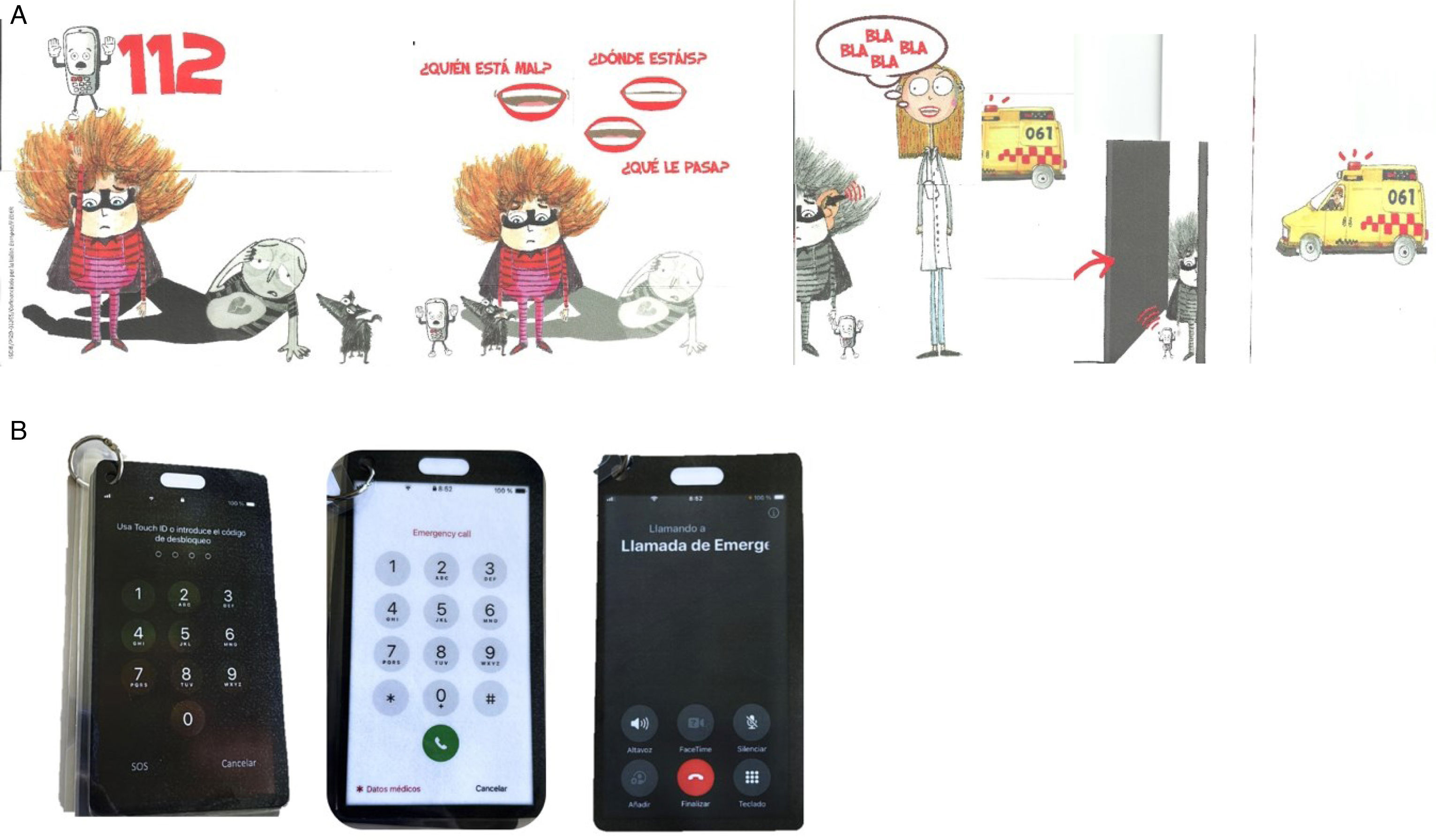
The first session consisted of a theoretical explanation, which was delivered in the CG using slides and the teacher’s telephone simulator; at the IG, the students manipulated and explored the Endless Book (Fig. 1A) with the help of the teachers (there was one Endless Book per student) and simulated a phone call using a laminated cardboard phone simulator (Fig. 1B) (there was one phone per two students).

In the second session, the teachers gave a practical demonstration of the covered topics, and, last of all, the students participated in three simulations during which they received feedback from the teachers and discussed their performance (Fig. 2).
Resources8
- •
Endless Book: picture book with a short accompanying text designed to teach children how to recognize cardiac arrest and contact emergency services immediately. It features four scenes arranged in a cyclical pattern, so the story is always read in the same order (Fig. 1A).
- •
A minimum-cost telephone simulator made from laminated cardboard (Fig. 1B). The goal was for the students to practice calling emergency services, just as they would with a real phone.
- •
Instructor Manual: Teachers were provided with a manual outlining the methodological components, schedule, and classroom arrangements for the training, as well as the implementation of the three simulation scenarios.
Two assessments were conducted: the first in the 15 days following the training (E0) and the second at 12 months (E1).
In both groups, the students were presented with the following scenario: “You’re in your room playing, and suddenly you hear a noise in the living room. When you get there, you find your grandfather lying on the floor, face up, with a phone next to him. How would you react?”
A member of the research team played the role of the emergency services dispatcher once the student made the call.
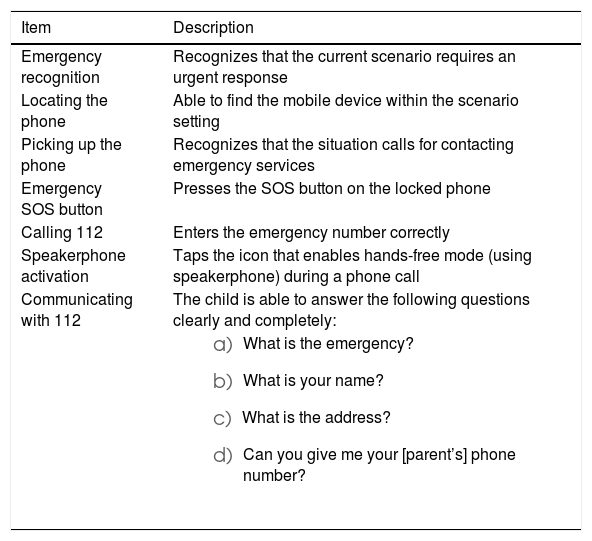
The evaluation was performed with a checklist (Table 1) to asses yes/no dichotomous variables that has been used in previous studies.8
Checklist used in the evaluation.
| Item | Description |
|---|---|
| Emergency recognition | Recognizes that the current scenario requires an urgent response |
| Locating the phone | Able to find the mobile device within the scenario setting |
| Picking up the phone | Recognizes that the situation calls for contacting emergency services |
| Emergency SOS button | Presses the SOS button on the locked phone |
| Calling 112 | Enters the emergency number correctly |
| Speakerphone activation | Taps the icon that enables hands-free mode (using speakerphone) during a phone call |
| Communicating with 112 | The child is able to answer the following questions clearly and completely: |
|
The research protocol was approved by the Ethics Committee of the University of Vigo, Spain (code 09-170123).
Statistical analysisThe data were analyzed with the Statistical Package for the Social Sciences (SPSS) software. We summarized quantitative data as absolute and relative frequencies. Groups were compared by means of the χ2 or the Fisher exact test, and changes over time (E0 vs E1) with the McNemar test. We calculated odds ratios (ORs) with the corresponding 95% confidence intervals (CIs) and assessed the size of the effect using the Cramer V: small, 0.10−0.30; moderate, 0.30−0.50; large, ≥0.50. For all tests, we considered p values of less than 0.05 statistically significant.
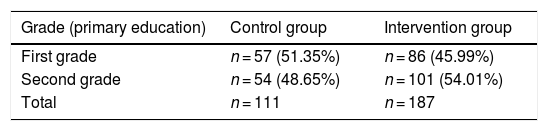
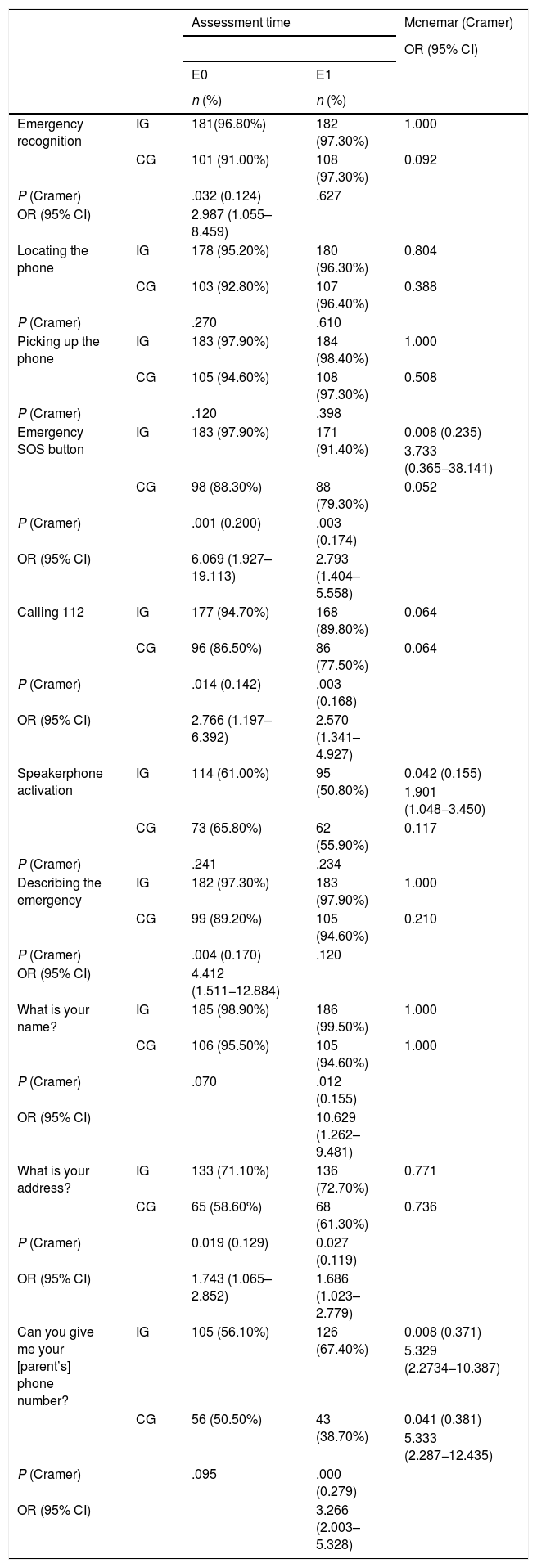
ResultsThe final sample consisted of 298 schoolchildren (50.8% female) out of the 330 who were initially eligible; 32 (9.4%) did not undergo the 12-month evaluation. Table 2 shows the distribution of participants by grade and group. There were no significant differences between groups (P = .380).
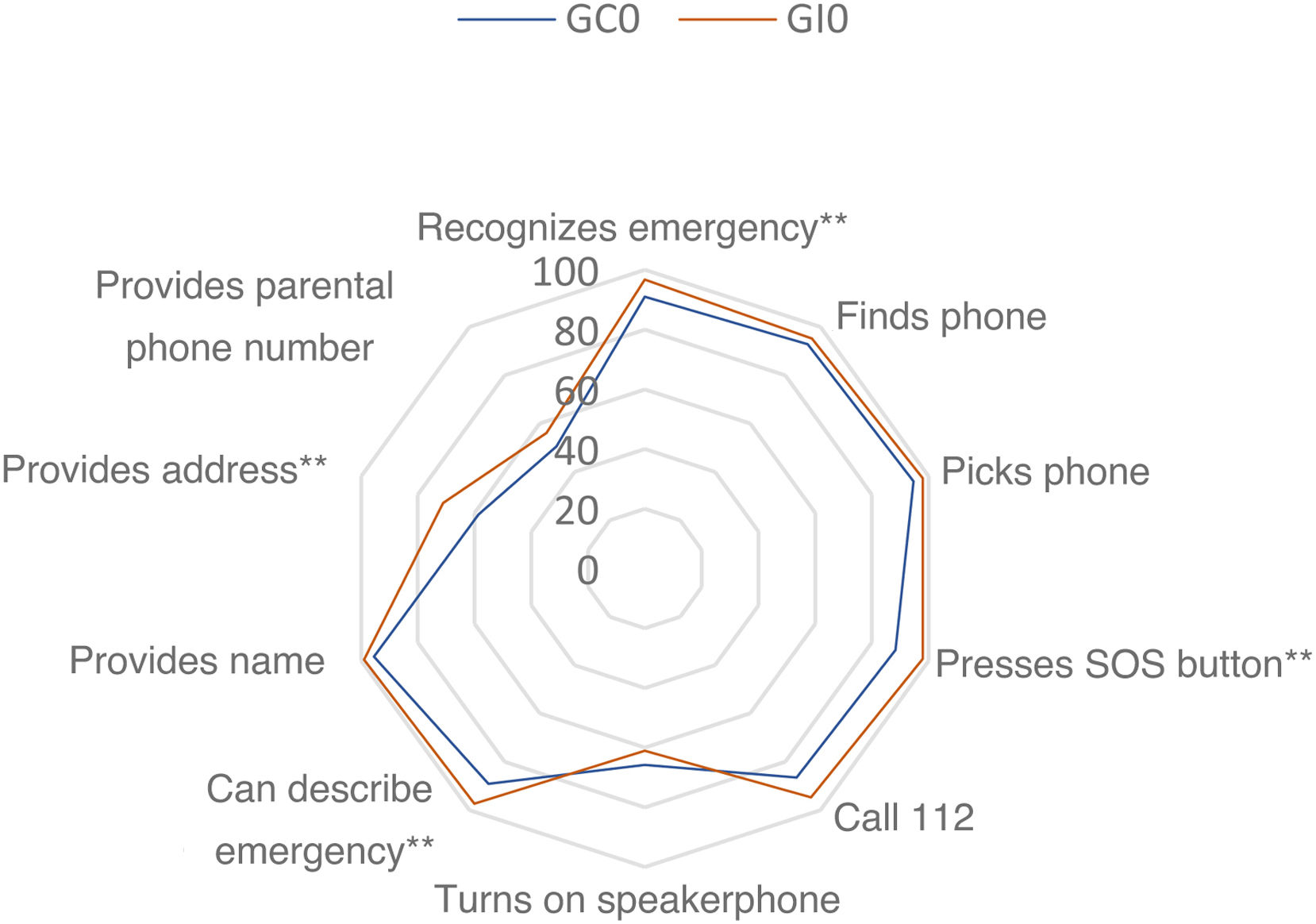
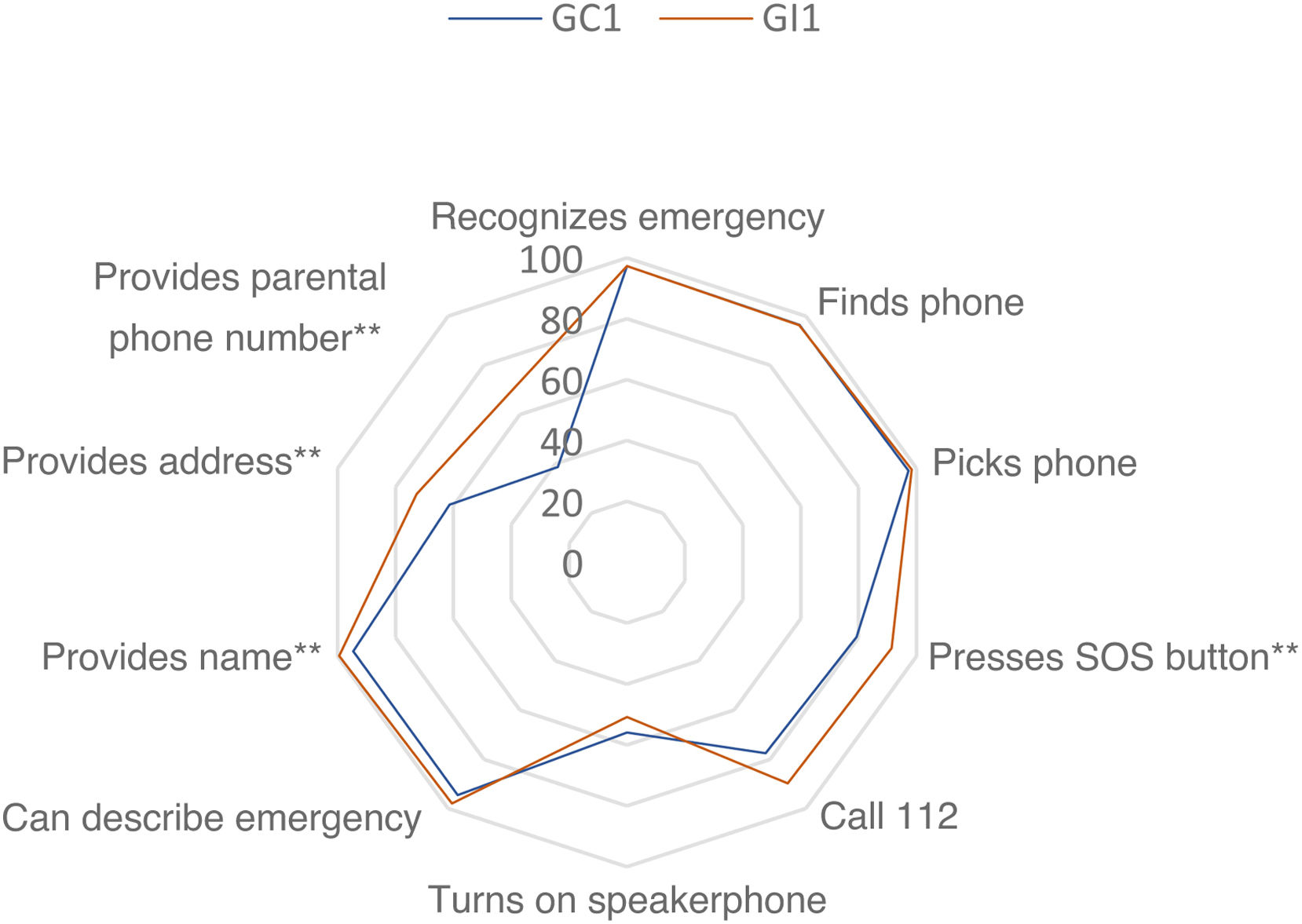
As can be seen in Table 3 and Fig. 3, more than 80% of children in both groups were able to perform 7 of the 10 assessed actions. There were statistically significant differences in favor of the IG for the following actions: emergency recognition, pressing the emergency SOS button, calling 112, describing the emergency, and providing the address (Table 3).
Results of the post-training and one-year follow-up evaluations and their comparison.
| Assessment time | Mcnemar (Cramer) | |||
|---|---|---|---|---|
| OR (95% CI) | ||||
| E0 | E1 | |||
| n (%) | n (%) | |||
| Emergency recognition | IG | 181(96.80%) | 182 (97.30%) | 1.000 |
| CG | 101 (91.00%) | 108 (97.30%) | 0.092 | |
| P (Cramer) | .032 (0.124) | .627 | ||
| OR (95% CI) | 2.987 (1.055–8.459) | |||
| Locating the phone | IG | 178 (95.20%) | 180 (96.30%) | 0.804 |
| CG | 103 (92.80%) | 107 (96.40%) | 0.388 | |
| P (Cramer) | .270 | .610 | ||
| Picking up the phone | IG | 183 (97.90%) | 184 (98.40%) | 1.000 |
| CG | 105 (94.60%) | 108 (97.30%) | 0.508 | |
| P (Cramer) | .120 | .398 | ||
| Emergency SOS button | IG | 183 (97.90%) | 171 (91.40%) | 0.008 (0.235) |
| 3.733 (0.365−38.141) | ||||
| CG | 98 (88.30%) | 88 (79.30%) | 0.052 | |
| P (Cramer) | .001 (0.200) | .003 (0.174) | ||
| OR (95% CI) | 6.069 (1.927–19.113) | 2.793 (1.404–5.558) | ||
| Calling 112 | IG | 177 (94.70%) | 168 (89.80%) | 0.064 |
| CG | 96 (86.50%) | 86 (77.50%) | 0.064 | |
| P (Cramer) | .014 (0.142) | .003 (0.168) | ||
| OR (95% CI) | 2.766 (1.197–6.392) | 2.570 (1.341–4.927) | ||
| Speakerphone activation | IG | 114 (61.00%) | 95 (50.80%) | 0.042 (0.155) |
| 1.901 (1.048−3.450) | ||||
| CG | 73 (65.80%) | 62 (55.90%) | 0.117 | |
| P (Cramer) | .241 | .234 | ||
| Describing the emergency | IG | 182 (97.30%) | 183 (97.90%) | 1.000 |
| CG | 99 (89.20%) | 105 (94.60%) | 0.210 | |
| P (Cramer) | .004 (0.170) | .120 | ||
| OR (95% CI) | 4.412 (1.511−12.884) | |||
| What is your name? | IG | 185 (98.90%) | 186 (99.50%) | 1.000 |
| CG | 106 (95.50%) | 105 (94.60%) | 1.000 | |
| P (Cramer) | .070 | .012 (0.155) | ||
| OR (95% CI) | 10.629 (1.262–9.481) | |||
| What is your address? | IG | 133 (71.10%) | 136 (72.70%) | 0.771 |
| CG | 65 (58.60%) | 68 (61.30%) | 0.736 | |
| P (Cramer) | 0.019 (0.129) | 0.027 (0.119) | ||
| OR (95% CI) | 1.743 (1.065–2.852) | 1.686 (1.023–2.779) | ||
| Can you give me your [parent’s] phone number? | IG | 105 (56.10%) | 126 (67.40%) | 0.008 (0.371) |
| 5.329 (2.2734−10.387) | ||||
| CG | 56 (50.50%) | 43 (38.70%) | 0.041 (0.381) | |
| 5.333 (2.287−12.435) | ||||
| P (Cramer) | .095 | .000 (0.279) | ||
| OR (95% CI) | 3.266 (2.003–5.328) | |||
Abbreviations: CG, control group; IG, intervention group, OR, odds ratio; E0, immediately post training; E1, one year post training.

The actions with the lowest performance rates (fewer than 70% of participants) were providing a parent’s phone number (CG, 56.10 vs IG: 50.50%; P = .095) and turning on the speakerphone (CG, 65.80 vs IG, 61.00%; P = .241).
Retention at 1 year post training (E1)Table 3 and Fig. 4 show the results of the follow-up evaluation at one year for both groups. We found that, compared to the CG, students in the IG achieved better results in half of the evaluated actions, with statistically significant differences in pressing the emergency SOS button, calling 112, providing their name, and providing a parent’s phone number.

In both groups, fewer than 60% of students turned on the speakerphone to enable hands-free use of the phone (CG, 50.80% vs IG, 55.90%; P = .234).
Intragroup longitudinal changes (E0–E1)Table 3 presents the learning outcomes. At the one-year follow-up, the CG exhibited poorer retention for the following actions: pressing the emergency SOS button, calling 112, and turning on the speakerphone (P = .117). The lowest retention corresponded to providing a parent’s phone number.
In the IG (Table 3), the actions with the poorest retention were also pressing the emergency SOS button and turning on the speakerphone. In contrast, the outcome with the greatest increase was providing a parental phone number (E0, 56.10% vs E1: 67.40%; P = .008).
DiscussionThis study shows that primary education students can learn the simple yet essential steps for activating the chain of survival, and that the use of simple, interactive, analog educational resources, such as the Endless Book and a very low-cost cell phone simulator, can improve learning and retention.
In 2015, De Buck et al.,9 after performing a systematic review of the evidence, established goals for the knowledge, skills and attitudes that should be acquired according to age and included the school curriculum. These recommendations were the basis for the selection of skills taught to the students who participated in our study.
At a young age, children can learn and practice BLS skills such as the chain of survival, and, within it, how to recognize cardiac arrest and contact emergency services.8 Our results are consistent with those of other studies, which suggests that innovative and interactive methodologies and resources—such as RCParvulari,10 Rescube11 or the use of training cards tailored to the student’s age12—may be comparable or even be more effective than traditional teaching methods.
Thus, several previous studies have compared traditional training with learning through manikins and educational manipulatives, such as the Rescube and the Endless Book, adapting the taught skills to the age of the participants.8,11,13 Their findings, which are consistent with those of our study, helped determine which specific, adapted educational tools have the potential to improve learning in the short and medium term.
In our sample, we observed that, following the training, only half of the children in the IG group completed the tasks of turning on the speakerphone, providing their address, and giving a parent’s phone number. One possible explanation is that the interactive resources used in the training (the Endless Book and the low-cost phone simulator) prioritize the general action sequence and the interaction during the call, but do not specifically train participants to provide certain personal information (such as a parent’s address or phone number) or to turn on the speakerphone, which may have made it difficult for students to carry out these tasks during the simulation. In contrast, the IG scored higher on those actions that were practiced directly using the phone simulator (such as making a call and communicating with emergency services), possibly due to the opportunity for repeated practice and the execution of a simulated call in a guided environment.
One year later, we found statistically significant differences in favor of the IG compared to the CG in five of the tasks, suggesting that the novel materials used in the training can improve skill retention. This could be due to more active learning and greater engagement of the students through sensory stimuli, which would facilitate the retention of these skills over time.14
Overall, the evidence on the subject of long-term skill acquisition among school-age children is still limited, which makes it difficult to draw firm conclusions in this regard. Studies similar to ours conducted by Branquinho et al.15 in children aged 7–12 years and Banfai et al.16 in students aged 5–7 years, with evaluations conducted 6 and 15 months later, respectively, found a tendency toward the gradual decay of knowledge retention, although knowledge remained above baseline levels. To some extent, these findings contrast with our own, as we did observe significant improvement in some outcomes compared to the initial evaluation. This discrepancy could be due to methodological differences, the nature of the educational resources utilized, or the evaluated skills, which underscores the need for further research on the factors that affect long-term learning.
On the other hand, we found improvement over time on the ability to provide a parental phone number. This outcome is not attributable to in-person instruction by teachers, so it is worth considering the influence of the family sphere. Students may have spontaneously transferred knowledge to their parents, given that the only formal intervention took place in the school setting. The fact that, one year later, a larger proportion of children remembered or had learned their parents’ phone numbers seems to indicate that the intervention may have sparked interest in the students and motivated them to discuss the contents of the training at home, thereby promoting consolidation and updating of that information within the family setting.17
Potential relevance of the findingsWe believe that our findings could be applicable to the fields of education and public health. The incorporation into the school curriculum of manipulatives and other interactive resources, such as the Endless Book and the low-cost phone simulator, could promote a more effective and sustainable approach to the teaching of basic life support skills.
These materials make it possible to tailor the content to the developmental stage of the students and facilitate understanding of essential concepts of the chain of survival from an early age. Furthermore, their low cost and ease of use make them ideal tools for integration into educational curricula, as they are more affordable. The integration of these resources can help raise future generations that are better prepared and more committed to providing early care in emergency situations.
LimitationsOur study has certain limitations that should be taken into account.
The observed differences between the control and intervention groups could be attributed to the lack of randomization in the study. Schoolchildren were assigned to groups based on organizational and logistical criteria related to the program’s implementation. Priority was given to maximizing the number of participants exposed to the intervention while maintaining a sufficiently large control group for comparison. The study was conducted in a specific geographical area, in a particular type of center (state-subsidized private schools), and in a population with specific sociodemographic characteristics. The intervention was delivered by schoolteachers who had been trained beforehand using a standardized training and evaluation model; however, we cannot rule out the possibility of some variability in the implementation of the training program. Both the training and the evaluations were conducted in a controlled and secure simulation environment, a factor to consider when extrapolating the results to a real-world situation. The low-cost phone used in the simulation ran a specific operating system (iOS). Since the interface, navigation, and steps for making a call may differ across operating systems, the results obtained may not be directly applicable to devices running other systems, such as Android.
ConclusionsSchoolchildren aged 5–8 years can learn and recall the initial steps in the chain of survival with a simple educational strategy delivered by their own teachers with the help of inexpensive analog hands-on educational materials. The use of these resources is associated with improved retention of learned contents compared to conventional training approaches. Their implementation in schools is feasible, cost-effective, and promotes practical learning from an early age
CRediT authorship contribution statementMaría García-Martínez (MGM): conceptualization and methodology of the study, formal analysis, initial draft of the manuscript.
Santiago Martínez-Isasi (SMI): formal analysis, methodological support, writing (drafting and revising), supervision and administration of the project.
Cristina Varela-Casal: design of learning resources, writing (drafting, revising, editing).
Antonio Rodríguez-Núñez (ARN): conceptualization and supervision of the study, writing (drafting, revising, editing).
FundingResearch funded by the Instituto de Salud Carlos III (PI23/00687) and cofunded by the European Union.
María García-Martínez is the recipient of a predoctoral fellowship from the Spanish Ministry of Science, Innovation and Universities (FPU23/03035).
The authors have no conflicts of interest to declare.