Infant botulism is a potentially fatal acute neuroparalytic disorder caused by Clostridium botulinum that is rare in infants. Its diagnosis is complex, and early suspicion is essential to improve outcomes.1
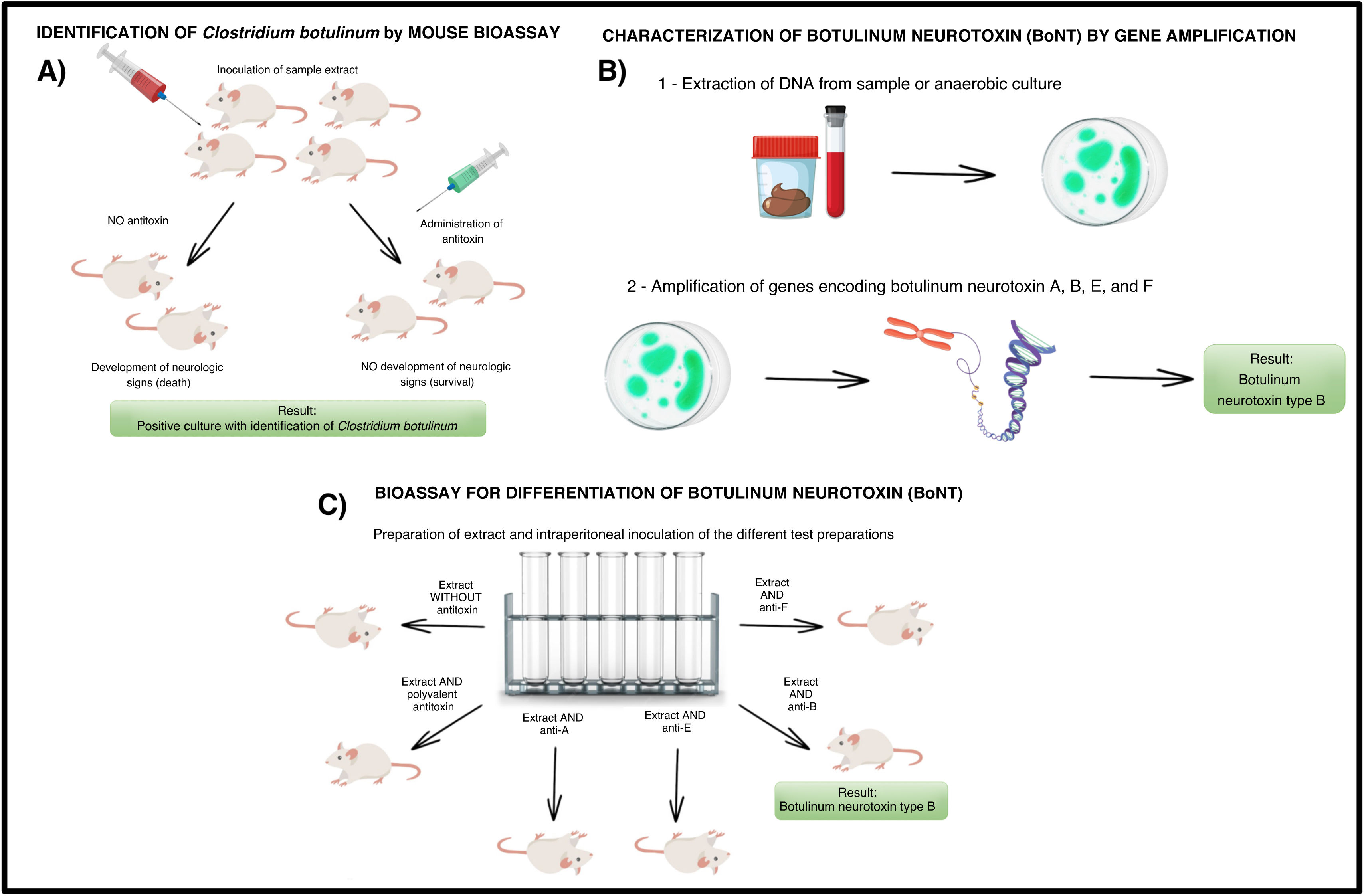
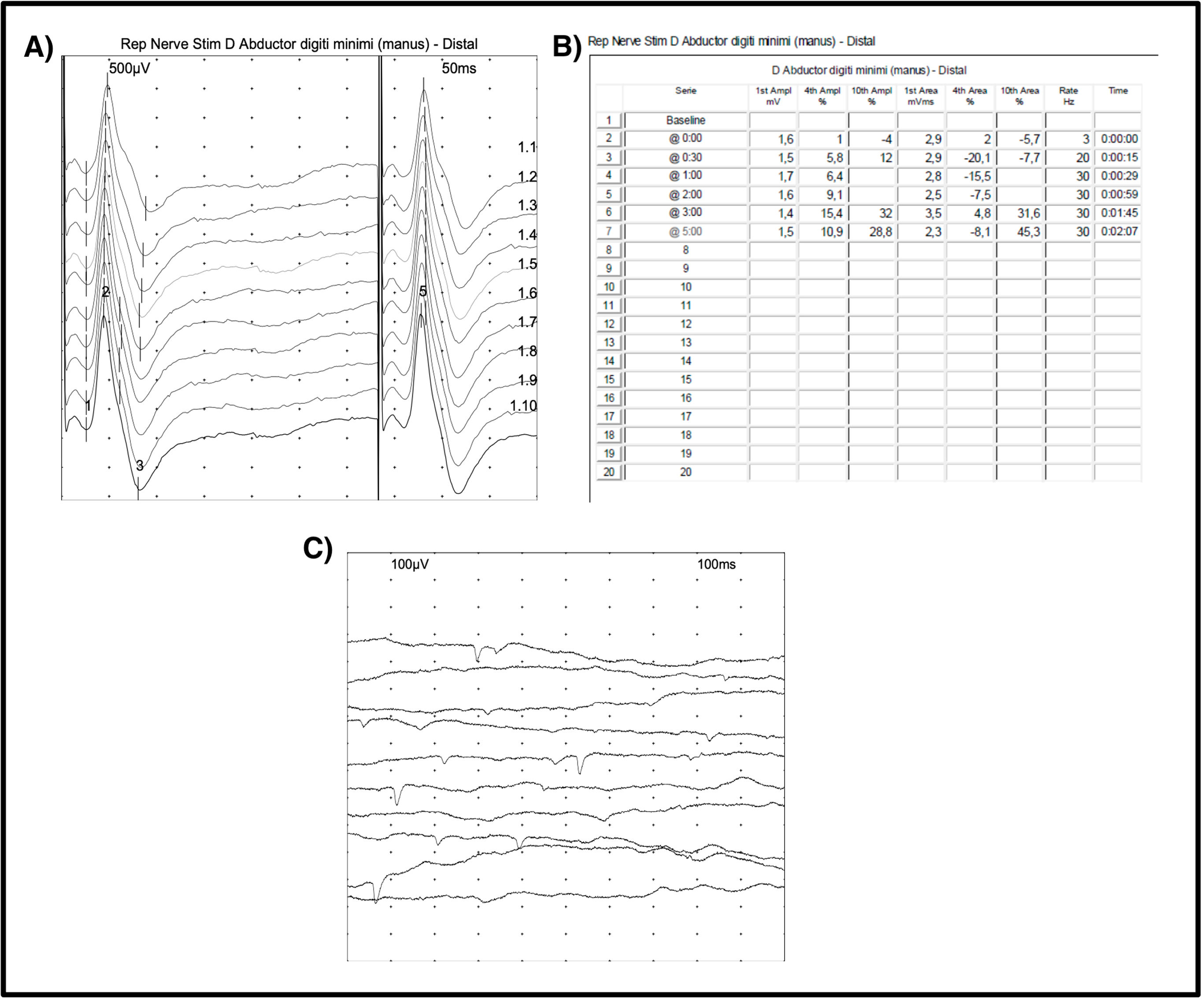
We present the case of male infant aged 11 months with listlessness, food refusal, somnolence and altered cry who subsequently developed axial hypotonia, ptosis, trouble suckling and absent stretch reflexes 24 h later, requiring admission to the pediatric intensive care unit. The findings of initial tests (laboratory and imaging) were normal. The neurologic symptoms were compatible with Miller Fisher syndrome, a rare variant of Guillain-Barré syndrome, but the subsequent history-taking revealed exposure to canned foods and soil, prompting consideration of botulism in the differential diagnosis. The lack of response to corticosteroids, immunoglobulin therapy, and plasmapheresis, negative anti-GQ1b antibody results, and confirmation of botulism by means of a mouse bioassay (Fig. 1), along with the findings of the electrodiagnostic study (Fig. 2), allowed initiation of treatment with equine-derived botulinum antitoxin, which achieved full resolution.
Mouse bioassay for screening and typing of botulinum neurotoxin. (A) Identification of Clostridium botulinum through observation of signs of botulism following inoculation of a sample extract. (B) Toxin screening and typing through intraperitoneal inoculation of sample extracts in mice. Control groups (extract treated with polyvalent antitoxin) and groups given extract treated with monovalent antitoxin (anti-A, anti-B, anti-E, and anti-F). The protection conferred by serotype B antitoxin (anti-B) confirmed the presence of neurotoxin type B. (C) Detection and differentiation of the genes encoding the different neurotoxin through extraction of DNA from a sample or anaerobic culture and performance of a molecular test (PCR) that enables identification of the specific neurotoxin type involved in the case.
Electrodiagnostic study in a patient with botulism. (A) Repetitive stimulation of the right ulnar nerve, recorded from the abductor digiti minimi muscle, showing a progressive, abnormal increment in compound muscle action potential (CMAP) amplitude and area during high-frequency repetitive nerve stimulation (30 Hz), consistent with a presynaptic disorder of neuromuscular transmission. (B) Quantitative recording during repetitive stimulation of the right ulnar nerve. The responses to each stimulus show a 30% increment (range, 28%–45%) in CMAP amplitude and area relative to the initial potential, confirming a presynaptic pattern. Values obtained for each stimulus showing a 30% increase (oscillations: 28%–45%) in amplitude and area compared to the initial CMAP, confirming the presynaptic pattern. (C) Electromyography of the left deltoid muscle at rest. Fibrillations and positive sharp waves indicative of acute motor unit involvement (described in advanced stages of botulism).
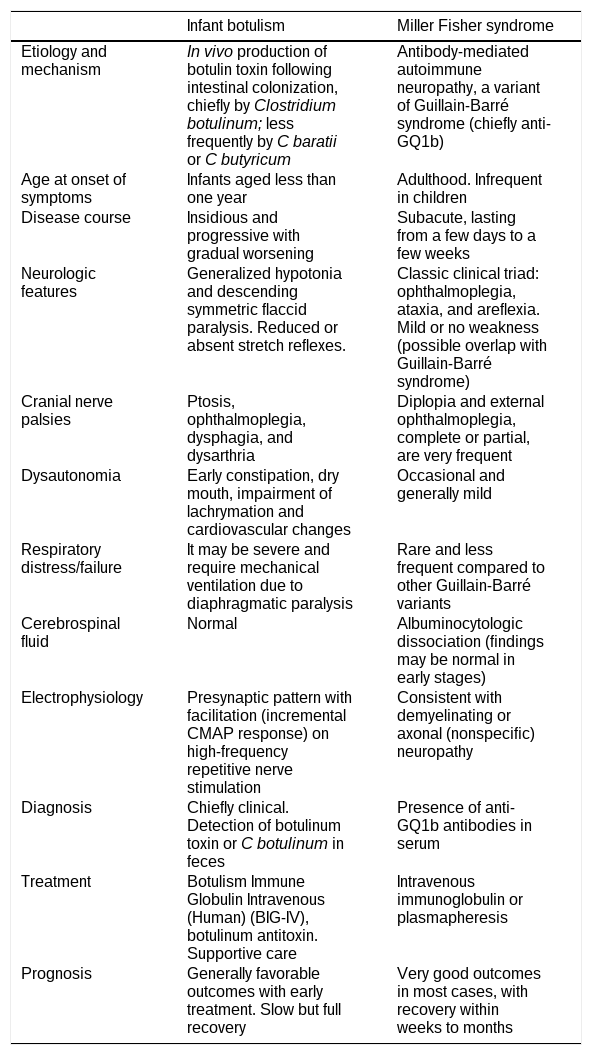
In adults, botulism can mimic stroke or Miller Fisher syndrome, but a review of the literature did not yield similar pediatric cases. In our patient (Table 1), the clinical course and testing results were key in making the diagnosis.2
Clinical and diagnostic features of infant botulism and Miller Fisher syndrome.
| Infant botulism | Miller Fisher syndrome | |
|---|---|---|
| Etiology and mechanism | In vivo production of botulin toxin following intestinal colonization, chiefly by Clostridium botulinum; less frequently by C baratii or C butyricum | Antibody-mediated autoimmune neuropathy, a variant of Guillain-Barré syndrome (chiefly anti-GQ1b) |
| Age at onset of symptoms | Infants aged less than one year | Adulthood. Infrequent in children |
| Disease course | Insidious and progressive with gradual worsening | Subacute, lasting from a few days to a few weeks |
| Neurologic features | Generalized hypotonia and descending symmetric flaccid paralysis. Reduced or absent stretch reflexes. | Classic clinical triad: ophthalmoplegia, ataxia, and areflexia. Mild or no weakness (possible overlap with Guillain-Barré syndrome) |
| Cranial nerve palsies | Ptosis, ophthalmoplegia, dysphagia, and dysarthria | Diplopia and external ophthalmoplegia, complete or partial, are very frequent |
| Dysautonomia | Early constipation, dry mouth, impairment of lachrymation and cardiovascular changes | Occasional and generally mild |
| Respiratory distress/failure | It may be severe and require mechanical ventilation due to diaphragmatic paralysis | Rare and less frequent compared to other Guillain-Barré variants |
| Cerebrospinal fluid | Normal | Albuminocytologic dissociation (findings may be normal in early stages) |
| Electrophysiology | Presynaptic pattern with facilitation (incremental CMAP response) on high-frequency repetitive nerve stimulation | Consistent with demyelinating or axonal (nonspecific) neuropathy |
| Diagnosis | Chiefly clinical. Detection of botulinum toxin or C botulinum in feces | Presence of anti-GQ1b antibodies in serum |
| Treatment | Botulism Immune Globulin Intravenous (Human) (BIG-IV), botulinum antitoxin. Supportive care | Intravenous immunoglobulin or plasmapheresis |
| Prognosis | Generally favorable outcomes with early treatment. Slow but full recovery | Very good outcomes in most cases, with recovery within weeks to months |
Abbreviation: CMAP, compound muscle action potential.
This case highlights the challenges of diagnosing infant botulism and the importance of integrating the findings of the clinical evaluation, history-taking, and diagnostic tests to enable early and effective treatment.3
FundingThis research did not receive any external funding.
The authors have no conflicts of interest to declare.