
Pain assessment is an essential component of the evaluation of pediatric patients. In the context of home hospitalization, pain management poses a clinical challenge, as it requires active participation from caregivers and must be supported by adequate training. The main objective of this study was to describe the identification, assessment, and management of pain in a hospital-at-home unit after the implementation of a protocol.
Materials and methodsWe conducted a prospective, observational, and descriptive study following the implementation of a pain management protocol. The sample included all patients admitted to the unit. The following variables were assessed: the ability of the caregiver to identify and manage pain, and the approach to pain management during painful procedures performed at home.
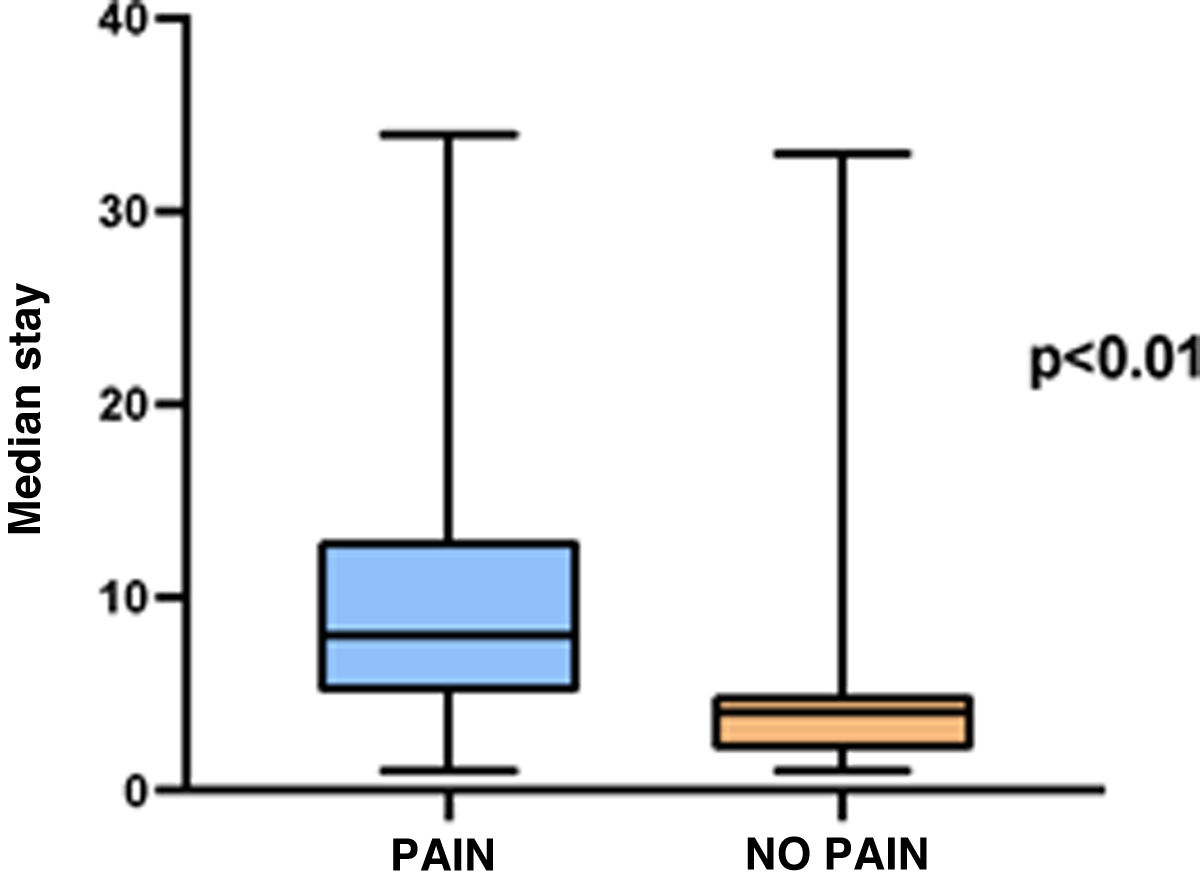
ResultsThe study included a total of 309 care episodes corresponding to 198 patients. Pain was adequately documented in 264 cases (85.4%). We found near-perfect agreement between caregiver- and provider-reported pain assessments (κ = 0.96; P < .001). Pain was identified in 31 procedures (10.0%). The median length of stay was significantly longer among patients with pain compared to those without pain (8 days [IQR, 5–13] vs 4 days [IQR, 2–5]; P < .01). Only three patients (1%) required hospital readmission due to poor pain control. A total of 32 painful procedures were performed, and some type of analgesic strategy was used in all of them: nonpharmacological measures in 12 patients and topical analgesia combined with nonpharmacological strategies in 19.
ConclusionsPediatric pain management at home appears feasible and effective through structured protocols that include caregiver participation and appropriate training. The high compliance rate and minimal discrepancy between caregiver and health care staff assessments suggest that the model is safe and well-accepted by both caregivers and professionals.
La evaluación del dolor es imprescindible dentro de la evaluación del paciente pediátrico. En el contexto de hospitalización a domicilio el control del dolor plantea un reto asistencial, ya que requiere de la participación de los cuidadores y debe ir acompañada de una adecuada formación previa. El objetivo principal del estudio fue describir la identificación, valoración y control del dolor en una unidad de hospitalización a domicilio (HAD) tras la implantación de un protocolo.
Material y métodosSe realizó un estudio observacional descriptivo y prospectivo tras la implantación de un protocolo de control del dolor, en el que se incluyeron los pacientes que ingresaron en la unidad domiciliaria. Se valoró: identificación y tratamiento del dolor por parte de los cuidadores y el manejo del dolor durante procedimientos dolorosos realizados.
ResultadosSe incluyeron 309 procesos que correspondían a 198 pacientes. En 264 procesos (85,4%) se realizó un registro adecuado del dolor. Se observó una concordancia casi perfecta entre la valoración del dolor realizada por cuidadores y profesionales sanitarios (índice kappa = 0,96; P < ,001). En un total de 31 procesos los pacientes presentaron dolor (10%). La mediana de días de estancia en la HAD fue significativamente superior en el grupo de pacientes con dolor (8 [5–13] días frente a 4 [2–5] días; P < ,01). Solamente 3 pacientes (1%) precisaron reingreso hospitalario por mal control del dolor. Se realizaron 32 procedimientos dolorosos y se utilizó algún tipo de estrategia analgésica en todos ellos: no farmacológica en 12 pacientes y analgesia tópica combinada con estrategias no farmacológicas en 19.
ConclusionesEl control del dolor pediátrico en el domicilio es posible y efectivo mediante protocolos estructurados que incluyen la participación de los cuidadores y la capacitación adecuada. La alta tasa de cumplimiento y la mínima discordancia entre la valoración de los cuidadores y el personal sugieren que el modelo es seguro y bien aceptado, tanto por los cuidadores como por el personal sanitario.

Pain assessment and management are key components of pediatric care.1 Pain, defined as an unpleasant sensory or emotional experience associated with actual or potential tissue damage,2 is a frequent symptom in hospitalized patients. Pediatric patients are subjected to invasive techniques that can cause pain somewhat frequently,3 and the experience of pain is associated with anxiety, worry, and behavioral distress in both children and families, which in turn is a source of stress for health care professionals, and may interfere with the correct performance of the procedure at hand. The physical and biological impact of pain in children is considerable4,5 and it is particularly relevant in neonates and young infants, in whom inadequate pain management is associated with an increase in morbidity and even mortality.6,7
Therefore, the performance of systematic pain assessments during the hospital stay is a clinical, ethical and emotional imperative.8–10 It facilitates the identification of complications, allows the adjustment of analgesic treatment based on the intensity, location, and duration of pain, helps prevent the negative impact of uncontrolled pain on neurologic, affective, and cognitive development, and minimizes the fear or stress associated with future medical procedures. In infants and young children who cannot report their pain verbally, validated scales that assess nonverbal signs or symptoms are also required.1
In recent years, pediatric hospital-at-home (HaH) has been established as a safe and cost-effective alternative to conventional hospitalization for certain patient profiles, offering benefits such as a reduced risk of nosocomial infections, improved emotional well-being for the child, and greater involvement of the family in the care process.11,12
However, pain management poses specific challenges in this care model, as the day-to-day responsibility for monitoring pain falls to the caregivers, and immediate access to health care professionals may be limited. Therefore, in this context, the involvement of caregivers in the assessment and documentation of pain becomes essential and must be accompanied by adequate training to enable them to identify signs of pain and participate in its management.11,13 It is also essential to ensure that the provided treatment is proportional to the intensity of the reported pain. In a systematic review that evaluated the experiences of children and families with pediatric HaH,12 Pinheiro et al. concluded that these programs helps strengthen family bonds, reducing the emotional impact of conventional hospitalization and improving the quality of life of children and their families; at home, children feel more comfortable and parents and caregivers feel more confident in participating in their care.12
Although pain management in the context of conventional pediatric inpatient care has been described extensively in clinical guidelines and protocols,1,10 the evidence on its evaluation and treatment in the pediatric HaH setting is still limited. Analyzing current practices and potential areas of improvement is key to guarantee that the same quality and safety standards of hospital-based care are upheld.
The primary objective of this study was to describe the identification, assessment, and management of pain in a pediatric HaH unit. The secondary objectives were to analyze the agreement in the identification of pain in pediatric patients admitted to the HaH unit by comparing the assessments made by parents and by health care professionals using validated scales, and to describe the application of the pain management protocol during painful procedures performed during the HaH stay.
MethodsStudy designWe conducted a prospective, observational and descriptive study following the introduction of a pediatric HaH pain management protocol. The study period ran from March 1, 2024 through March 31, 2025.
Inclusion criteria:
- •
Patients admitted to the HaH unit during the study period whose parents or caregivers consented to participation in the study.
Exclusion criterion:
- •
Refusal of consent by parent or caregiver.
The implemented protocol was adapted from the existing pediatric pain management protocol of the hospital to the specific characteristics of HaH (Appendix B, supplemental material). It is a standardized protocol for the assessment and management of pain in pediatric patients, developed to ensure effective, safe and personalized pain management at every stage and level of hospital-based care.
The protocol has two key components:
- 1
Identification and management of pain at home:
- •
Systematic assessment of pain by the caregiver using validated scales appropriate for the age of the patient.
- •
Daily documentation of pain in the vital signs log.
- •
Administration of prescribed home analgesic treatment according to pain intensity.1
- •
The scales used for pain assessment were:
- o
Premature Infant Pain Profile-Revised: for neonates and infants aged less than 2 months.14
- o
Crying, Attitude, Normal Breathing, Tone and Facial Observation scale (LLANTO, for its acronym in Spanish): for children aged 2 months to 5 years.15
- o
Faces Pain Scale-Revised: for children aged 3–5 to 10 years.16
- o
Verbal numerical rating scale/visual analog scale: children aged more than 10 years.17,18
- o
- •
- 2
Management of pain during painful procedures8,19 conducted at home:
- •
Pharmacological and/or nonpharmacological measures for pain relief according to the type of procedure and characteristics of the patient, per the hospital protocol (Appendix B, supplemental material).
- •
- 3
Education and training of families.
Prior to admission to the unit, the primary caregivers received structured training by the HaH care team in a single in-person, one-on-one session. This training included:
- •
Verbal explanation and printed copy of pain assessment scales appropriate for the age of the patient.
- •
Practical instruction on how to use the daily vital signs log, with particular emphasis on the adequate assessment and documentation of pain.
- •
Providing the family a copy of the HaH care plan, including specific guidance for pain management.
- •
Answering questions and verifying comprehension through teach-back techniques to ensure adequate skill acquisition by caregivers.
During the stay in the unit, care team members made daily visits to the home, and patients had 24/7 phone access to the department of pediatrics. During home visits, health care staff reviewed the pain log regularly, assessed the effectiveness of treatment, and adjusted interventions according to the patient’s condition and the joint assessment conducted with the family.
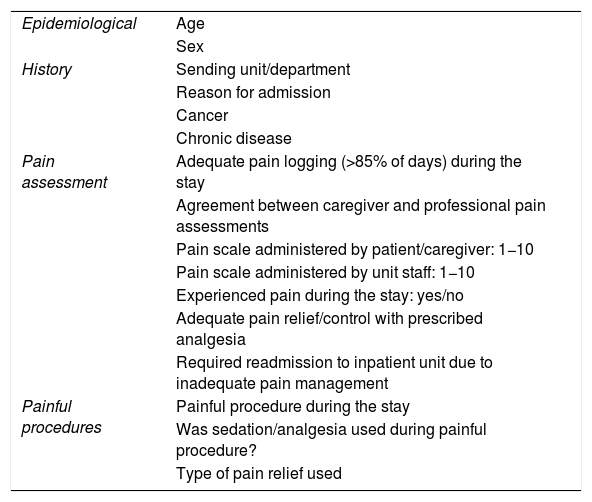
Study variablesWe collected data on the following variables (Table 1): age, sex, sending department/unit, reason for admission, cancer diagnosis, chronic illness diagnosis, adequate pain documentation (considered adequate when pain level was logged three times a day more than 85% of the days the patient stayed in the unit), agreement between caregiver and health care professional pain assessments, pain scale applied by patient/caregiver,1–10 pain scale applied by unit staff,1–10 pain during the HaH stay, adequate pain management with prescribed analgesia, need of readmission to inpatient unit due to poor pain control, performance of painful procedures during HaH stay, use of sedation or analgesia during painful procedures, implemented pain relief measures (none; nonpharmacological; topical analgesic; topical analgesic and nonpharmacological measures; systemic analgesic).
Study variables.
| Epidemiological | Age |
| Sex | |
| History | Sending unit/department |
| Reason for admission | |
| Cancer | |
| Chronic disease | |
| Pain assessment | Adequate pain logging (>85% of days) during the stay |
| Agreement between caregiver and professional pain assessments | |
| Pain scale administered by patient/caregiver: 1−10 | |
| Pain scale administered by unit staff: 1−10 | |
| Experienced pain during the stay: yes/no | |
| Adequate pain relief/control with prescribed analgesia | |
| Required readmission to inpatient unit due to inadequate pain management | |
| Painful procedures | Painful procedure during the stay |
| Was sedation/analgesia used during painful procedure? | |
| Type of pain relief used |
We defined “underlying chronic disease” as the presence of a preexisting condition, persisting in time or of prolonged duration, with onset prior to the acute episode that prompted admission, and that could have an impact on the patient’s general health, clinical outcomes, or management. The chronic disease would require ongoing follow-up and specific medication or care.
The study was approved by the ethics committee for research with medication of the hospital with the code name “DOLORDOM.01”. All legal guardians and/or patients were informed and signed the consent form required for participation in the study.
Statistical analysisThe statistical analysis of the data was performed with the software R version 3.5.315 and GraphPad Prism version 9.5.1. We have expressed quantitative variables as median and interquartile range (IQR) and qualitative variables as percentages. The association between variables was analyzed by means of the Fisher exact in the case of qualitative variables and the Mann-Whitney U test in the case of quantitative variables. We considered P values of less than .05 statistically significant.
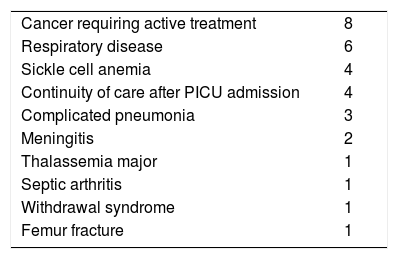
ResultsBetween March 1, 2024, and March 31, 2025, there were 309 admissions to the HaH unit, corresponding to 198 patients (66% male and 34% female). The median age at admission was 64 months (IQR, 24.5–163 months), and the average length of stay was 4 days (IQR, 2–6 days). The distribution by reason for admission was as follows: administration of intravenous medication (n = 112; 36.2%), need of oxygen therapy (n = 102; 33%), administration of subcutaneous medication (n = 44; 14.2%), monitoring and continuity of care (n = 30; 9.7%), wound care (n = 7; 2.2%), performance of diagnostic tests (n = 8; 2.5%), enteral feeding (n = 4; 1.2%), and administration of intramuscular medication (n = 2; 0.2%).
Detection and assessment of painIn 264 cases (85.4%), caregivers at home documented pain adequately using validated scales appropriate for the patient’s age.
We found near-perfect agreement was between the pain assessments performed by caregivers and those performed by health care professionals (kappa coefficient = 0.96; P < .001).
We identified a single discrepancy in the pain assessments in one patient who was admitted three times. This patient reported mild pain in his self-assessment, whereas the health care staff rated his pain as moderate.
Prevalence of painPatients reported pain in a total of 31 care episodes (10%), and the pain was unrelated to health care procedures. The subset of patients who reported pain did not differ significantly from the subset who did not report pain in terms of the prevalence of underlying chronic disease (P = .24; OR, 1.64; 95% CI, 0.70–3.80) or cancer (P = .66, OR, 0.84; 95% CI, 0.40–1.79) (Table 2).
The median length of stay in the HaH unit was significantly longer in the group of patients with pain (8 days [IQR, 5–13] vs 4 days [IQR, 2–5]; P < .01) (Fig. 1). Pain was documented more frequently in male compared to female patients (12.7% vs 4.8%), and the difference was statistically significant (OR = 0.76; 95% CI, 0.6−0.9; P < .05). In three patients (1%), pain could not be controlled with the prescribed analgesia, and they were readmitted to adjust treatment:
- •
One cancer patient with chronic pain secondary to the underlying disease, who required escalation to opioid therapy.
- •
One patient with sickle cell disease, who had a vaso-occlusive crisis and required escalation to strong opioids.
- •
One cancer patient with new-onset lower back pain, who required further evaluation and escalation of analgesia.

Comparison of the median length of stay in the hospital-at-home unit in patients who experienced pain during the stay versus those who did not. The horizontal axis (x-axis) indicates the presence or absence of pain; the vertical axis (y-axis) shows the median length of stay in days. Difference expressed as P < .01.
The caregivers administered the prescribed analgesics, all via the oral route. The need for intravenous analgesia was a criterion for readmission to a conventional inpatient ward. The drugs used for analgesia were: acetaminophen in 45% of patients (n = 14), ibuprofen in 13% (n = 4), ibuprofen and acetaminophen in 10% (n = 3), acetaminophen and metamizole in 13% (n = 4), and tapentadol (in a single cancer patient over six different stays in the HaH unit).
Painful procedures at homeA total of 32 painful procedures were performed in 31 patients, and some form of pain relief was used in every instance. The procedures included:
- •
Venipuncture: 16 procedures (51.6%).
- •
Implantation of port with reservoir for long-term central venous access (Port-a-Cath): 13 procedures (42%).
- •
Urinary catheterization: 2 procedures (6.4%).
- •
Placement of subcutaneous device: un procedures (3.2%).
One patient underwent two painful procedures during a single care episode.
The pain relief strategies used for painful procedures were:
- •
Nonpharmacological pain relief (physical and environmental interventions, distraction techniques, BUZZY, oral sucrose): 12 patients (38.7%).
- •
Topical analgesic (lidocaine and prilocaine cream) combined with nonpharmacological measures: 19 procedures (61.2%).
The procedures were completed successfully in 100% of the patients. We did not identify any adverse events associated with the procedures.
DiscussionThe findings of our study suggest that at-home pediatric pain management is both possible and effective. They highlight the importance of the active involvement of the family in HaH units, which is essential for the accurate assessment and effective management of pain, with results similar to those reported in the previous literature. The considerable adherence of caregivers to the documentation of pain (greater than 85%), along with the minimal discrepancy observed between the assessments made by caregivers and by health care professionals, suggested that the training received prior to admission was adequate and was indicative of a sufficient level of awareness regarding pain management.
Previous studies20,21 have evaluated the management of postoperative pain in the pediatric population, showing that the implementation of structured educational programs associated with at-home follow-up improves the management of pediatric pain at home and promotes adherence to treatment.
A study by Hansson et al.22 that analyzed the feasibility and psychosocial impact of a HaH program for pediatric patients with cancer found that the parent-reported pain scores were higher in the home-care group. This is particularly relevant in the field of pediatric care, as young children and infants cannot report their pain verbally, which calls for the use of validated observational scales appropriate for age along with rigorous education and training of caregivers to ensure reliable assessments.1,5,7 In contrast, in our study we found minimal discrepancies between the pain assessments of families and health care staff.
Patient characteristicsThere were no differences between the group of patients who experienced pain and the group who did not in the prevalence of underlying chronic disease or cancer. Since these conditions could have acted as confounders in the analysis of the length of stay, which was longer in the group with pain, we made a comparative analysis, and found no significant differences.
Pain managementIn most patients, pain was effectively controlled with the prescribed pain relief strategy. This was not the case in only three patients (1%); all of whom had underlying oncological diseases and required transfer to an inpatient setting for escalation of analgesia. This finding underscores that, although most patients can receive adequate pain control at home, those with severe pain—whether chronic or acute and related to the underlying disease—require close monitoring and dynamic adjustment of pain relief strategies.
These outcomes differ from those reported by Fortier et al., who conducted a study to assess pain management at home in children with cancer, and found that every study day there were children with clinically significant pain who did not receive any pain medication.23
At-home medication was delivered via the oral route, as the need for escalation to intravenous analgesia was considered a criterion for readmission to a conventional inpatient ward in order to optimize pain management, which can limit the use of these drugs in our unit. However, previous studies have assessed the use of patient-controlled analgesia delivered via a computerized ambulatory drug delivery device in the home setting in patients with cancer and severe pain, and found this alternative both feasible and effective.24
Painful proceduresInvasive procedures conducted in the context of HaH, in agreement with what has been observed in conventional hospitalization, are both frequent and potentially painful.6 In our study, the combination of nonpharmacological measures (such as distraction techniques and Buzzy-style devices) and topical analgesia allowed successful performance of procedures in absence of adverse events. These results highlight the importance of implementing pain management strategies tailored to the home setting, ensuring that procedures are conducted with a level of safety and quality meeting hospital standards.
Our study has some limitations that are worth noting. First, it was conducted in a single hospital-at-home unit, which may limit the generalizability of the results to other centers with different resources or patient profiles. Second, the sample included a limited number of patients with severe cancer pain; therefore, conclusions regarding the management of severe pain in this subgroup should be interpreted with caution. Finally, our study focused on pain management during the HaH stay and did not assess other potentially relevant long-term outcomes, such as treatment adherence or the overall experience of the caregivers, which could be subjects for future research.
In conclusion, our findings suggest that managing pediatric pain at home is possible and can be effective when using structured protocols that involve caregivers in patient care and include adequate training. The implementation of a structured and systematic approach to the identification, documentation, and treatment of pain, combined with appropriate management of painful procedures at home, could serve as a model that can be adapted to other pediatric HaH units and departments.
Furthermore, the high rate of adherence to adequate pain documentation and the minimal discrepancy between the assessments made by caregivers and by health care providers suggest that the protocol is safe and well accepted by both families and care teams; therefore, the model could be effective in involving caregivers and improving the quality of at-home care, as well as in reducing the need for hospital readmission due to uncontrolled pain. Although our results are promising, they should be interpreted as preliminary evidence that requires confirmation in prospective, ideally multicenter, studies.
The authors have no conflicts of interest to declare.
The following is Supplementary data to this article: