


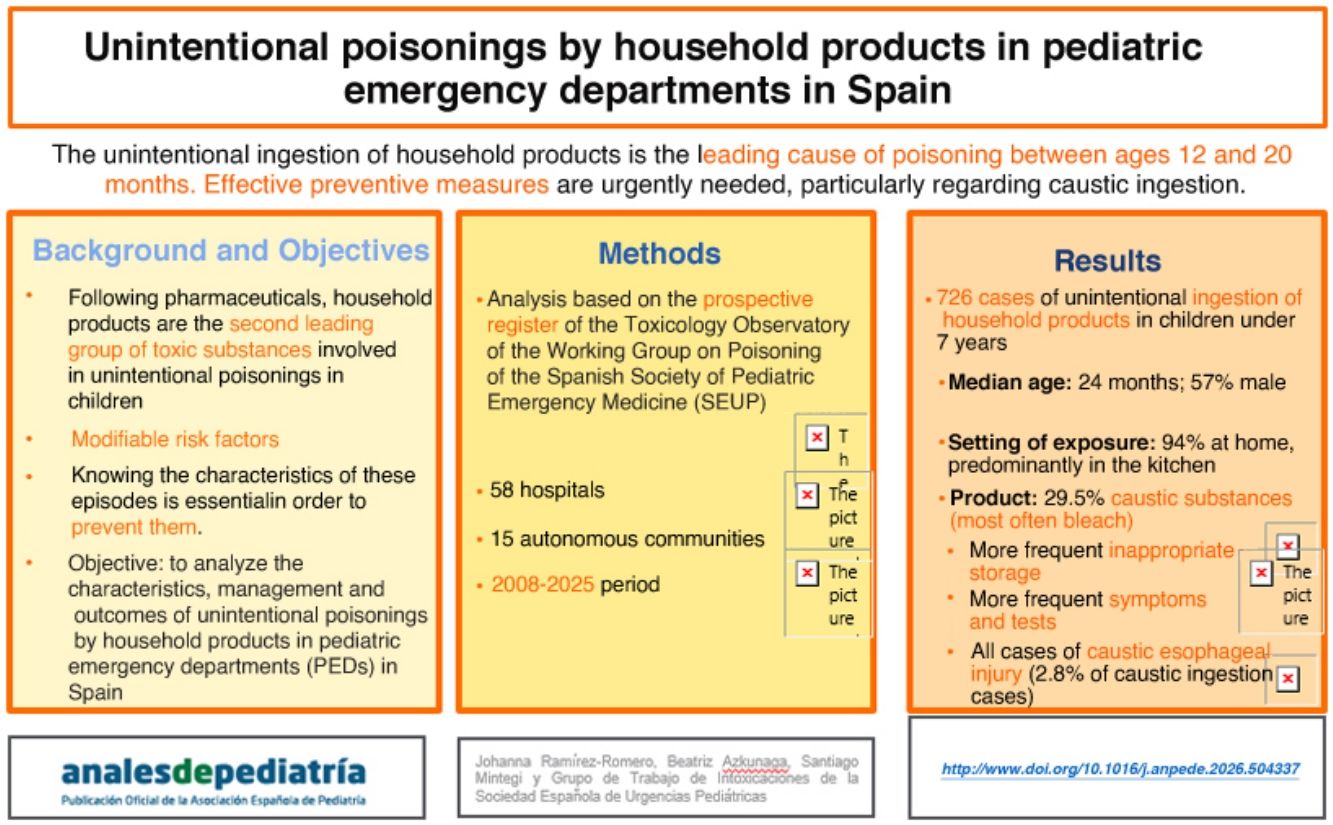
Household products are a frequent cause of unintentional poisoning in children under 7 years of age. However, very few studies analyze their characteristics. The objective of our study was to analyze the typology, epidemiology, interventions, and outcomes of cases of unintentional poisoning by household products managed in pediatric emergency departments (PEDs) in Spain.
MethodsObservational study based on the prospective registry of the Toxicology Observatory of the Poisoning Working Group of the Spanish Society of Pediatric Emergency Medicine (SEUP), including 58 PEDs. We analyzed cases registered between 2008 and 2025.
ResultsOf the 3900 registered poisonings, 726 (18.6%) corresponded to unintentional ingestion of household products in children under 7 years of age. The median age was 24 months (interquartile range, 16−35), 57% were male, and 94% of the episodes occurred at home, primarily in the kitchen (318 cases; 74.6%). Household products were the main group of toxic substances involved in children aged 12–20 months. Caustics were the most frequently involved type of product (214 cases [29.5%]; bleach was the most frequent individual agent, involved in 159 cases [21.9%]), and poisoning by caustic substances was significantly associated with storage in nonoriginal containers and within reach of children, as well as with a higher proportion of symptoms, additional tests, and endoscopies. No patients died. Esophageal caustic burns were documented in 6 patients (0.82%), all of them after ingestion of caustics (2.8% of this group).
ConclusionsUnintentional ingestion of household products is the leading cause of poisoning in children aged 12–20 months managed in Spanish emergency departments. The implementation of effective prevention strategies, especially regarding caustic substances, is urgently needed.
Los productos del hogar constituyen una causa frecuente de intoxicación no intencionada en menores de 7 años. Sin embargo, hay muy pocos estudios que analicen sus características. El objetivo es analizar la tipología, epidemiología, intervenciones y pronóstico de las consultas por intoxicaciones no intencionadas por productos del hogar en los servicios de urgencias pediátricos (SUP) españoles.
MétodosEstudio observacional basado en el registro prospectivo del Observatorio Toxicológico del Grupo de Trabajo de Intoxicaciones de la Sociedad Española de Urgencias de Pediatría, incluyendo 58 SUP. Se analizaron los casos registrados entre 2008 y 2025.
ResultadosDe las 3900 intoxicaciones registradas, 726 (18,6%) correspondieron a ingestas no intencionadas de productos del hogar en menores de 7 años. La mediana de edad fue de 24 meses (rango intercuartil: 16−35), el 57% eran varones y el 94% de los episodios ocurrieron en el domicilio, principalmente en la cocina (318; 74,6%). Los productos del hogar constituyeron el principal grupo de tóxicos implicado entre los 12 y los 20 meses de edad. Los cáusticos fueron el grupo más frecuente (214; 29,5%; siendo la lejía el agente individual más habitual, 159; 21,9%), asociándose, además, significativamente con almacenamiento en envases no originales y al alcance de los niños, así como con una mayor proporción de síntomas, pruebas complementarias y realización de endoscopias. Ningún paciente falleció. Se documentó causticación esofágica en 6 pacientes (0,82%), todos ellos tras la ingesta de cáusticos (2,8% de este grupo).
ConclusionesLa ingesta no intencionada de productos del hogar es la primera causa de intoxicación en los niños entre 12 y 20 meses de edad en los SUP españoles. Urge la implementación de estrategias preventivas eficaces especialmente en lo referente a los cáusticos.

Pediatric poisonings continue to be a significant public health problem at the global level. Thousands of children are evaluated in emergency departments each year for this issue, chiefly in relation to the accidental ingestion of pharmaceuticals or household products, of which most cases are preventable.1,2 In Spain, approximately 0.2% to 0.3% of pediatric emergency department (PED) visits are due to poisoning, which is unintentional in half of the episodes.3,4 Children are particularly susceptible to unintentional poisoning in the first years of life, during which their exploratory behavior increases the likelihood of exposure to potentially toxic substances.3–5
According to national clinical reports, more than 90% of pediatric unintentional poisonings occur in the home,3,4 and household products are the second leading group of causative agents involved in these episodes, following pharmaceuticals.2,4 Historically, caustic substances are the predominant agents in episodes involving household products.1 However, the particular characteristics of pediatric patients and the broad range of available household products result in substantial variation in clinical presentation, both in terms of clinical manifestations and severity.1,5,6
Episodes of poisoning by household products frequently involve modifiable risk factors, such as failing to keep these substances in their original container or out of reach of children.3,4 In addition, these exposures continue to occur in spite of regulatory measures enacted in recent years, such as the mandatory use of child-resistant packaging for certain chemicals, which have been found to reduce the incidence of severe poisoning.7
Knowing the characteristics of this type of poisonings is essential to identify specific risk factors and conceive of effective measures to contribute to the development of prevention strategies. To our knowledge, there are no large case series in Spain analyzing poisonings involving household products in pediatric patients. Therefore, the aim of our study was to analyze the characteristics, epidemiology, management and outcomes of PED visits associated with unintentional poisoning involving household products in Spain.
Material and methodsStudy designWe conducted a study based on a prospective registry of poisonings reported by 58 Spanish PEDs included in the Toxicology Observatory of the Working Group on Poisoning of the Sociedad Española de Urgencias de Pediatría (SEUP, Spanish Society of Pediatric Emergency Medicine) between 2008 and 2025.
Household products involved in poisoning episodes were classified according to their composition and the purpose for which they are commonly used in the home into: caustic products (including bleach, ammonia, caustic soda, and boric acid); detergents (including laundry detergents and fabric softeners, soap, and dishwashing products); household cleaning products (a category comprising toilet cleaners, glass cleaners, floor cleaners, and other cleaning products); air fresheners, pesticides, antiseptics, hydrocarbons, desiccants, and alcohols. We also created an “other” category for products that could not be included in the preceding groups.
Data collectionDuring the study period, the cases of exposure to potentially toxic substances managed at participating SUPs were recorded on the 13th of each month from 2008 through December 2014, and from January 2014 onward, on the 13th, 14th, and 15th of each month, using online forms managed through the Google Drive platform. The Toxicology Observatory is comprised of 58 PEDs in 15 autonomous communities in Spain, of which 47 serve patients aged up to 14 years, and the rest, patients up to 18 years. Participating PEDs reported the total number of visits and the details of all visits due to exposure to potentially toxic substances on the aforementioned dates. The forms were completed by the physician in charge following discharge from the PED in epidodes managed at the outpatient level or discharge from hospital in episodes that led to hospital admission.
The form for collecting data on individual poisoning episodes includes the following fields: date of episode, hospital, age, sex, toxic substance, mechanism of poisoning, location and type of storage of potential toxic substance, previous history of similar episodes in patient or another family member, prehospital assessment or treatment, person who accompanied the patient to the PED, means of transport to PED, time elapsed from exposure to arrival to the PED, signs and symptoms, diagnostic tests performed, treatment in SUP, patient destination, and patient outcomes. We analyzed the distribution of poisoning episodes by age group to identify the periods of highest risk of exposure to household products.
The data collection/registration method has been reported in a previous issue of this journal.
Appendix A lists the participating hospitals.
Statistical analysisThe statistical analysis was performed with the software IBM SPSS Statistics for Windows, version 24.0 (IBM Corp. Armonk, NY, USA). We summarized the data using the mean or median, interquartile range, and percentages or 95% confidence intervals. We compared quantitative variables by means of the Student t-test and categorical variables with the χ2 and Fisher exact tests. We considered P values of less than 0.05 statistically significant. The study was approved by the Clinical Research Ethics Committee of the Basque Country.
ResultsDuring the study period, in the days selected for data collection, participating PEDs received a cumulative total of 2 137 202 visits, of which 3900 (0.18%) were due to exposures to potentially toxic substances. Of these, 2526 (64.8%) occurred in children aged less than 7 years. In the subset aged less than 7 years, 2149 (85.1%) corresponded to unintentional poisoning episodes, and pharmaceuticals (1012 cases; 47.1%) and household products (726 cases; 33.7%) were the most frequently involved agents. The 726 episodes of unintentional poisoning involving household products comprised the study sample.
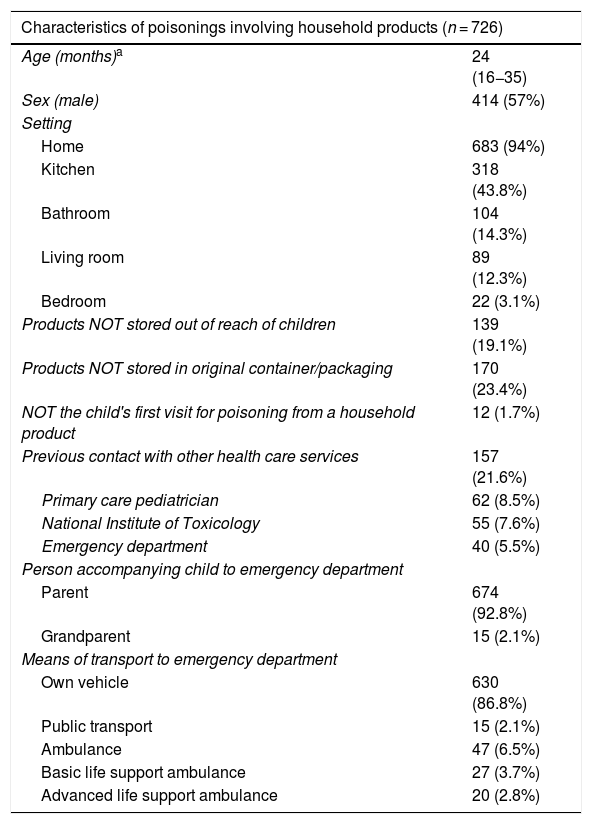
Table 1 describes the circumstances surrounding the unintentional exposures to household products and the characteristics of the products. Overall, the typical pattern involved young children (with a predominance of boys) who, after ingesting the substance in the home, usually in the kitchen, were quickly brought to the PED by their parents. Household products were the main group of toxic substances involved in poisoning episodes in the 12- to 20-month age group.
Characteristics of episodes of poisoning involving household products.
| Characteristics of poisonings involving household products (n = 726) | |
|---|---|
| Age (months)a | 24 (16−35) |
| Sex (male) | 414 (57%) |
| Setting | |
| Home | 683 (94%) |
| Kitchen | 318 (43.8%) |
| Bathroom | 104 (14.3%) |
| Living room | 89 (12.3%) |
| Bedroom | 22 (3.1%) |
| Products NOT stored out of reach of children | 139 (19.1%) |
| Products NOT stored in original container/packaging | 170 (23.4%) |
| NOT the child's first visit for poisoning from a household product | 12 (1.7%) |
| Previous contact with other health care services | 157 (21.6%) |
| Primary care pediatrician | 62 (8.5%) |
| National Institute of Toxicology | 55 (7.6%) |
| Emergency department | 40 (5.5%) |
| Person accompanying child to emergency department | |
| Parent | 674 (92.8%) |
| Grandparent | 15 (2.1%) |
| Means of transport to emergency department | |
| Own vehicle | 630 (86.8%) |
| Public transport | 15 (2.1%) |
| Ambulance | 47 (6.5%) |
| Basic life support ambulance | 27 (3.7%) |
| Advanced life support ambulance | 20 (2.8%) |
Data expressed as n (%) except for amedian and interquartile range.
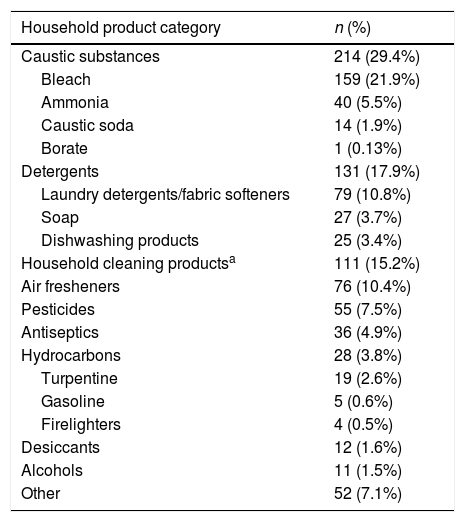
Caustic substances were the type of product involved most frequently (n = 214; 29.4% of episodes), chiefly on account of bleach (n = 159; 21.9% of total episodes; 74.3% of episodes of caustic ingestion). Table 2 details the toxic substances involved in the episodes. A total of 32 gastrointestinal endoscopies were performed, 31 of them following ingestion of a caustic substance. There was evidence of esophageal injury in six patients (2.8% of cases of caustic ingestion), including one with grade III esophagitis who went on to develop esophageal stenosis. Caustic agents were more likely to be stored outside their original containers (42.1% compared to 7.6% of other household products; P < .001) and within reach of children (29.4% compared to 11.4% of other household products; P < .05).
Categories of household products involved in documented poisoning episodes.
| Household product category | n (%) |
|---|---|
| Caustic substances | 214 (29.4%) |
| Bleach | 159 (21.9%) |
| Ammonia | 40 (5.5%) |
| Caustic soda | 14 (1.9%) |
| Borate | 1 (0.13%) |
| Detergents | 131 (17.9%) |
| Laundry detergents/fabric softeners | 79 (10.8%) |
| Soap | 27 (3.7%) |
| Dishwashing products | 25 (3.4%) |
| Household cleaning productsa | 111 (15.2%) |
| Air fresheners | 76 (10.4%) |
| Pesticides | 55 (7.5%) |
| Antiseptics | 36 (4.9%) |
| Hydrocarbons | 28 (3.8%) |
| Turpentine | 19 (2.6%) |
| Gasoline | 5 (0.6%) |
| Firelighters | 4 (0.5%) |
| Desiccants | 12 (1.6%) |
| Alcohols | 11 (1.5%) |
| Other | 52 (7.1%) |
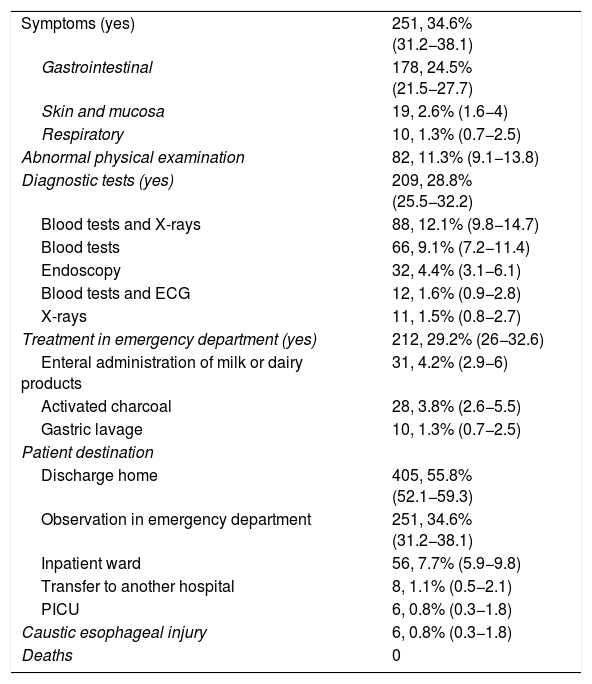
Table 3 summarizes the clinical presentation, management, and outcomes of pediatric poisoning due to exposure to household products. None of the patients needed advanced airway management nor cardiovascular support, and none died.
Clinical presentation, interventions, and outcomes of episodes of pediatric poisoning by household products.
| Symptoms (yes) | 251, 34.6% (31.2−38.1) |
| Gastrointestinal | 178, 24.5% (21.5−27.7) |
| Skin and mucosa | 19, 2.6% (1.6−4) |
| Respiratory | 10, 1.3% (0.7−2.5) |
| Abnormal physical examination | 82, 11.3% (9.1−13.8) |
| Diagnostic tests (yes) | 209, 28.8% (25.5−32.2) |
| Blood tests and X-rays | 88, 12.1% (9.8−14.7) |
| Blood tests | 66, 9.1% (7.2−11.4) |
| Endoscopy | 32, 4.4% (3.1−6.1) |
| Blood tests and ECG | 12, 1.6% (0.9−2.8) |
| X-rays | 11, 1.5% (0.8−2.7) |
| Treatment in emergency department (yes) | 212, 29.2% (26−32.6) |
| Enteral administration of milk or dairy products | 31, 4.2% (2.9−6) |
| Activated charcoal | 28, 3.8% (2.6−5.5) |
| Gastric lavage | 10, 1.3% (0.7−2.5) |
| Patient destination | |
| Discharge home | 405, 55.8% (52.1−59.3) |
| Observation in emergency department | 251, 34.6% (31.2−38.1) |
| Inpatient ward | 56, 7.7% (5.9−9.8) |
| Transfer to another hospital | 8, 1.1% (0.5−2.1) |
| PICU | 6, 0.8% (0.3−1.8) |
| Caustic esophageal injury | 6, 0.8% (0.3−1.8) |
| Deaths | 0 |
Data are expressed as n, %, and 95% confidence interval.
Abbreviations: ECG, electrocardiogram; PICU, pediatric intensive care unit.
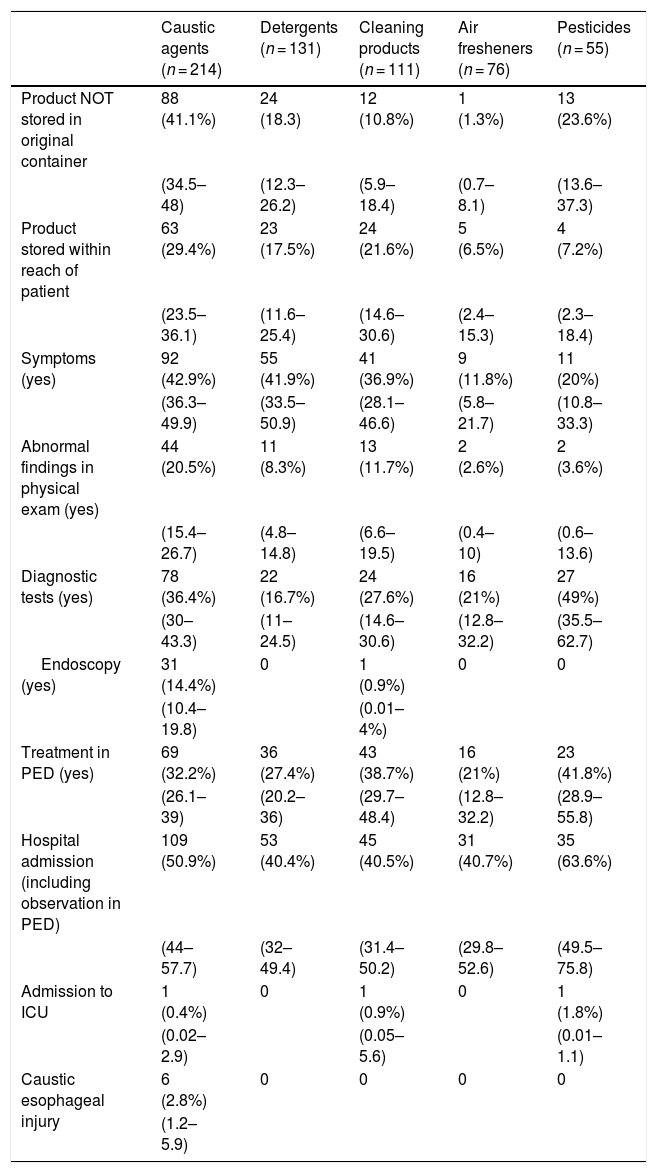
We found differences in product storage, episode severity, management, and patient outcomes in relation to the type of household product (Table 4). Thirty-two patients (4.4%) underwent an endoscopic examination, all patients who ingested caustic substances (n = 31; 14.4% of episodes involving these substances) except for one who ingested a household cleaning product (limescale remover). Six patients (0.82%) had caustic esophageal injury, all due to ingestion of a caustic product (bleach in 5 cases and ammonia in 1): two patients with grade I esophagitis, three with grade II esophagitis, and one with grade III esophagitis (Zargar classification), the latter associated with esophageal stenosis. Esophageal injury was present in 2.8% of patients with unintentional caustic ingestion and 3.14% of patients who had ingested bleach.
Differences in clinical presentation, management and outcomes in relation to the type of household product involved in the poisoning episode.
| Caustic agents (n = 214) | Detergents (n = 131) | Cleaning products (n = 111) | Air fresheners (n = 76) | Pesticides (n = 55) | |
|---|---|---|---|---|---|
| Product NOT stored in original container | 88 (41.1%) | 24 (18.3) | 12 (10.8%) | 1 (1.3%) | 13 (23.6%) |
| (34.5–48) | (12.3–26.2) | (5.9–18.4) | (0.7–8.1) | (13.6–37.3) | |
| Product stored within reach of patient | 63 (29.4%) | 23 (17.5%) | 24 (21.6%) | 5 (6.5%) | 4 (7.2%) |
| (23.5–36.1) | (11.6–25.4) | (14.6–30.6) | (2.4–15.3) | (2.3–18.4) | |
| Symptoms (yes) | 92 (42.9%) | 55 (41.9%) | 41 (36.9%) | 9 (11.8%) | 11 (20%) |
| (36.3–49.9) | (33.5–50.9) | (28.1–46.6) | (5.8–21.7) | (10.8–33.3) | |
| Abnormal findings in physical exam (yes) | 44 (20.5%) | 11 (8.3%) | 13 (11.7%) | 2 (2.6%) | 2 (3.6%) |
| (15.4–26.7) | (4.8–14.8) | (6.6–19.5) | (0.4–10) | (0.6–13.6) | |
| Diagnostic tests (yes) | 78 (36.4%) | 22 (16.7%) | 24 (27.6%) | 16 (21%) | 27 (49%) |
| (30–43.3) | (11–24.5) | (14.6–30.6) | (12.8–32.2) | (35.5–62.7) | |
| Endoscopy (yes) | 31 (14.4%) | 0 | 1 (0.9%) | 0 | 0 |
| (10.4–19.8) | (0.01–4%) | ||||
| Treatment in PED (yes) | 69 (32.2%) | 36 (27.4%) | 43 (38.7%) | 16 (21%) | 23 (41.8%) |
| (26.1–39) | (20.2–36) | (29.7–48.4) | (12.8–32.2) | (28.9–55.8) | |
| Hospital admission (including observation in PED) | 109 (50.9%) | 53 (40.4%) | 45 (40.5%) | 31 (40.7%) | 35 (63.6%) |
| (44–57.7) | (32–49.4) | (31.4–50.2) | (29.8–52.6) | (49.5–75.8) | |
| Admission to ICU | 1 (0.4%) | 0 | 1 (0.9%) | 0 | 1 (1.8%) |
| (0.02–2.9) | (0.05–5.6) | (0.01–1.1) | |||
| Caustic esophageal injury | 6 (2.8%) | 0 | 0 | 0 | 0 |
| (1.2–5.9) |
Data expressed as n, % and 95% confidence interval.
Abbreviations: ICU, intensive care unit; PED, pediatric emergency department.
We carried out an exploratory analysis of temporal trends in household product poisonings over the study period. There were no significant changes in the distribution of causative agents by type of product; caustic substances remained the predominant group throughout the study period. However, there was a gradual decline in the use of health care resources. The proportion of patients in whom diagnostic tests were performed decreased from 37.2% in the 2008–2013 period to 25.7% in the 2020–2025 period
(P = .046). Similarly, the administration of treatments in the emergency department decreased from 35.1% to 22.0% (P = .010), and the percentage of hospital admission decreased from 14.2% to 6.1% (P = .029). In contrast, the proportion of symptomatic patients remained stable throughout the study period (35.1%, 33.8%, and 37.1%, respectively; P = .69).
DiscussionUnintentional poisoning from household products continues to be a common reason for visits to Spanish PEDs, especially in the first years of life. Our registry confirms that household products are the leading group of toxic substances involved in poisonings between 12 and 20 months of age, even ahead of pharmaceuticals. This finding is consistent with the previous literature, which identifies the first years of life as the period of highest risk for unintentional poisoning in the home setting.8 Thus, this pattern is consistent with the evidence from international registries, such as the annual reports of the American Association of Poison Control Centers (AAPCC), according to which the highest incidence of unintentional exposure corresponds to children aged less than 5 years, with exposure occurring primarily in the home setting.9
Nearly every exposure in our case series occurred at home, usually in the kitchen, which was consistent with European and North American studies that identified it as the highest-risk setting.10,11 Storage of products in containers other than the original one and within reach of children is a well-documented risk factor. Several studies have shown that the transfer of caustic substances into beverage bottles significantly increases the risk of accidental ingestion.12,13
The predominance of caustic substances as the main type of products involved in poisonings, chiefly on account of bleach, was consistent with the trends observed in other case series.14 Caustic substances were not only the most frequent subgroup of household products involved in poisoning, but they also exhibited the highest risk profile. Our data showed a statistically significant association between caustic ingestion and improper storage. These findings are particularly relevant given that, while regulatory measures have been introduced to improve packaging safety, risky household practices that facilitate accidental exposure still persist.
Similarly, from a clinical standpoint, most cases had a favorable outcome. However, the comparative analysis of toxic substance groups revealed significant differences in both clinical severity and the interventions required. Caustic substances were the group associated with the highest proportion of symptomatic poisoning, abnormal findings on physical examination, and use of diagnostic tests, and accounted for all but one of the performed endoscopies and for all documented cases of esophageal caustic injury. The liquefactive necrosis with deep tissue penetration caused by alkaline substances explains the greater severity observed in this group.15 The current recommendations of the European Society for Paediatric Gastroenterology, Hepatology and Nutrition (ESPGHAN) support the selective performance of an upper GI endoscopy within 12–24 hours of the exposure in patients who exhibit symptoms or suspected of ingesting the substance intentionally.16,17 In a pediatric case series in Spain, Ripoll-Trujillo et al. demonstrated that the implementation of a less aggressive protocol allowed reducing the number of upper GI endoscopies without compromising patient safety.18 The frequency of lesions identified in this group of patients is comparable to the frequency reported in other contemporary pediatric series.19,20
On the other hand, in this case series, detergents were the second most common group of involved products. Due to the methodological limitations of this study, we were unable to determine the format of the detergent in all cases; however, given its relevance in this context, it is worth noting the emergent increase in ingestions of unit-dose formats (“pods”). These products are particularly appealing to children because of their colors and textures, and ingestion is often associated with more severe symptoms due to the higher concentration of ingredients in these formulations. Following their introduction to the European market, various studies reported an increase in medical consultations due to the ingestion of “pods,” which were associated with more severe gastrointestinal and respiratory symptoms compared to traditional liquid detergents.21–24 This phenomenon prompted regulatory actions and changes in packaging design in the European Union.25
Pesticide poisoning, although less common (7.5%), exhibited a pattern of greater medical complexity. These cases were associated with a high frequency of diagnostic tests (49%) and treatment in the emergency department (41.8%), as well as with the highest proportion of hospital admission (63.6%). When we analyzed the episodes included in this subset, we found no exposures to organophosphates; most episodes were attributed to pyrethroid-based insecticides for home use and anticoagulant rodenticides. This finding may be related to regulatory changes implemented in the European Union over the past few decades, which have progressively restricted the domestic use of numerous organophosphate compounds due to their potential toxic effects on human health and the environment. Furthermore, we did not identify cases of exposure to substances banned in the European Union. Although there were no documented sequelae, these data reflect the greater concern generated by these products due to their potential systemic toxicity. This finding was consistent with international evidence on poisonings involving organophosphates and other household insecticides.26,27
It is worth noting that there were no documented cases of organophosphate poisoning in this case series. Most episodes involved pyrethroid-based household insecticides and anticoagulant rodenticides.
The outcomes of exposure to air fresheners and detergents were nearly uniformly favorable.
As regards the management by providers at the PED, there are some aspects that call for reflection. Nearly 30% or patients received some form of treatment at the PED, which was not appropriate in some cases, for instance, administration of activated charcoal or milk/dairy products following ingestion of a household product. These interventions are the subject of do-not-do recommendations published and endorsed by scientific societies and,28 in addition to not being supported by solid scientific evidence, in the case of caustic ingestion, they can impede visualization in a subsequent endoscopic examination.17
Another interesting finding was the trend observed over the 17-year period. Although the distribution by type of product of the involved substances and the proportion of symptomatic patients remained stable, there was a gradual decrease in the use of diagnostic tests, the administration of treatments in the emergency department, and the hospital admission rate. These trends may reflect a gradual improvement in the management of this type of poisoning episodes in Spanish PEDs, driven by growing experience, the implementation of specific protocols, and initiatives for surveillance and training such as the Toxicology Observatory of the GTI-SEUP. Although the study design precludes the establishment of causal relationships, these findings suggest a more efficient use of health care resources without an apparent increase in the severity of patient outcomes.
There are limitations to our study. The design of the Toxicology Observatory does not always allow for the collection of data on certain aspects (such as the type of container in which household products are stored or more specific information about the involved products) that could improve the recommendations derived from the study. Nonetheless, we believe that the provided information is sufficiently relevant to be considered toward designing effective preventive measures.
We can conclude that the accidental ingestion of household products remains one of the leading causes of unintentional poisoning in Spanish PEDs, and it is the leading cause among children aged 12 to 20 months in this care setting. There is an urgent need to implement effective preventive strategies, especially with regard to caustic substances.
FundingThis research did not receive any external funding.
The authors have no conflicts of interest to declare.
Hospital Universitario Tajo: Carmen María Hinojosa Mateo; Hospital Quirón Bizkaia: Pablo Oliver Goicolea; Hospital Universitario Arnau de Vilanova: Neus Pociello; Hospital Universitario Basurto: Isabel Rodríguez Albarrán; Hospital Cabueñes: María Morán Poladura; Hospital Regional Universitario de Málaga: Silvia Oliva Rodríguez Pastor; Hospital Universitario Navarra: Miriam Palacios López, Nuria Clerigué Arrieta; CH Jaén: Tomàs del Campo Muñoz; CAU León: Ana Gloria Andrés Andrés, Manuel Muñiz Fontán; Centro de Salud Parc Taulí: Irene Baena Olomí, Sara Bajja Sánchez; Hospital Universitario Cruces: Johanna Ramírez Romero, Maria Campos Lopez, Jokin Kortazar Barron; Hospital Universitario Doce de Octubre: Sofía Mesa García; Hospital Universitario Donostia: José Ángel Muñoz Bernal; Hospital Universitario Dr. Peset: Ana Rodríguez Varela; Hospital Universitario Francesc de Borja: Carlos Miguel Angelats Romero, Inma Vilaplana Mora; Fundació Sant Hospital de la Seu d’Urgell: Joaquín Astete Frugoni; Hospital Universitario Fundación Alcorcón: Alberto Barasoain Millán; Hospital Universitario Gregorio Marañón: Paula Vázquez López; Hospital Infanta Cristina: María Dolores Rodríguez Mesa; Hospital Infanta Elena: Ingrid González Gil; Hospital Terrassa: Emma Barrera Segura; Hospital Laredo: Ana Jordá, Beatriz Vega Santa-Cruz; Hospital Mendaro: Laura Herrero García; Hospital Universitario Mutua Terrassa: Anna Pizà Oliveras; Hospital Universitario Niño Jesús: Juan Carlos Molina Cabañero; Hospital Materno-Infantil Las Palmas de Gran Canaria: Liliana Mangione Cardarella; Hospital Materno-Infantil Badajoz: Lucía Ramiro Mateo; Centro Asistencial Ávila: Sheila de Pedro del Valle; Hospital Montepríncipe, Hospital Sanchinarro, Hospital Torrelodones, Hospital Puerta del Sur: Ingrid González Gil; Hospital Príncipe de Asturias: María Ángeles García Herrero; Hospital Universitario Puerta de Hierro: Consuelo Benito Caldés, Paula Armero; Hospital Rey Juan Carlos: Gema Sabrido Bermúdez, Pablo Bello Gutierrez; Hospital Universitario Río Hortega: Isabel Bullón; Xarxa Hospitalaria i Universitaria de Manresa, Fundació Althaia: Eva Botifoll García, Zulema Lobato Salinas; Hospital Universitario Sant Joan de Déu: Lidia Martínez Sánchez, Carles Luaces Cubells, Lorena Algarrada Vico; Hospital San Pedro: Laura Martínez Mengual; Hospital Universitario Salamanca: Francisco Javier López Ávila; Hospital Toledo: Elena Aquino Oliva; Hospital Zumarraga: María Amalia Pérez Sáez; Hospital Universitario Politécnico La Fe: Rafael Señer Timoner; Hospital Mataró: Julio Baena Baca; Hospital Universitario Marqués de Valdecilla, Hospital Sierra-Llana: Ana Cristina Peñalba Citores; Hospital Gernika-Lumo: Amaya Alday; Hospital Miguel Servet: Carmen Campos Calleja; Hospital Universitario Son Espases: Victoria López Corominas; Centro Asistencia Soria: Natalia Muñoz García; Hospital Infantil La Paz: Begoña de Miguel Lavisier; Hospital CU Valencia: Parisa Khodayar Pardo; Hospital Severo Ochoa: Ana María Angulo Chacón; Hospital Universitario General de Villalba: Esther Casado Verrier; Hospital Universitario Santa Lucía: María Esther Ordóñez; Hospital Universitario Virgen del Rocío: Isabel Martínez; Hospital Infanta Leonor: Rosa María Zubimendi Pérez; Hospital Universitario Central de Asturias: Julián Rodríguez.
Appendix A lists the members of the Working Group on Poisoning of the SEUP who are also affiliated to the Toxicology Observatory.
Meeting presentation: This study was submitted to the XXX Annual Meeting of the Sociedad Española de Urgencias de Pediatría; May 14–16, 2026; and to the 72nd Annual Congress of the Asociación Española de Pediatría; June 11–13, 2026.

articles


Anales de Pediatría (English Edition) follows the Recommendations for the Conduct, Reporting, Editing and Publication of Scholarly Work in Medical Journals
