
To determine the prevalence of fecal carriage of antimicrobial resistance (AMR) genes in 40 pediatric inpatients managed in a rural hospital in Ethiopia (May–June 2024).
Patients and methodsWe conducted a prospective study in 40 pediatric inpatients managed at Gambo Rural General Hospital, Oromia, Ethiopia (May–June 2024). Stool samples were collected to assess for intestinal carriage and screened using the Allplex™ Entero-DR multiplex PCR assay for genes associated with carbapenemase-producing Enterobacterales (CPE), extended-spectrum beta-lactamase (ESBL)-producing Enterobacterales, and vancomycin-resistant Enterococcus (VRE). We collected data on demographic and clinical characteristics and antibiotic exposure. The statistical analysis included the Mann-Whitney U and Fisher’s exact tests.
ResultsFecal carriage of AMR genes was detected in 82.5% of patients. The most prevalent resistance mechanism was CTX-M (80.0%), followed by NDM (37.5%), vanA (32.5%), and VIM (10.0%). Testing did not detect KPC, OXA-48, IMP, or vanB genes. Malnutrition was present in 65% of the patients. There were no statistically significant differences in clinical outcomes (length of stay, severity) between patients with and without AMR genes (P > .05 in all comparisons; limited by the sample size of n = 40). Severe chronic malnutrition was less frequent among carbapenemase carriers (12.5% vs 62.5%; P = .033). This exploratory finding should be interpreted with extreme caution due to multiple testing, low statistical power (n = 40), and potential sources of bias including altered gut microbiota, reduced health care exposure among severely malnourished children, or chance. These observations only describe colonization patterns and cannot be used to infer causality.
ConclusionsWe found a high prevalence of fecal carriage of AMR genes in stool samples from pediatric inpatients in this hospital in rural Ethiopia, underscoring the need for enhanced surveillance, stewardship, and infection control measures in resource-limited settings.
Determinar la prevalencia de la presencia en heces de genes de resistencia a los antimicrobianos (RAM) en 40 niños ingresados en un hospital rural de Etiopía (mayo-junio de 2024).
Pacientes y métodosEstudio prospectivo con participación de 40 pacientes pediátricos ingresados en el Hospital General Rural de Gambo (Oromia, Etiopía) entre mayo y junio de 2024. Se recogieron muestras de heces para evaluar el estado de portador intestinal y se analizaron mediante el ensayo de PCR multiplex Allplex™ Entero-DR para detectar genes asociados a Enterobacterales productoras de carbapenemasas (EPC) y de beta-lactamasas de espectro extendido (BLEE), así como a Enterococcus resistente a la vancomicina (ERV). Se recogieron datos sobre las características demográficas y clínicas de los pacientes y del antecedente de exposición a antibióticos. En el análisis estadístico se utilizaron la prueba U de Mann-Whitney y el test exacto de Fisher.
ResultadosSe detectó la presencia de genes de RAM en las heces del 82,5% de los pacientes. El mecanismo de resistencia más frecuente fue CTX-M (80,0 %), seguido de NDM (37,5 %), vanA (32,5 %) y VIM (10,0 %). No se detectaron genes KPC, OXA-48, IMP ni vanB. El 65% de los pacientes presentaba desnutrición. No hubo diferencias significativas en la evolución clínica (duración de la estancia hospitalaria, gravedad) según la presencia o ausencia de genes de RAM (p > 0,05 en todas las comparaciones; limitado por el tamaño muestral de n = 40). La desnutrición crónica grave fue menos frecuente entre los portadores de carbapenemasas (12,5% vs. 62,5%; p = 0,033). Este hallazgo preliminar debe interpretarse con extrema cautela debido a la realización de pruebas múltiples, la escasa potencia estadística (n = 40) y las potenciales fuentes de sesgo, entre las que se incluyen la alteración de la microbiota intestinal, el menor contacto con servicios de salud entre los niños con desnutrición grave, o el azar. Los datos presentados solo describen patrones de colonización y no pueden utilizarse para inferir una relación causal.
ConclusionesSe observó una prevalencia elevada de genes de resistencia a los antimicrobianos en muestras de heces de los pacientes pediátricos ingresados en este hospital rural en Etiopía, lo que pone de relieve la necesidad de reforzar las medidas de vigilancia, de optimización del uso de antimicrobianos, y de gestión y control de infecciones en entornos con recursos limitados.

Antimicrobial resistance (AMR) is a critical global health threat, particularly in low-resource regions such as Sub-Saharan Africa, where surveillance data are scarce and the burden is highest.1–3 High rates of intestinal carriage of antimicrobial-resistant Enterobacterales and Enterococcus have been documented in pediatric populations.4–6 Carbapenemase-producing Enterobacterales (CPE), especially those harboring Klebsiella pneumoniae carbapenemase (KPC), New Delhi metallo-beta-lactamase (NDM), oxacillinase 48 (OXA-48), Verona integron-encoded metallo-beta-lactamase (VIM) and imipenemase (IMP) genes, and extended-spectrum beta-lactamase (ESBL)-producing strains, are increasingly reported worldwide.7–10 Vancomycin-resistant Enterococcus (VRE) is also an emerging concern and is often linked to mobile genetic elements and nosocomial transmission.11–13
Rural hospitals in Africa face additional challenges: limited access to antibiotics, high rates of malnutrition, delayed diagnostics, and poor hygiene.14,15 The Global Antimicrobial Resistance and Use Surveillance System (GLASS) initiative of the World Health Organization (WHO) calls for expanded AMR surveillance in such settings. The aim of this study, conducted between May and June 2024, was to describe the prevalence of AMR genes in stool samples from pediatric inpatients in rural Ethiopia in order to provide urgently needed data on intestinal carriage rates to inform local and global AMR containment strategies.
Patients and methodsStudy design and settingWe conducted a prospective cross-sectional study at Gambo Rural General Hospital, located in the province of West Arsi, Ethiopia, 245 km southeast of the capital, Addis Ababa, at an altitude of 2250 m above sea level (7° 18′ 21″ N; 38° 48′ 54.7″ E). The hospital serves 11 kebeles (municipalities), corresponding to a total estimated catchment population of 100 000 inhabitants. The temperature ranges from 13 to 30 °C, with varying levels of precipitation and rain concentrated between June and October. Subsistence farming and animal husbandry are the major occupations of the residents in this area.
ParticipantsWe consecutively recruited children aged less than 18 years admitted to the pediatric ward between May and June 2024. Informed consent was obtained from their parents/legal guardians.
Sample collection and microbiological analysisTo assess intestinal carriage of AMR genes, stool samples were collected in sterile containers with 70% ethanol, refrigerated, and transported to the Microbiology Laboratory at Príncipe de Asturias University Hospital, Spain. DNA extraction was performed using the STARMag universal kit (Seegene Inc; Seoul, South Korea) on the Hamilton Microlab STARlet platform (Werfen, Barcelona, Spain). The Allplex™ Entero-DR assay (Seegene) was used to detect blaKPC, blaNDM, blaVIM, blaOXA-48, blaIMP, blaCTX-M, vanA, and vanB genes, following the manufacturer’s protocol. This molecular method detects resistance genes, but it cannot be used to establish phenotypic correlation (which requires antimicrobial susceptibility testing) or to identify the species; culture-based methods were not used due to logistic and resource limitations in the rural Ethiopian setting (lack of a local microbiology lab).
Data collectionWe retrieved data on demographic, clinical, and nutritional characteristics and antibiotic exposure from health records.
Statistical analysisThe statistical analysis was performed with the statistical package SPSS version 27.0 (IBM Corp; Armonk, NY, USA). Continuous variables were expressed as median and interquartile range (IQR) and categorical variables as proportions, unless otherwise specified. To compare differences between groups, we used the Mann-Whitney U test, the χ² test with the Yates correction, or, if any expected frequency was less than 5, the Fisher exact test. We considered P values of 0.05 or less statistically significant for these comparisons.
Ethical approvalThe study was approved by the Ethics Committee of the Ethiopian Catholic Secretariat and Gambo Rural General Hospital (protocol GH/MSMHF/709). We obtained verbal informed consent from the parents/legal guardians due to the sociocultural and logistical realities of this rural Ethiopian setting, including low literacy rates (<30% in the West Arsi zone) and limited infrastructure for written documentation. The verbal consent process was explicitly approved by the institutional review boards and adhered to international ethical recommendations for resource-limited settings with low literacy (CIOMS 2016, WHO 2011). Parents/guardians were fully informed about the study’s purpose, procedures, risks, benefits, and voluntary nature using local languages (Oromo/Amharic) through trained local staff. All candidates provided consent, and none refused participation.
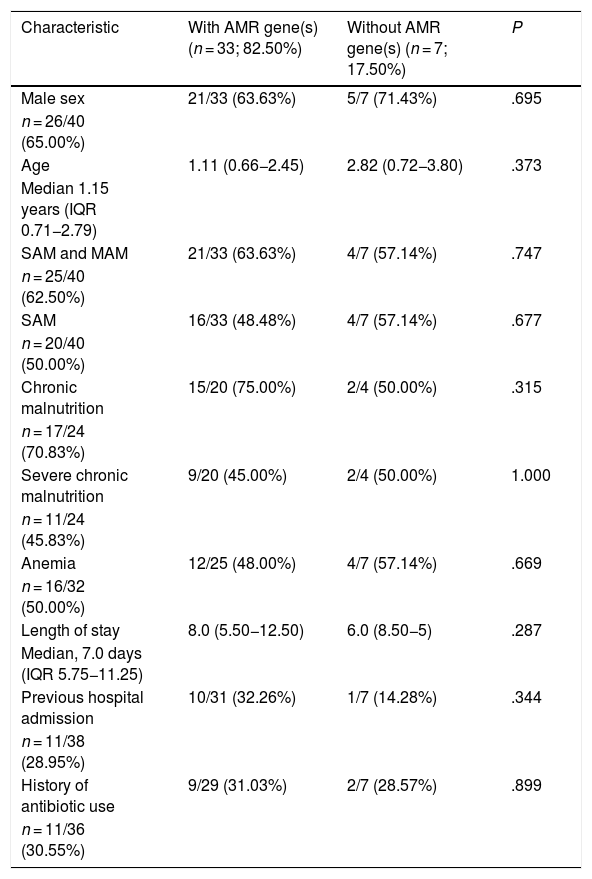
ResultsDemographic and clinical characteristicsForty pediatric patients (65% male; median [IQR] age, 1.15 [0.71−2.79] years) admitted between May and June 2024 participated in the study. The prevalence of acute malnutrition was 62.5% (50% severe, 12.5% moderate). In the group aged more than 6 months (n = 23), the median mid-upper arm circumference was 12 cm (IQR 10.80–13.20) (Table 1).
Demographic and clinical characteristics of pediatric patients according to the presence or absence of antimicrobial resistance genes.
| Characteristic | With AMR gene(s) (n = 33; 82.50%) | Without AMR gene(s) (n = 7; 17.50%) | P |
|---|---|---|---|
| Male sex | 21/33 (63.63%) | 5/7 (71.43%) | .695 |
| n = 26/40 (65.00%) | |||
| Age | 1.11 (0.66−2.45) | 2.82 (0.72−3.80) | .373 |
| Median 1.15 years (IQR 0.71−2.79) | |||
| SAM and MAM | 21/33 (63.63%) | 4/7 (57.14%) | .747 |
| n = 25/40 (62.50%) | |||
| SAM | 16/33 (48.48%) | 4/7 (57.14%) | .677 |
| n = 20/40 (50.00%) | |||
| Chronic malnutrition | 15/20 (75.00%) | 2/4 (50.00%) | .315 |
| n = 17/24 (70.83%) | |||
| Severe chronic malnutrition | 9/20 (45.00%) | 2/4 (50.00%) | 1.000 |
| n = 11/24 (45.83%) | |||
| Anemia | 12/25 (48.00%) | 4/7 (57.14%) | .669 |
| n = 16/32 (50.00%) | |||
| Length of stay | 8.0 (5.50−12.50) | 6.0 (8.50−5) | .287 |
| Median, 7.0 days (IQR 5.75−11.25) | |||
| Previous hospital admission | 10/31 (32.26%) | 1/7 (14.28%) | .344 |
| n = 11/38 (28.95%) | |||
| History of antibiotic use | 9/29 (31.03%) | 2/7 (28.57%) | .899 |
| n = 11/36 (30.55%) |
Data expressed as median (IQR) or n (%).
Abbreviations: AMR, antimicrobial resistance; MAM, moderate acute malnutrition; SAM, severe acute malnutrition.
The most frequent reasons for admission were acute gastroenteritis (37.5%), lower respiratory tract infection (25%), complications of malnutrition (20%), and sepsis evaluation (12.5%). Other reasons included malaria (3%) and surgical conditions (2.5%). The presenting symptoms included fever (72.5%), diarrhea (45%), respiratory distress (30%), and vomiting (25%).
Antibiotic exposureAmong the 12 patients (30.6%) who had received antibiotics in the previous 3 months, the most commonly used agents were:
- -
Amoxicillin (n = 8; 66.7% of exposed): primarily for respiratory infection (n = 5), otitis (n = 2), and diarrhea (n = 1).**
- -
Amoxicillin-clavulanate (n = 3; 25.0%): urinary tract infection (n = 2), cellulitis (n = 1).**
- -
Ceftriaxone (n = 1, 8.3%): severe pneumonia.**
No patients had received carbapenems or vancomycin in the previous 3 months.**
During the hospital stay, 97.5% received beta-lactams (primarily third-generation cephalosporins and penicillins) and 7.5% received vancomycin (Table 1).
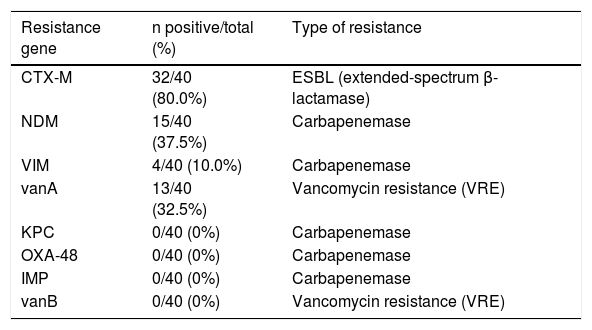
Prevalence of resistance genesAntimicrobial resistance genes were detected in 82.5% (33/40) of patients: CTX-M was found in 80%, NDM in 37.5%, vanA in 32.5%, and VIM in 10%. On the other hand, KPC, OXA-48, IMP, or vanB were not detected in any (Tables 2 and 3).
- •
There were no significant differences in age, sex, or nutritional status between patients in whom AMR genes were detected and those in whom they were not.
- •
The median length of stay was longer in the group with detected AMR genes (8.0 vs 6.0 days; P = .287).
- •
Severe chronic malnutrition was less frequent among patients carrying bacteria with carbapenemase genes (12.5% vs 62.5%; P = .033).
Prevalence of major antimicrobial resistance genes detected in the cohort.
| Resistance gene | n positive/total (%) | Type of resistance |
|---|---|---|
| CTX-M | 32/40 (80.0%) | ESBL (extended-spectrum β-lactamase) |
| NDM | 15/40 (37.5%) | Carbapenemase |
| VIM | 4/40 (10.0%) | Carbapenemase |
| vanA | 13/40 (32.5%) | Vancomycin resistance (VRE) |
| KPC | 0/40 (0%) | Carbapenemase |
| OXA-48 | 0/40 (0%) | Carbapenemase |
| IMP | 0/40 (0%) | Carbapenemase |
| vanB | 0/40 (0%) | Vancomycin resistance (VRE) |
Distribution of the main antimicrobial resistance genes detected by multiplex PCR in stool samples from pediatric inpatients. Data are presented as number and percentage of positive patients.
Abbreviations: ESBL, extended-spectrum β-lactamase; VRE, vancomycin-resistant Enterococcus.
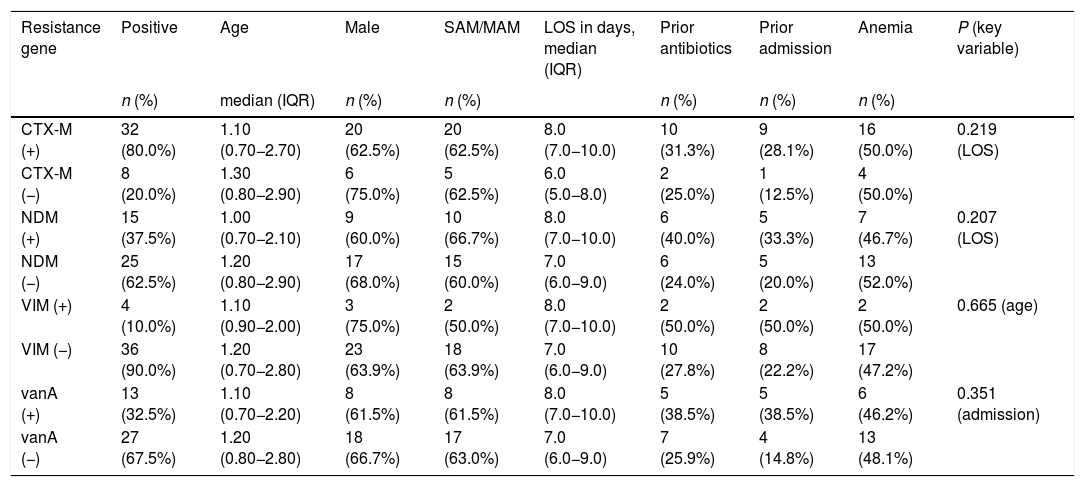
Association of major antimicrobial resistance genes with key clinical and demographic variables in pediatric inpatients.
| Resistance gene | Positive | Age | Male | SAM/MAM | LOS in days, median (IQR) | Prior antibiotics | Prior admission | Anemia | P (key variable) |
|---|---|---|---|---|---|---|---|---|---|
| n (%) | median (IQR) | n (%) | n (%) | n (%) | n (%) | n (%) | |||
| CTX-M (+) | 32 (80.0%) | 1.10 (0.70−2.70) | 20 (62.5%) | 20 (62.5%) | 8.0 (7.0−10.0) | 10 (31.3%) | 9 (28.1%) | 16 (50.0%) | 0.219 (LOS) |
| CTX-M (−) | 8 (20.0%) | 1.30 (0.80−2.90) | 6 (75.0%) | 5 (62.5%) | 6.0 (5.0−8.0) | 2 (25.0%) | 1 (12.5%) | 4 (50.0%) | |
| NDM (+) | 15 (37.5%) | 1.00 (0.70−2.10) | 9 (60.0%) | 10 (66.7%) | 8.0 (7.0−10.0) | 6 (40.0%) | 5 (33.3%) | 7 (46.7%) | 0.207 (LOS) |
| NDM (−) | 25 (62.5%) | 1.20 (0.80−2.90) | 17 (68.0%) | 15 (60.0%) | 7.0 (6.0−9.0) | 6 (24.0%) | 5 (20.0%) | 13 (52.0%) | |
| VIM (+) | 4 (10.0%) | 1.10 (0.90−2.00) | 3 (75.0%) | 2 (50.0%) | 8.0 (7.0−10.0) | 2 (50.0%) | 2 (50.0%) | 2 (50.0%) | 0.665 (age) |
| VIM (−) | 36 (90.0%) | 1.20 (0.70−2.80) | 23 (63.9%) | 18 (63.9%) | 7.0 (6.0−9.0) | 10 (27.8%) | 8 (22.2%) | 17 (47.2%) | |
| vanA (+) | 13 (32.5%) | 1.10 (0.70−2.20) | 8 (61.5%) | 8 (61.5%) | 8.0 (7.0−10.0) | 5 (38.5%) | 5 (38.5%) | 6 (46.2%) | 0.351 (admission) |
| vanA (−) | 27 (67.5%) | 1.20 (0.80−2.80) | 18 (66.7%) | 17 (63.0%) | 7.0 (6.0−9.0) | 7 (25.9%) | 4 (14.8%) | 13 (48.1%) |
Comparison of clinical and demographic variables according to the presence of each major antimicrobial resistance gene (CTX-M, NDM, VIM, vanA) in pediatric inpatients. Data presented as median (IQR) or n (%). The P values were calculated using the Mann-Whitney U or Fisher exact test as applicable. Abbreviations: LOS, length of stay; SAM, severe acute malnutrition; MAM, moderate acute malnutrition.
The reasons for admission included acute gastroenteritis (37.5%), lower respiratory tract infection (25%), and malnutrition-related complications (20%). There were no significant differences between patients colonized with antibiotic resistance gene-carrying bacteria and non-colonized patients in length of stay (8.0 vs 6.0 days; P = .287), severity, or mortality (0% in both groups; limited statistical power due to sample size of n = 40).
DiscussionThis study, conducted in May and June 2024, found high fecal carriage rates of AMR genes among pediatric inpatients in rural Ethiopia, with detection of ESBL (CTX-M) in 80% of patients, carbapenemases (NDM, VIM) in 37.5%, and vanA in 32.5%. These frequencies are comparable to those reported in other studies from Sub-Saharan Africa (high ESBL rates among infants with neonatal sepsis at Jimma Medical Center, Ethiopia,9; 17% prevalence of ESBL fecal carriage in children aged less than 5 years in Addis Ababa, Ethiopia,16; high prevalence of faecal carriage of ESBL-producing Enterobacteriaceae among children in Dar es Salaam, Tanzania,22 [Tellevik et al.]; high prevalence of CRKP in cases of sepsis diagnosed in Ethiopian children aged less than 5 years,17; 61% prevalence of CPE among children hospitalized in pediatric wards in Luanda, Angola,18; CTX-M prevalence of 70% to 90% among pediatric isolates in Kenya/Uganda and high carbapenemase carriage in rural Kenyan pediatric centers,6,19; and colonization by ESBL-producing bacteria in 48% of pediatric inpatients at a South African referral hospital20) and higher than those reported in European pediatric populations (5%–20%).21,23–25
Multiple factors were associated with AMR gene detection (environmental transmission, hygiene deficits, possible vertical pathways) and there was a low prevalence of prior antibiotic exposure (30.6%), indicating that environmental and community-related factors may contribute substantially more than direct selective pressure.14
The median hospital stay was longer in patients carrying AMR genes (8.0 vs 6.0 days; P = .287). This difference was not statistically significant, probably on account of the low statistical power (n = 40, post-hoc power <30%) and unmeasured confounders. Therefore, no clinical inference can be drawn.
The small sample size was a limitation but reflects the reality of research in rural African hospitals, where logistical and ethical barriers make large studies challenging. Similar studies with sample sizes of less than 50 have been published in the International Journal of Antimicrobial Agents and other leading journals, having explained the context clearly and justified the limitations. Despite these constraints, the study yields several important public health implications. Our findings, though not powered for multivariable analysis, provide critical baseline data for this neglected population.
The unexpected inverse association between severe chronic malnutrition and carbapenemase carriage may reflect an altered microbiota or reduced health care exposure in the most malnourished, but this requires confirmation in larger cohorts. Given the cross-sectional design and small sample size, the associations observed in this study should be interpreted as hypothesis-generating rather than causal and warrant confirmation in future longitudinal research.
The key limitations include: (1) lack of phenotypic correlation, as gene detection does not confirm resistance expression (which would require antibiogram with minimum inhibitory concentration [MIC]/culture); (2) no species identification (generic identification of Enterobacterales/Enterococcus)26,27; both intrinsic to molecular surveillance with PCR in rural hospitals lacking infrastructure. These aspects do not invalidate the descriptive genotypic baseline prevalence data.4,10 The high prevalence of VRE gene detection observed in our hospital aligns with Ethiopian pediatric reports.26–28
Implications: There is an urgent need for investment in diagnostic capacity, infection control, and antimicrobial stewardship in rural African hospitals.1,15 Surveillance in underrepresented settings is essential to inform global AMR strategies.2,3 Given the high prevalence of malnutrition (65%) and AMR carriage observed in this cohort, future studies should incorporate standardized neurodevelopmental assessment tools to better explore the combined impact of these factors on long-term developmental outcomes. This critical aspect could not be addressed in the present study due to resource and logistics constraints typical of rural African settings. Future research should prioritize larger multicenter cohort studies exploring transmission (vertical/environmental) as well as VRE trends in Africa vs Europe.13,29,30
These results suggest the need for a comprehensive public health approach tailored to the local context. Specifically, the development of local empirical antibiotherapy protocols may be warranted in light of the high observed prevalence of intestinal carriage (CTX-M in 80%, NDM in 37.5%, vanA in 32.5%). At Gambo Rural General Hospital, this might involve prioritizing beta-lactams not compromised by ESBL activity for severe infections, with early review for de-escalation when possible, and implementing strict criteria for limited and sporadic access to carbapenems and vancomycin, which are only available through occasional donations from foreign collaborators.5,8
It is also essential to implement antimicrobial stewardship programs (ASPs) adapted to resource-limited settings. These interventions should include training on rational antibiotic use, de-escalation criteria based on local data, and antibiotic consumption monitoring. Particularly, given the extremely limited availability of carbapenems at Gambo Rural General Hospital—dependent exclusively on irregular donations from international collaborators—ASP programs should prioritize the strategic reservation of these scarce resources for culture-confirmed cases with no alternative therapeutic options, maximizing their impact while preventing further resistance selection.
Complementing these efforts, realistic infection control measures (such as reinforcing hand hygiene, basic separation of colonized patients, and caregiver education) are feasible even in rural hospitals and can mitigate nosocomial transmission of resistance genes.11,13
ConclusionsHigh fecal carriage of AMR genes was observed among pediatric inpatients in rural Ethiopia (May–June 2024). These baseline data highlight the need for enhanced surveillance, tailored stewardship, and infection control in resource-limited environments.
FundingPartially funded by Werfen Ltd., which provided molecular biology reagents. Also, this study was conducted in the framework of the research project “The search for new compounds with antimicrobial properties against multidrug-resistant pathogens or with ineffective treatments” [Fundación para la Investigación Biomédica del Hospital Universitario Príncipe de Asturias (FIBHUPA)].
The authors have no conflicts of interest to declare.
We thank the staff of Gambo Rural General Hospital and the Master’s Program in Tropical Medicine and International Health (Universidad Autónoma de Madrid) for their support.