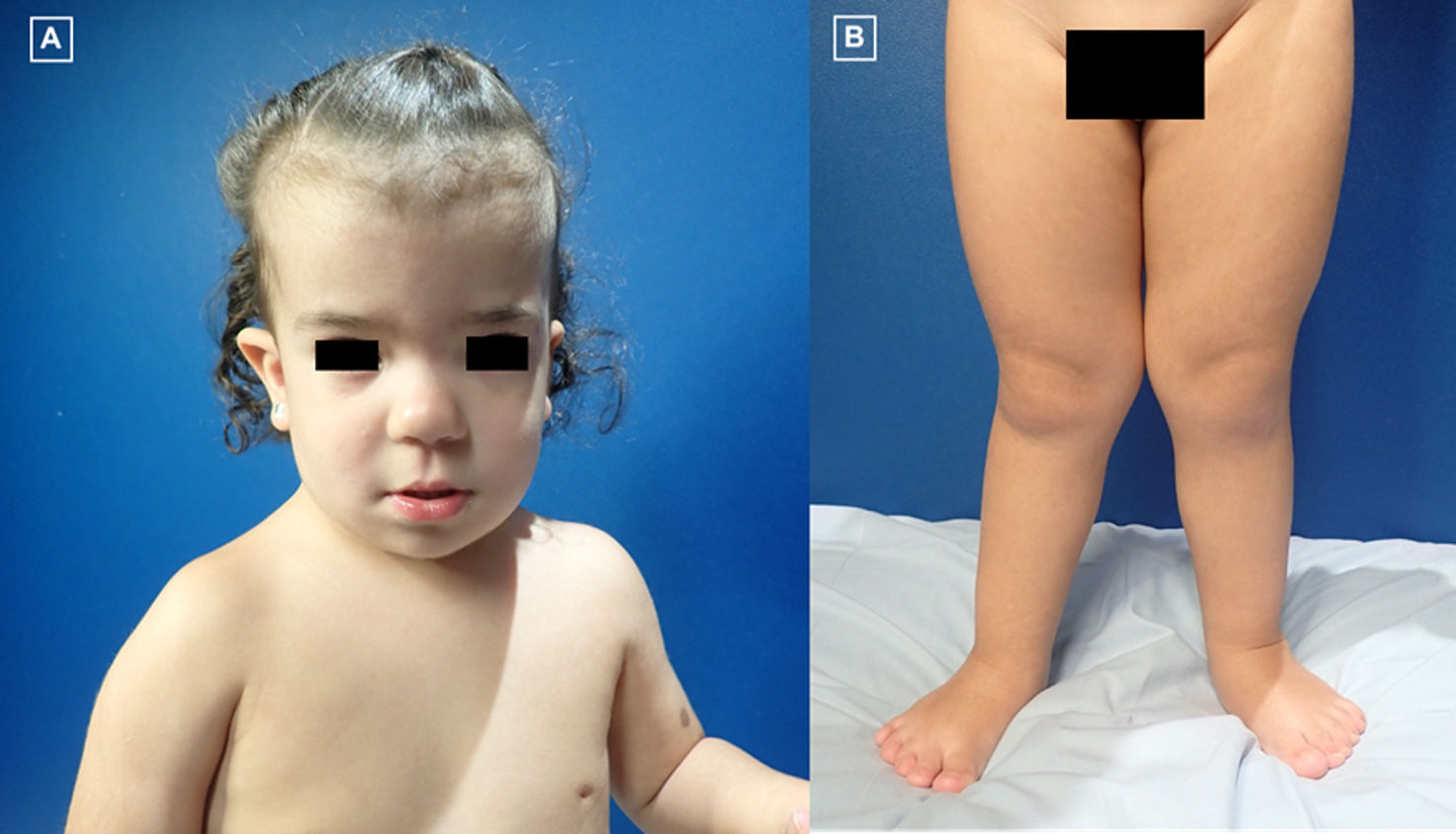
A girl aged 3 years was referred to the dermatology clinic for assessment of hyperpigmented lesions with a blaschkoid distribution in the upper extremity. She presented with facial dysmorphic features, including epicanthal folds, a low nasal bridge, and low-set ears, in addition to short stature (below the 3rd percentile), right-sided hemihyperplasia, clinodactyly of the fifth finger and hypoplastic nails (Fig. 1). During pregnancy, chromosomal array analysis of a chorionic villus sample had detected an aneuploidy of chromosome 22; this finding was not confirmed by amniocentesis, and the postnatal karyotype was normal.

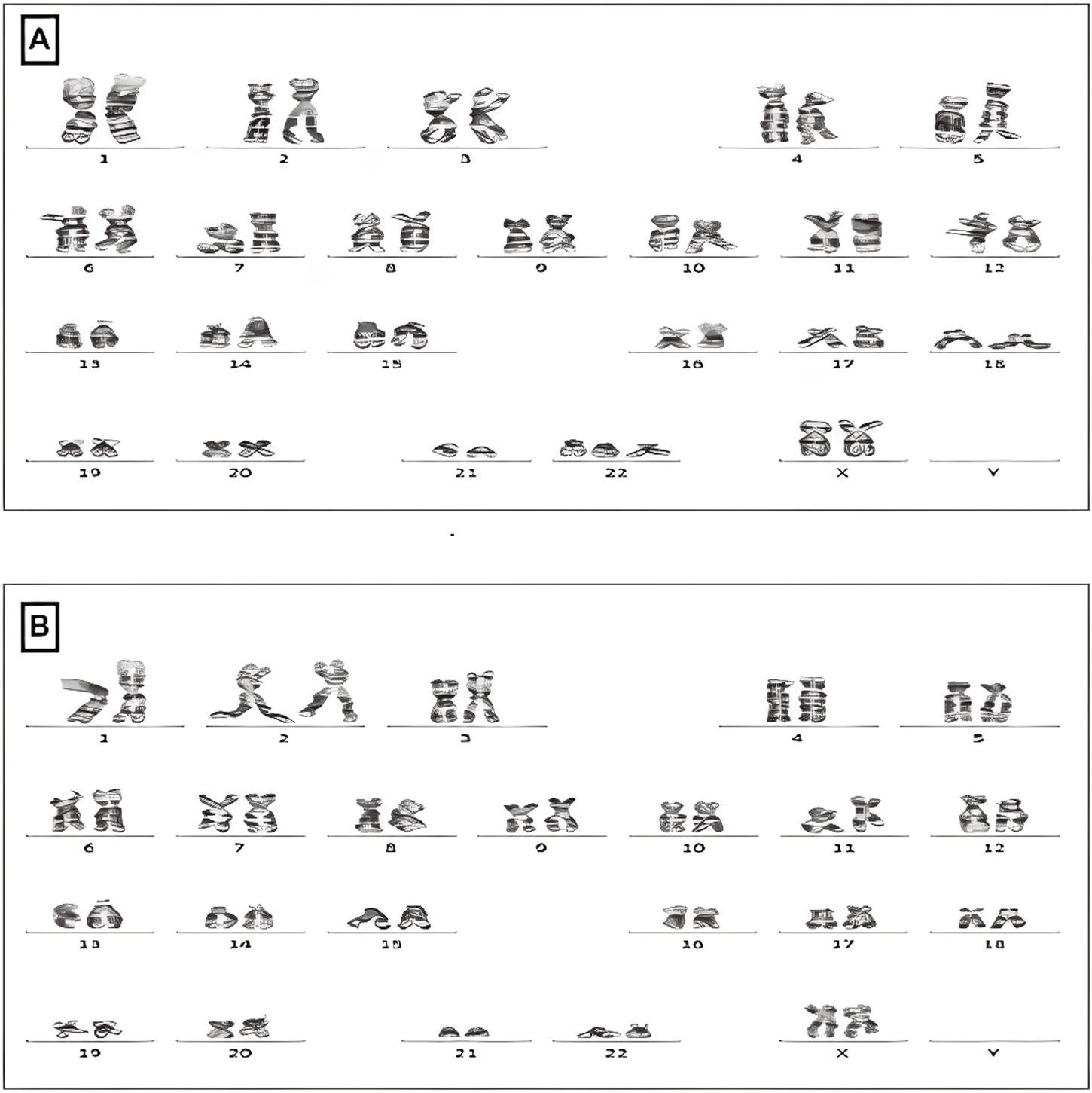
Mosaic trisomy 22 was suspected, prompting genetic analysis of skin fibroblasts obtained via biopsy of the hyperpigmented lesions, revealing a 47,XX,+22(25)/46,XX(75) karyotype that was consistent with the suspected diagnosis (Fig. 2).

Complete trisomy 22 is the second most common aneuploidy associated with pregnancy loss (identified in 2.9% of miscarriages1 and is incompatible with life. On the other hand, the mosaic form exhibits a broad phenotypic variability depending on the proportion of trisomic cells in blood and tissues.1,2 It is a rare mosaicism, with fewer than 30 cases reported to date. This case highlights the importance of maintaining a high index of suspicion for mosaicism in the presence of suggestive manifestations and negative peripheral blood tests, and genetic analysis of affected tissue is considered the gold standard for diagnosis. Finally, genetic counseling should be approached with caution, as the risk of transmission depends on the extent of gonadal involvement and must be evaluated by a specialist.
Previous meeting: This case was presented as a poster at the 35th Meeting of the Spanish Group of Pediatric Dermatology (GEDP) with the title “Mosaico de trisomía 22: la importancia de un correcto algoritmo diagnóstico”; January 27, 2024; A Coruña, Spain.