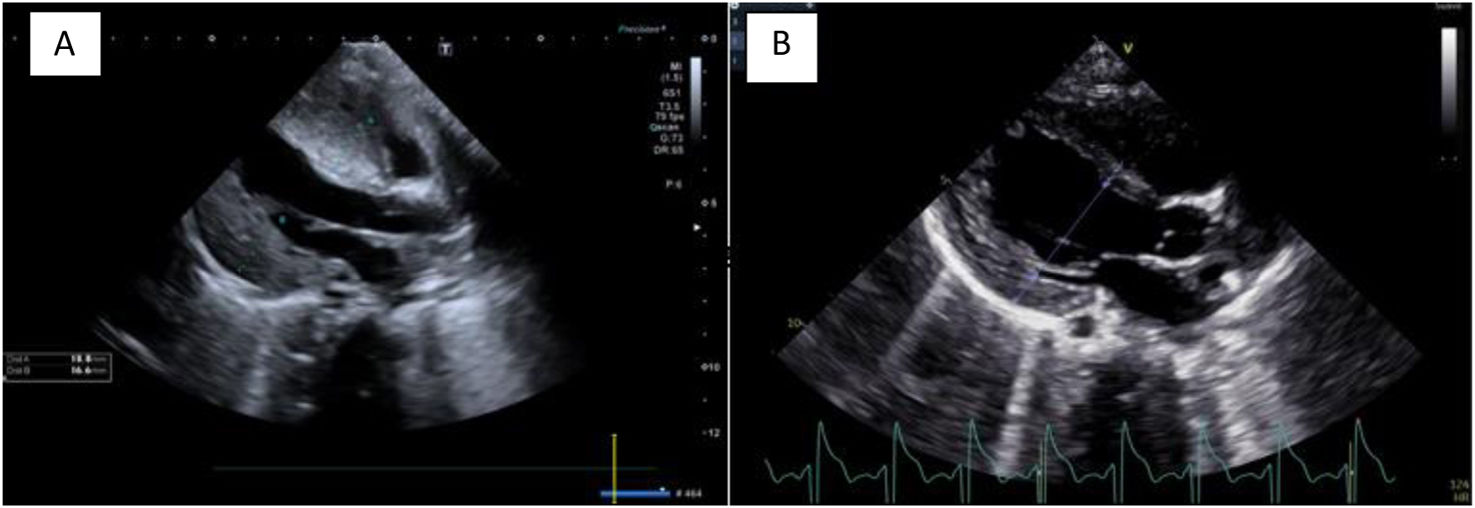
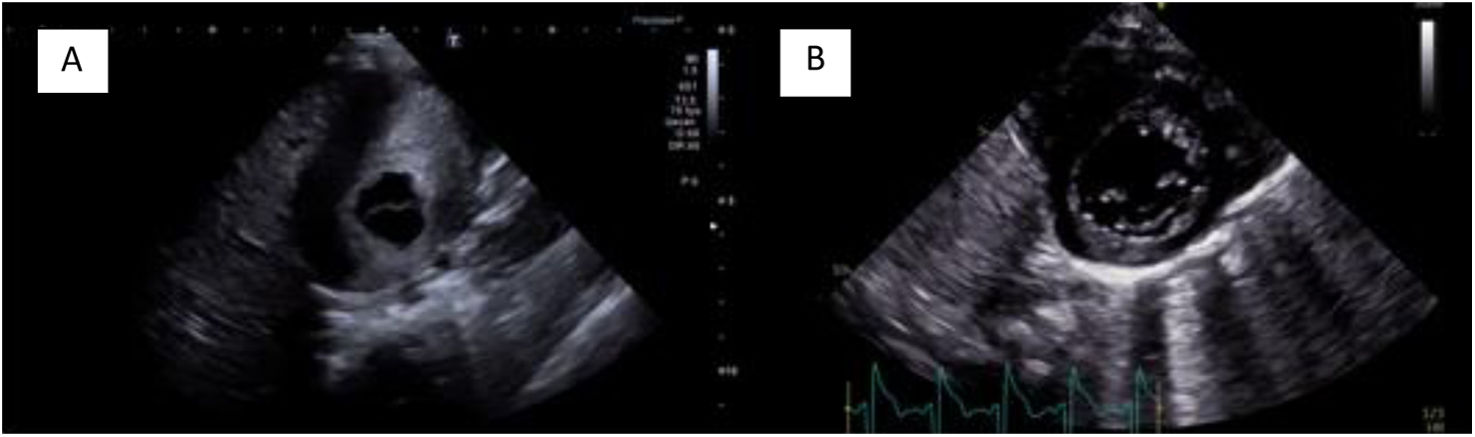
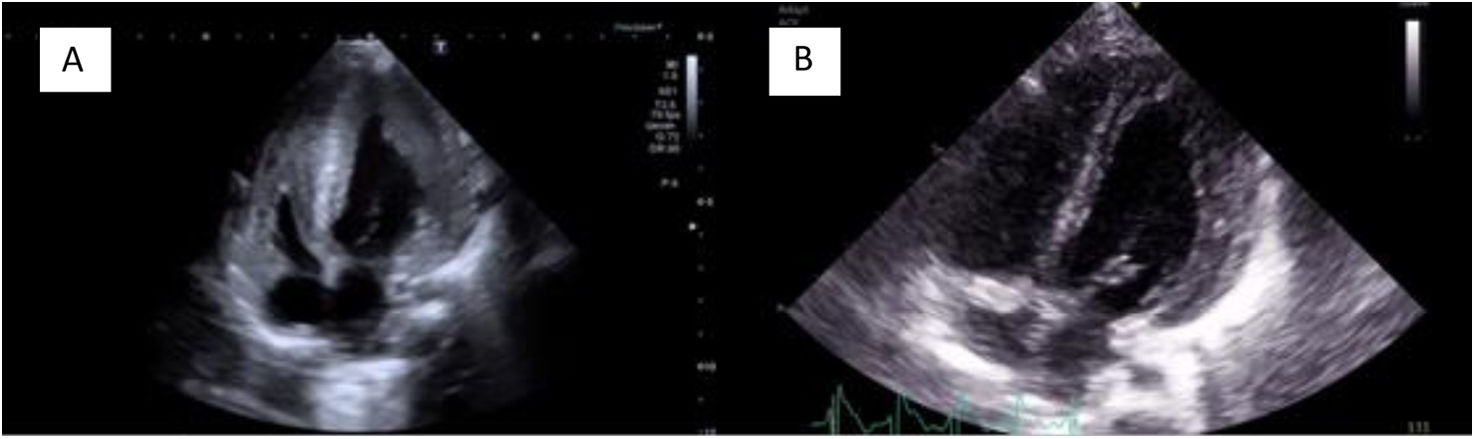
We present the case of an infant with Pompe disease (glycogen storage disease type II) diagnosed at age 7 months following an episode of severe respiratory failure with hypotonia. The initial echocardiogram showed nonobstructive hypertrophic cardiomyopathy: interventricular septum thickness at end diastole (IVSd) of 14 mm with a z-score of +5.48, left ventricular posterior wall (LVPW) of 16 mm with a z-score of +7.71, left ventricular end-diastolic diameter (LVEDD) of 18 mm with a z-score of −3.61, and left ventricular ejection fraction (LVEF) of 50% (Figs. 1A, 2A, and 3A).


Enzyme replacement therapy with avalglucosidase alfa (Nexviadyme) was initiated, with clear evidence of structural and functional improvement at 2 months of treatment: the left ventricle was neither dilated nor hypertrophic (IVSd, 6 mm [z-score +1.6]; LVPW, 7 mm [z-score +3.42]; LVEDD, 28 mm [z-score +0.81]) and the LVEF had increased to 63% (Figs. 1B, 2B and 3B).
Pompe disease is an autosomal recessive disorder that manifests with deficiency of lysosomal enzyme acid α-1,4-glucosidase. Hypertrophic cardiomyopathy is one of its most characteristic manifestations in infants.1
Enzyme replacement with avalglucosidase-alfa is a novel therapy that has proven highly effective, especially in patients with significant cardiac involvement. Early and sustained echocardiographic improvement has been reported, with regression of hypertrophy, normalization of the ventricular mass index, improvement of diastolic function and reduction in electrocardiographic signs of overload.2