

There are studies and preliminary data at the national and international levels that show an increase in the number of suicide attempts since the beginning of the coronavirus disease 2019 (COVID-19) health crisis.1–4 The objective of our study was to describe the clinical characteristics of cases of acute paracetamol poisoning with suicidal intent in patients managed in the pediatric emergency department. As a secondary objective, we assessed temporal trends in these characteristics following the lockdown imposed on account of the COVID-19 pandemic.
We conducted a single-center retrospective observational study based on the review of health records. The sample consisted of patients managed at pediatric emergency departments for paracetamol overdose with suicidal intent between January 2018 and December 2021. Our pediatric emergency department manages patients aged up to 16 years, although older patients are admitted if they have certain underlying conditions. It is worth noting that several patients were managed after being referred from other centers, as our hospital is a tertiary care center as well as a referral center for pediatric liver transplantation.
Severe hypertransaminasemia was defined as transaminase levels more than 10 times the upper limit of normal, and acute liver failure an international normalized ratio (INR) greater than 1.5 in patients with encephalopathy or an INR greater than 2 in patients without associated encephalopathy.
We collected data on demographic characteristics, psychiatric history, previous treatment, clinical and laboratory findings and treatment during the episode. This information was used to create a database that was analyzed with the R statistical package, version 4.1.3. The project was approved by the Ethics Committee of our hospital.
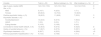
A total of 30 patients with a median age of 14 years were included, with a predominance of the female sex (Table 1). Of this total, more than half had a psychiatric history, most commonly of anxiety/depressive disorders. In addition, 40% of patients were linked to the mental health network, and 36.7% of had a history of suicidal behavior.
Demographic characteristics of the sample.
| Variable | Total (n = 30) | Before lockdown (n = 16) | After lockdown (n = 14) | P |
|---|---|---|---|---|
| Age in years, median (IQR) | 14.0 (13.0; 15.8) | 14.5 (13.0; 16.2) | 14.0 (14.0;15.0) | .9 |
| Sex, n (%) | .3 | |||
| Male | 5 (16.7) | 4 (25.0) | 1 (7.1) | |
| Female | 25 (83.3) | 12 (75.0) | 13 (92.9) | |
| Positive psychiatric history, n (%) | 18 (60.0) | 11 (68.8) | 7 (50.0) | .3 |
| Psychiatric disorder, n (%) | .4 | |||
| Anxiety/depression | 13 (43.3) | 6 (37.5) | 7 (50.0) | |
| ADHD | 1 (3.3) | 0 (0.0) | 1 (7.1) | |
| Eating disorder | 3 (10.0) | 3 (18.8) | 0 (0.0) | |
| Connected to mental health network, n (%) | 12 (40.0) | 6 (37.5) | 6 (42.9) | .8 |
| History of suicidal behavior, n (%) | 11 (36.7) | 6 (37.5) | 5 (35.7) | >.9 |
| Psychotropic treatment, n (%) | 8 (26.7) | 4 (25.0) | 4 (28.6) | >.9 |
| Previous psychiatric hospitalization, n (%) | 4 (13.3) | 3 (18.8) | 1 (7.1) | .6 |
Abbreviations: ADHD, attention-deficit hyperactivity disorder; IQR, interquartile range.
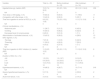
With regard to paracetamol exposure, the median total ingested dose was 15.5 g (see Table 2), equivalent to 280 mg/kg (IQR, 148.1–461.5). The time elapsed between ingestion and arrival at the emergency department varied widely, with a median of 9 h.
Clinical and laboratory characteristics of paracetamol overdose episodes.
| Variable | Total (n = 30) | Before lockdown (n = 16) | After lockdown (n = 14) | P |
|---|---|---|---|---|
| Ingested dose (g), median (IQR) | 15.5 (7.4; 30.2) | 8.3 (6.5; 16.6) | 22.0 (12.1; 34.8) | .036 |
| NA | 2 | 2 | 0 | |
| Toxic dose (>150 mg/kg), n (%) | 19 (63.3) | 8 (50.0) | 11 (78.6) | .11 |
| Coingestion with other drugs, n (%) | 13 (43.3) | 8 (50.0) | 5 (35.7) | .4 |
| Time from ingestion to arrival to PED (h), n (%) | 9.0 (5.2; 13.8) | 7.0 (5.0; 13.2) | 11.0 (7.0; 13.8) | .6 |
| NA | 0 | 0 | 0 | |
| Clinical manifestations, n (%) | ||||
| Abdominal pain | 11 (36.7) | 5 (31.2) | 6 (42.9) | .5 |
| Vomiting | 15 (50.0) | 9 (56.2) | 6 (42.9) | .5 |
| Decreased level of consciousness | 6 (20.0) | 5 (31.2) | 1 (7.1) | .2 |
| Administration of activated charcoal, n (%) | 13 (43.3) | 9 (56.2) | 4 (28.6) | .13 |
| NAC regimen, n (%) | .13 | |||
| Two-bag | 7 (31.8) | 1 (12.5) | 6 (42.9) | |
| Three-bag | 11 (50.0) | 4 (50.0) | 7 (50.0) | |
| Other | 4 (18.2) | 3 (37.5) | 1 (7.1) | |
| NA | 8 | 8 | 0 | |
| Time from ingestion to NAC initiation (h), median (IQR) | 11.0 (8.5; 12.2) | 9.5 (6.0; 11.5) | 11.0 (9.2; 12.8) | .6 |
| NA | 10 | 4 | 6 | |
| Duration of NAC (h), n (%) | .4 | |||
| >24 | 1.0 (5.0) | 1.0 (16.7) | 0.0 (0.0) | |
| 2−8 | 5.0 (25.0) | 2.0 (33.3) | 3.0 (21.4) | |
| 8−24 | 14.0 (70.0) | 3.0 (50.0) | 11.0 (78.6) | |
| NA | 10 | 10 | 0 | |
| Hypertransaminasemia, n (%) | 14 (48.3) | 4 (26.7) | 10 (71.4) | .016 |
| NA | 1 | 1 | 0 | |
| Severe hypertransaminasemia, n (%) | 5 (17.2) | 1 (6.2) | 4 (30.8) | .2 |
| NA | 1 | 0 | 1 | |
| Acute liver failure, n (%) | 3 (10.0) | 1 (6.2) | 2 (14.3) | .6 |
Abbreviations: IQR, interquartile range; NA, not analyzed due to incomplete data; NAC, N-acetylcysteine.
On arrival to the emergency department, one-third of the patients were asymptomatic, while the most common symptoms in those with clinical manifestations were abdominal pain and vomiting. The presence of abdominal pain at admission was associated with a higher probability of severe hypertransaminasemia.
Most patients began treatment with N-acetylcysteine (NAC) following administration of activated charcoal in nearly half of them. We found no significant differences in clinical outcomes or in the frequency or severity of liver involvement in relation to the different NAC regimens used for treatment.
Forty-seven percent of the patients (14/30) presented hypertransaminasemia, which was severe in 17% (5/30). All patients with severe liver involvement were treated with NAC for more than 24 h. Three patients met the criteria for acute liver failure, requiring admission to the intensive care unit. We ought to highlight that all patients in this case series exhibited complete normalization of transaminase levels within a mean of 4 days (range, 90–101.5 h) without need of liver transplantation.
When comparing the pre- and post-lockdown periods (from June 2020 onwards), we found that both groups were homogeneous (Table 1). We found an increase in cases in the post-lockdown period (9.9 cases/year compared to 6.4 cases/year in the pre-lockdown period), as well as a significant increase in the total ingested dose of paracetamol, which was consistent with the need for NAC in all post-lockdown patients. In addition, there was a higher frequency of liver involvement with hypertransaminasemia in the post-lockdown period (P = .016).
The data from our case series are consistent with the findings of some previous studies that reported an increase in the incidence of self-poisoning among adolescents following the lockdown imposed due to the COVID-19 pandemic,1 especially in risk groups with a history of psychiatric illness.2 In this regard, it seems clear that the mental health network must be reinforced in the face of growing demand to facilitate early intervention. Furthermore, after the lockdown, there was a marked increase in the ingested dose of paracetamol, which could have contributed to the higher frequency of hypertransaminasemia, as noted in previous studies, with obvious implications in terms of the risks associated with overdosing.3,5 Lastly, we ought to highlight the importance of the initial clinical evaluation of the patient, as those presenting with abdominal pain were more likely to have severe hypertransaminasemia.6
FundingThis research did not receive any external funding.
The authors have no conflicts of interest to declare.
Previous meetings: This study was presented at the Congress of the SEGHNP; April 20–22, 2023; Cordoba, Spain; and the Congress of the SEUP; May 18–20, 2023; Las Palmas de Gran Canaria, Spain.